Nasolabial Fold Filler: Fold, Shadow or Diagnosis? Using Front, 45° and Profile Photos
A visible nasolabial fold or shadow is not a diagnosis. Learn what front, 45° and profile photos can and cannot show, and why only a clinician can assess filler.
Published by Beauty Blossom
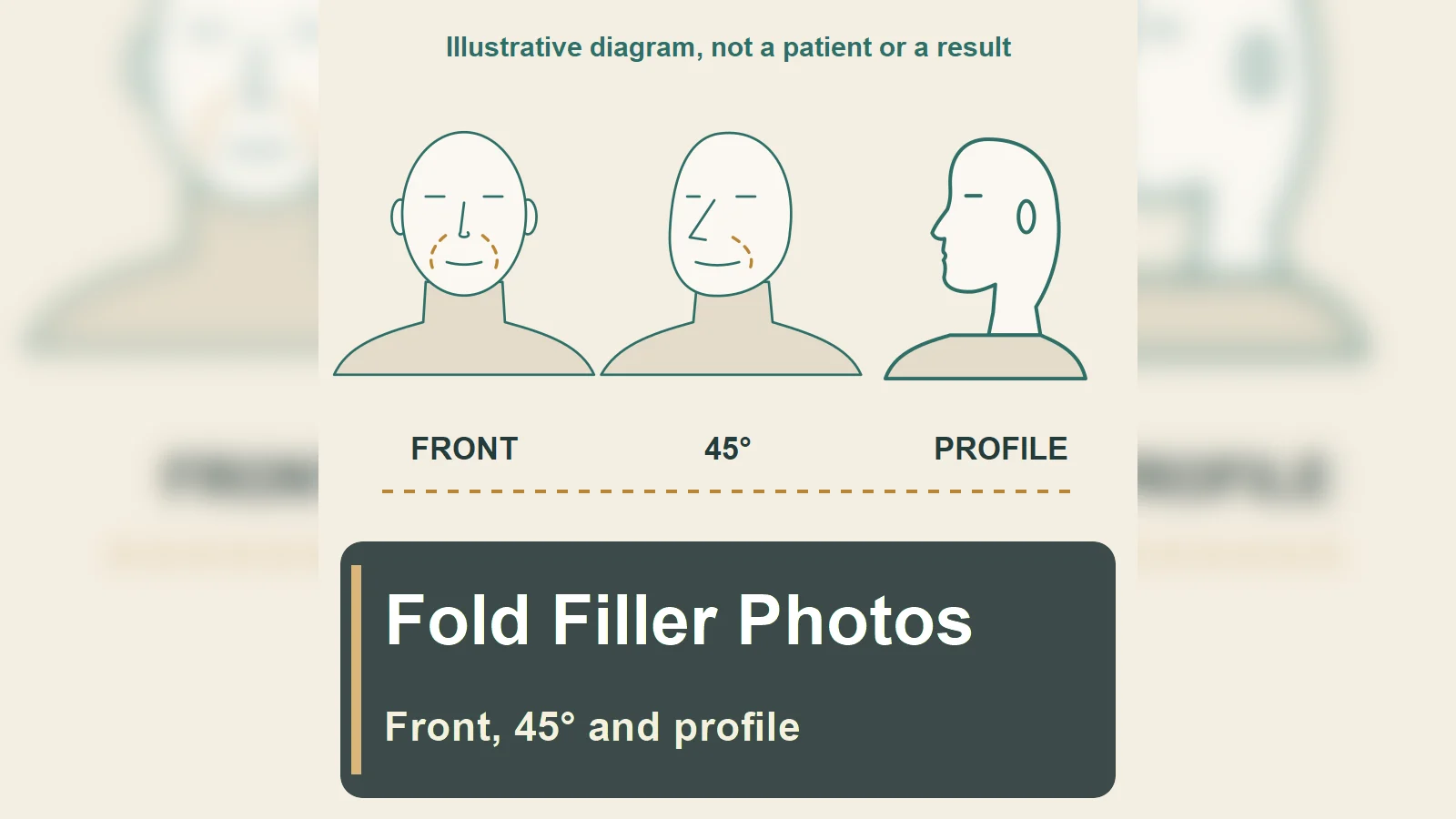
A line that runs from beside the nose toward the corner of the mouth is easy to spot in a mirror or a phone photo. Some people call it a nasolabial fold. Others notice a shadow that shifts with the light, or a line that appears only when they smile. A picture cannot settle which it is, and whether filler is appropriate for that area is a clinical decision rather than a photo result.
Short answer: A visible fold or shadow is an observation. A diagnosis or treatment recommendation is a clinician’s conclusion after examining your face in person. Front, 45° and profile photos can help you describe what you notice, but they cannot show tissue condition, how the area moves or whether filler suits you. The clinic’s general filler page lists nasolabial folds among the areas it may consider, and says the product and amount are decided after an assessment. This article promises no smoothing or any other change.
Is a visible fold the same as a diagnosis?
No. “I can see a line here” describes what you notice. It does not say what is behind it. The clinic’s filler page says the amount of filler is not decided from photos or from the name of an area, but advised after an examination. It also says that similar-looking concerns in the same area can have different causes.
The table shows what each common photo angle can help you describe, and what it cannot tell you.
| Photo | What it can help you describe | What it cannot tell you |
|---|---|---|
| Front, relaxed face | Whether the fold looks similar on both sides, and where it starts and ends | Depth, tissue condition or cause |
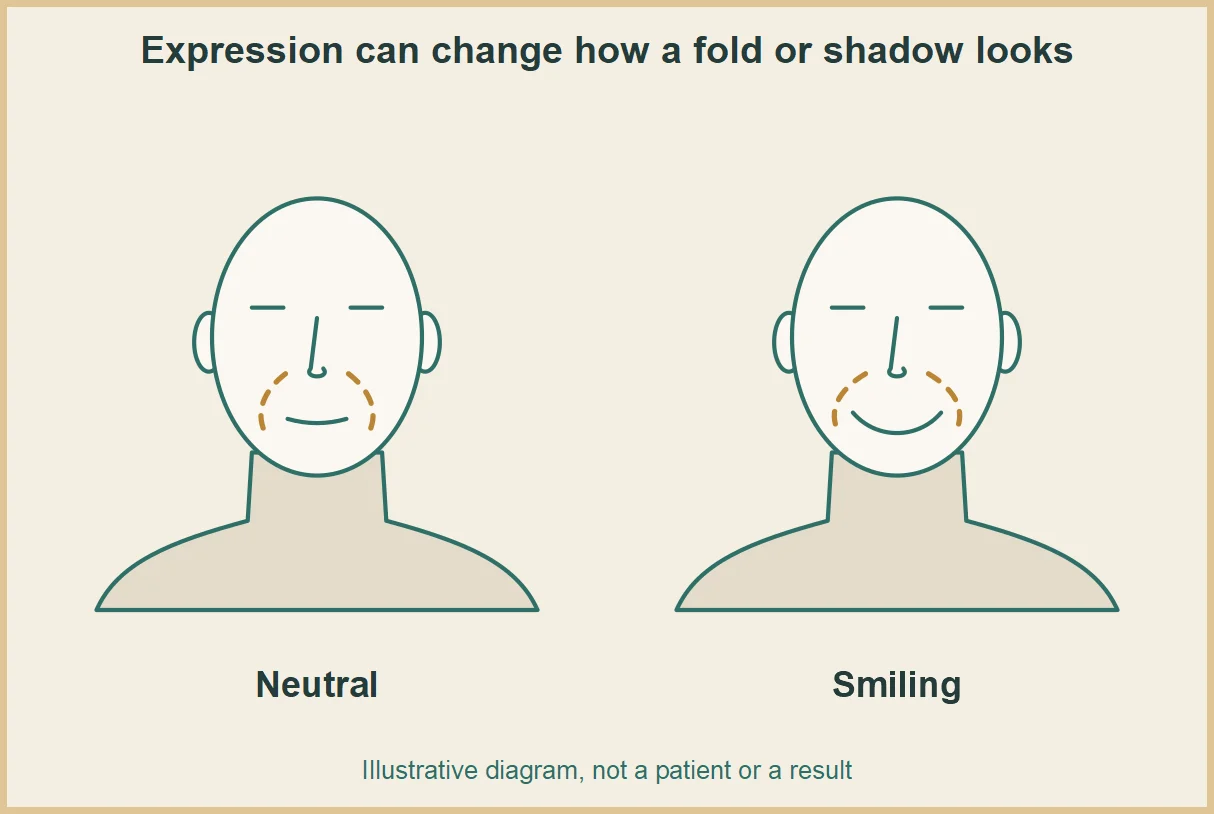
| Front, gentle smile | How the line changes when your expression changes | Whether the area needs any treatment |
| 45° angle | How light and shadow fall between the cheek and the mouth | Whether it is a fold or only a shadow in everyday light |
| Profile | How the cheek, lips and chin sit relative to each other | Whether filler is appropriate or how much would be needed |
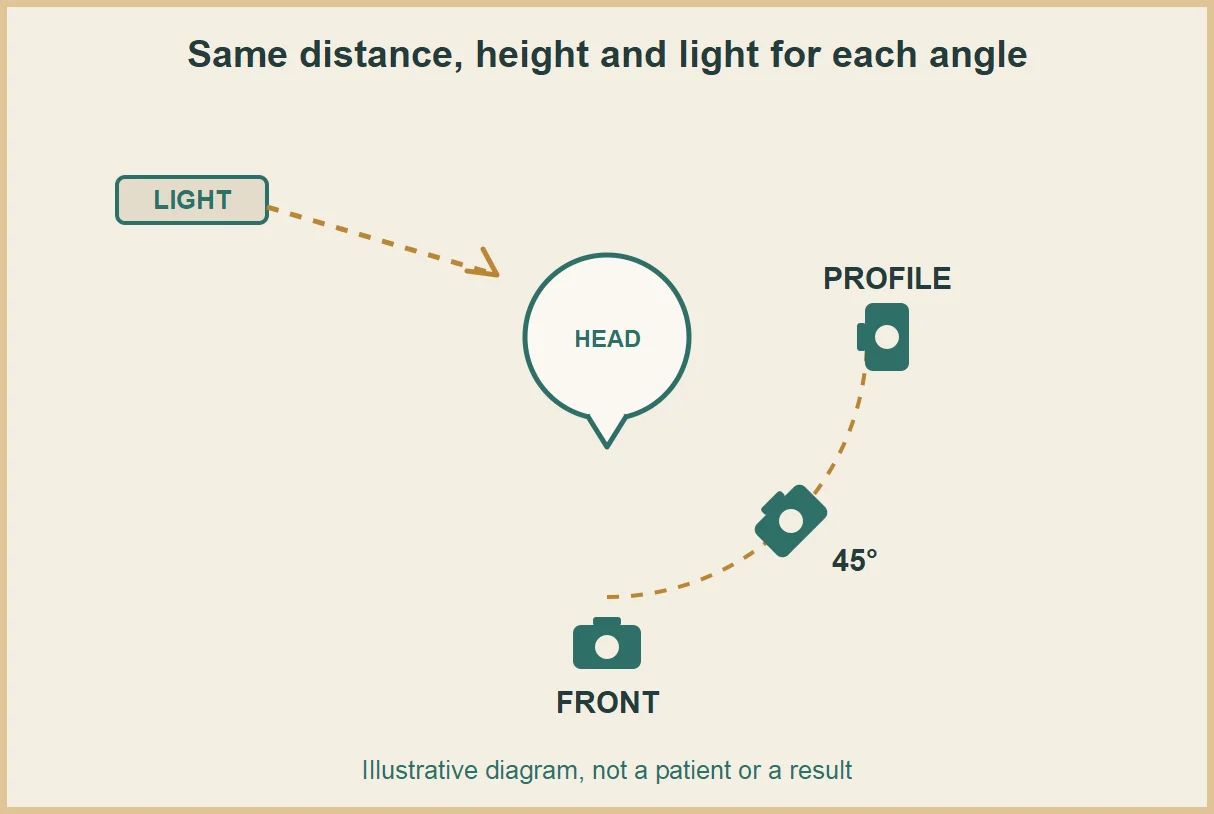
How can you take photos that are easier to compare?
These are general photo tips for your own notes, not a clinic requirement. Ask the clinic whether photos help at all before you rely on them.
- Keep the same distance, the same camera height and a relaxed face for each shot.
- Take the front, 45° and profile views in the same place, and note the date.
- Take one set in soft, even light and another in the light where you usually notice the line. If the line seems to disappear or shift, tell the clinician: that is useful information about shadow versus fold.
- Do not use filters or editing apps, and do not zoom in so far that the whole face is lost.
What does the clinic’s filler page say?
The clinic’s filler page describes hyaluronic acid (HA) filler as a gel used to add volume or refine contours. It lists the forehead, cheeks, cheekbones, nasolabial folds, lips and chin among the areas that may be considered, and says the type and amount depend on your skin, the volume you want and the products available. It describes the process as assessing your current condition, discussing the area and product, then reviewing recovery. It also says the area markings on its page are only illustrations for consultation, not actual injection sites or depths.
This is a general filler page. It does not describe a separate nasolabial-fold service, and this article stays with that one area rather than making claims about neighbouring parts of the face.
What can only a clinician’s assessment decide?
- Whether filler is appropriate for you at all, or whether a different approach fits the concern better.
- Which area or areas should be considered, and in what proportion to the rest of your face.
- Which product and how much, if any.
- How earlier treatments in this area, if you have had any, affect the plan.
If you have had filler before, tell the clinic the area, the date, the product and the amount if you know them. The clinic’s page says it assesses any remaining filler and your tissue condition before considering more treatment.
Caution: Swelling, bruising, redness and tenderness can occur after filler. The clinic’s page also mentions that, rarely, infection, an allergic reaction or a vascular complication can occur, and asks you to contact the clinic if discomfort becomes severe or you notice unusual changes in skin colour or vision. The page says HA filler may be dissolved with hyaluronidase depending on the situation, but that this does not work for every type of filler. This article cannot tell you whether filler is suitable for you.
Questions to bring to your consultation
- Is what I see a fold, a shadow or something else, in your assessment?
- Is filler appropriate for this area, and why or why not?
- If it is considered, which product and how much, and what should I know about it?
- What do you review after treatment, and when?
- Which symptoms should make me call right away?
Frequently asked questions
If I can see a line beside my nose, is filler the answer?
Not automatically. Seeing a fold or shadow does not decide whether filler is appropriate. Only a clinician’s assessment can do that, and the outcome may be a different approach or no treatment at all.
Can photos replace an in-person assessment?
Photos can help you explain your concern, but the clinic’s page says the amount is advised after an examination, not from photos. Expect an in-person assessment.
Is a shadow the same as a fold?
Not necessarily. A shadow changes when the light or your head position changes. Telling the clinician how the line looks in different light is helpful.
Will filler smooth the line?
This article cannot promise that. The clinic’s page says early swelling can affect how the area looks, that results are assessed as they settle and that how long they last varies.
Can HA filler be dissolved?
The clinic’s page says hyaluronidase may be considered for HA filler depending on the situation, and that it does not work for every type of filler. A clinician decides whether it is possible.
Which symptoms should I report after filler?
Contact the clinic immediately if discomfort becomes severe, or if you notice unusual changes in skin colour or vision, as the clinic’s page advises.
Visit Beauty Blossom Clinic in Seoul
Beauty Blossom Clinic is at Mediwon Medical Center, 66 Yanghwa-ro, Mapo-gu, Seoul, on the sixth and eighth floors, directly in front of Hapjeong Station Exit 3. Reception is on the sixth floor. For current opening hours, check the map and directions page or contact the clinic directly.
- See the map and directions
- Clinic information: filler page on the clinic’s English site (general filler information; it is not an event or price page)
- Read clinic notices
- Request a consultation (booking page)
- View the events page (this article quotes no price and does not guarantee any offer)
- Return to the clinic homepage
This article provides general information, not an individual diagnosis or treatment plan. Suitability, treatment experience, recovery and results differ. Discuss potential benefits, limitations and risks with a qualified treating clinician.
Location
Beauty Blossom Clinic
Mediwon Medical Center, 66 Yanghwa-ro, Mapo-gu, Seoul, South Korea (reception: 6F)
Individual results may vary.
Back to Blog →