Sun Protection After a Peel: Why It Still Matters Without Visible Flaking
Whether or not skin visibly flakes, a peel leaves new skin more sun-sensitive. What AAD and Mayo Clinic say about depth, sunscreen and gentle care.
Published by Beauty Blossom
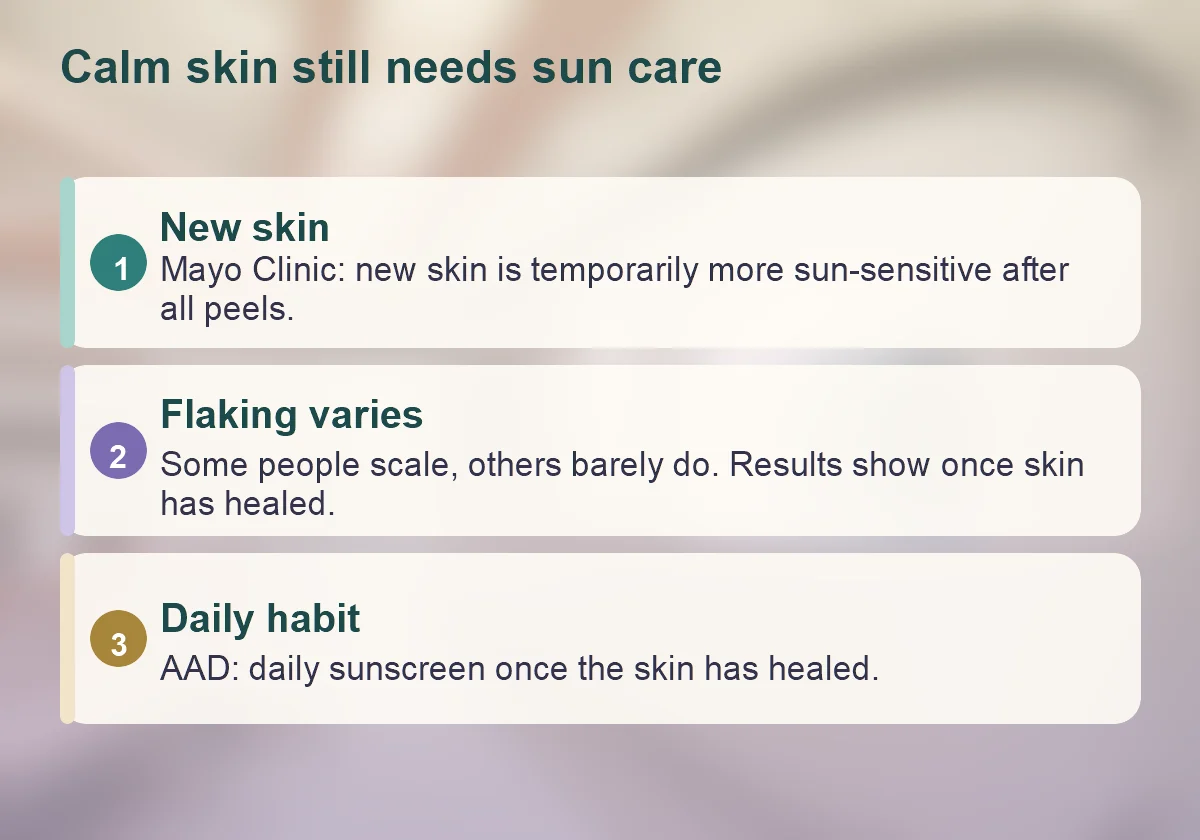
Do you still need sun protection after a peel if your skin never visibly flakes? Yes. Mayo Clinic says that with all peels the new skin is temporarily more sensitive to the sun, and the AAD includes daily sunscreen in the aftercare even for its lightest category. Some people flake noticeably and others hardly at all, so the sun plan you were given follows the depth of the peel and how the skin is healing. Skin that looks calm on the surface is not a reason to drop sunscreen, shade or gentle care early.
What peel depth changes
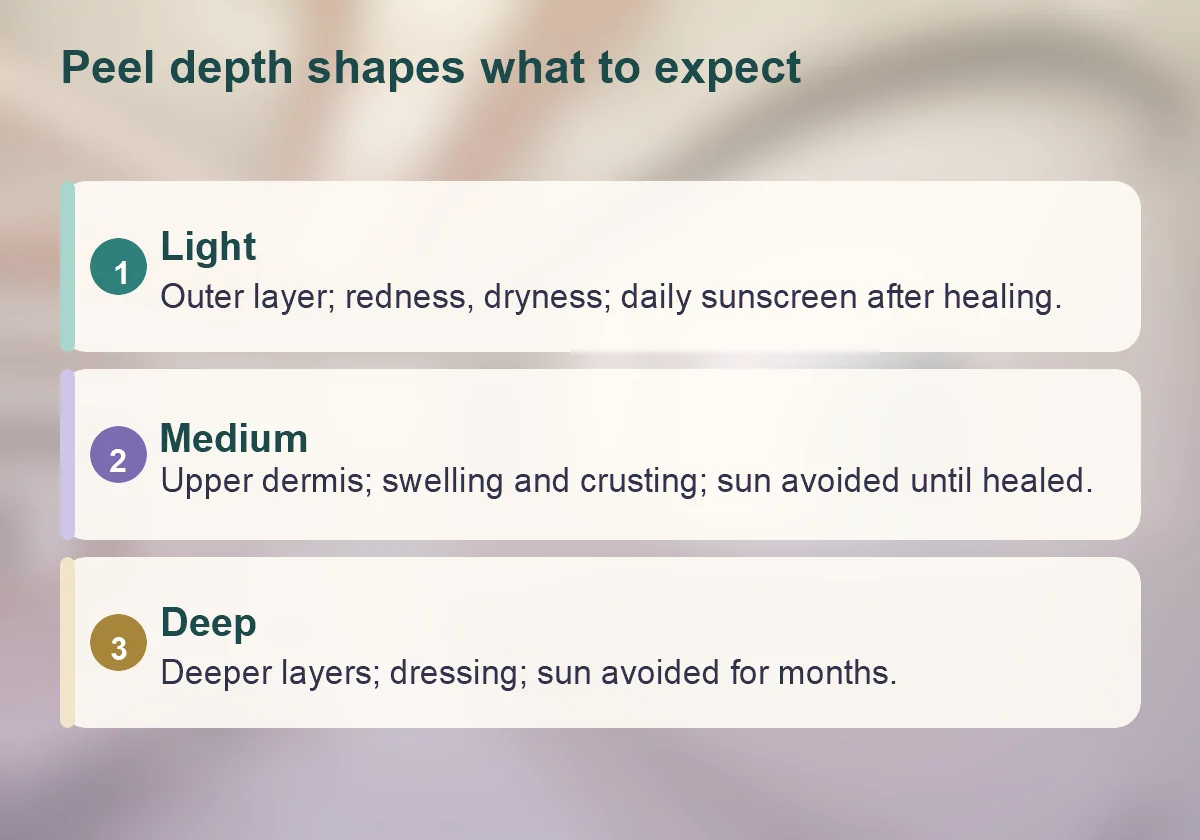
Mayo Clinic describes three depths. A light peel removes the outer layer of skin (the epidermis), a medium peel reaches part of the upper dermis, and a deep peel goes deeper still. The AAD describes the aftercare as different at each depth and calls its lightest category a refreshing or lunchtime peel.
| Depth | What the sources describe | Sun guidance in the sources |
|---|---|---|
| Light | Redness first; scaling may develop; skin dry and mildly irritated | Lotion or cream until healed, then daily sunscreen (AAD) |
| Medium | Redness and swelling; crusting; redness can last for months | Total avoidance of the sun until the skin heals (AAD) |
| Deep | Severe redness and swelling; a surgical dressing | Total sun avoidance for months (AAD) |
Individual skin matters too. Mayo Clinic says skin tone and thickness affect results, and that darker or lighter patches are more common in people with brown or black skin and can sometimes be permanent. The AAD says people with skin of color should see someone with expertise in peeling darker skin tones. Mayo also lists recent isotretinoin use, a history of keloids, pregnancy and frequent cold sores as reasons a doctor may caution against a peel.
A menu name is not a depth category. Peel menus, including the one at Beauty Blossom Clinic, list names such as Lhala Peel and Aqua Peel. Light, medium and deep are defined by how far the peel reaches and what it is made with: typically glycolic or salicylic acid for light, trichloroacetic acid for medium and phenol for deep, according to Mayo Clinic. Ask which depth and which ingredient your peel uses, and follow the aftercare for that peel, sun protection included, even if the name sounds gentle.
What visible flaking does and does not tell you
After a light peel the AAD describes redness first, with scaling that may develop afterward. Flaking, when it happens, is one stage of healing. The AAD says you see the results once the skin has healed. Mayo Clinic says light-peel results are subtle and build with repeated treatments, and that it can take several months for skin color to return to normal and for full results to show. Redness can last for months after medium and deep peels.
Sun and picking are tied to the outcomes you want to avoid. The AAD says the risk of infection or scarring increases if you fail to protect your skin from the sun, scratch the treated skin or pick off a scab, among other missteps, and that serious side effects are often the result of not following the dermatologist's instructions. Mayo Clinic adds that too much sun before a peel can cause permanent irregular pigmentation.
Practical steps: sun, gentle care, no forcing
- Ask which depth category your peel falls into and how long the sun guidance lasts. Mayo Clinic says to talk with your doctor about how long to protect your skin.
- Follow the cleansing, moisturizing and ointment directions you were given until the skin heals, even when it looks calm. The AAD notes that dry, cracked skin can scar.
- Apply sunscreen every day once your skin has healed, as the AAD advises. Until then, follow the sun instructions for your depth, which means avoiding the sun completely until healed after a medium peel and for months after a deep peel.
- Skip tanning beds and other indoor tanning. The AAD says skin will not heal properly.
- Do not pick, rub or scratch, and do not peel off flakes or scabs yourself. The AAD links this to infection and scarring.
- If the skin burns, itches or swells, contact the person who performed the peel.
Frequently asked questions
Is sunscreen needed after a mild peel?
Yes. The AAD includes daily sunscreen in the aftercare for its lightest category, and Mayo Clinic says all peels leave the new skin temporarily more sun-sensitive. Confirm with whoever performed the peel how long the protection should continue.
Does heavy flaking mean the peel worked better?
Results are judged once the skin has healed, not by how much skin comes off. The AAD says results depend largely on the skill of the person performing the peel, and Mayo Clinic describes light-peel results as subtle and building with repeated treatments. Heavy flaking is no reason to pull at the skin, since picking or scratching raises the risk of infection and scarring. Ask the provider at follow-up how healing is going.
Should I treat Lhala Peel or Aqua Peel like a deep chemical peel?
Do not assume either way. Deep peels are phenol-based procedures done with monitoring and a surgical dressing, and the AAD advises total sun avoidance for months afterward. A product name does not show which depth category a peel belongs to, so ask your provider which depth and ingredients apply and what sun plan goes with them. Beauty Blossom describes its peeling menu as gentle exfoliation, and gentle exfoliation still comes with the aftercare you were given, sun protection included.
Sources
Clinic information and contact
For treatment details or appointment enquiries, use the clinic's official channels.
Location
Beauty Blossom Clinic
66 Yanghwa-ro, Mapo-gu, Seoul, Republic of Korea (6th and 8th floors)
Individual results may vary.
Back to Blog →