Ultracol 100 vs 200: How to Frame Your Goals Before a Consultation
Ultracol 100 and 200 are described by particle size and concerns, not as a strength scale. Prepare texture and fullness questions before a consultation.
Published by Beauty Blossom
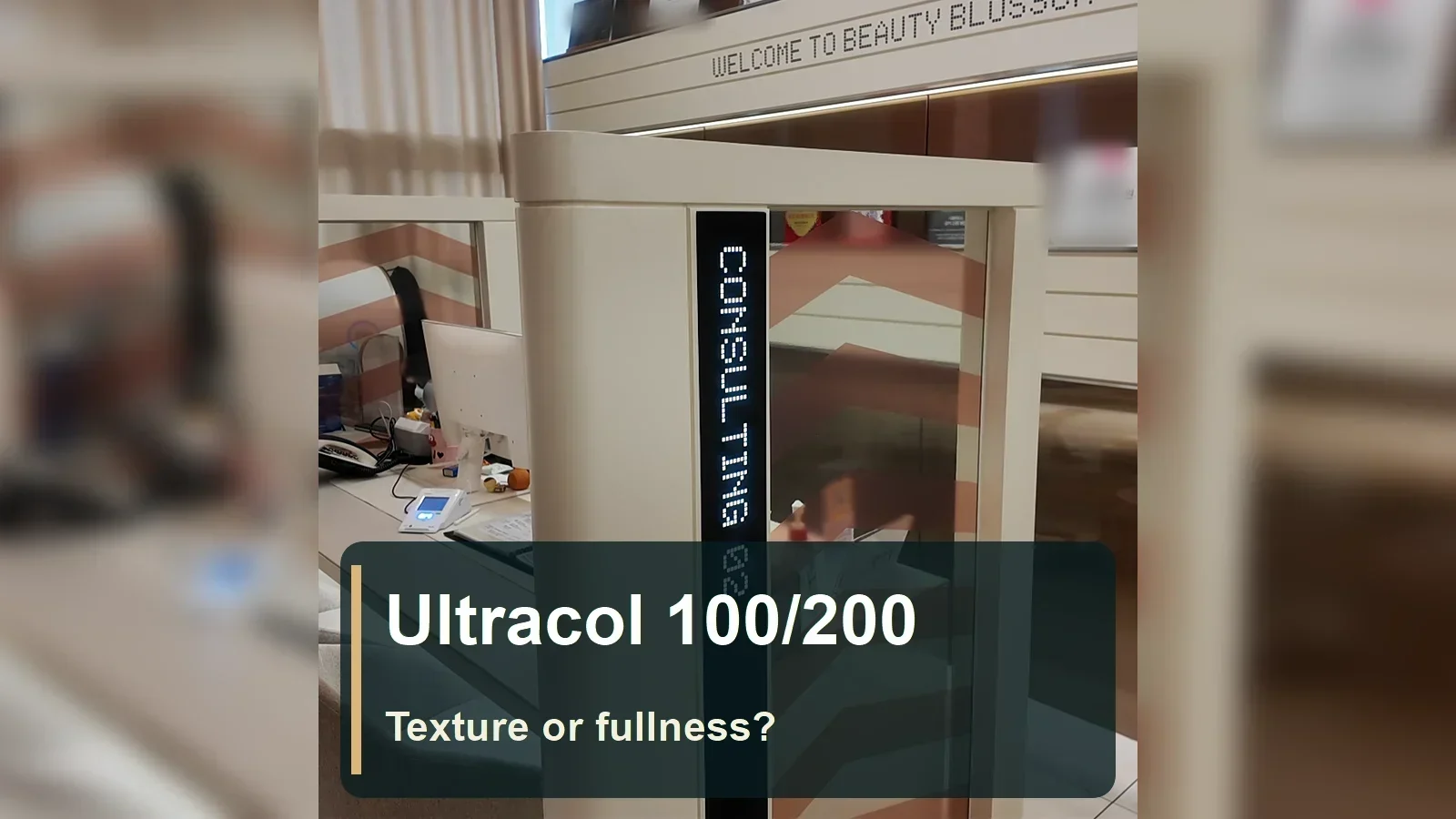
The numbers 100 and 200 look like a strength dial, so it is tempting to arrive at a consultation asking for one of them. The clinic’s own page describes the two Ultracol versions differently: by particle size and by the kind of concern each is discussed for. A smaller number is not presented as a milder version, and a larger one is not presented as the better choice.
A more useful preparation is to work out whether you are mainly bothered by surface texture, by lost fullness, or by both, and then let the clinician explain what fits.
Short answer: The clinic page describes Ultracol as an injectable with PDO particles intended to stimulate your own collagen over time. It presents 100 as having relatively small particles, discussed for skin texture, fine lines and the look of pores, and 200 as having larger particles, discussed for areas that have lost fullness and for deeper wrinkles. Which one, if either, suits you depends on your skin and an in-person consultation.
What do Ultracol 100 and 200 mean on the clinic page?
They are described by particle size and by the concerns they are discussed for. PDO stands for polydioxanone, a material the page says the body gradually breaks down. The page explains that the particles are intended to stimulate the body’s own collagen production over time.
The page also notes that its particle diagram shows relative sizes only. It does not represent the number of particles, their actual size or the amount injected. That is why a number alone cannot tell you what you will receive, and why the clinic says product selection depends on your skin and the consultation.
How do I describe texture compared with volume?
Separate what you see on the surface from what you feel is missing underneath. Texture might mean fine lines, a rough look in the light, or visible pores. Volume might mean a hollow, a flatter area or a softer outline that used to look fuller. Many people notice both, and they may not be in the same place on the face.
Try describing one area at a time: where it is, when it bothers you, and what you would like to look different. The clinic says it assesses which areas need texture improvement and which need volume before choosing a product and amount, so your description is the starting point of that assessment.
Which goal might lead to which question?
This table is a conversation aid, not a selection guide. The clinician may suggest something different, or advise not to treat.
| What you describe | What the page says it discusses | Question to ask |
|---|---|---|
| Rough look, fine lines or visible pores | Ultracol 100: relatively small particles, discussed for texture, fine lines and the look of pores | Is this the main concern, and is Ultracol the right route for it? |
| A flatter or less full area | Ultracol 200: larger particles, discussed for areas that lost fullness | Which area lacks fullness, and how would the amount be planned? |
| Deeper wrinkles | Ultracol 200 is also discussed for deeper wrinkles | What can reasonably be addressed, and what may need a different plan? |
| Both texture and fullness | The clinic says it assesses which areas need texture and which need volume | Would different areas be handled differently, and why? |
| Not sure what bothers you | Neither number is chosen from a menu | What would you look at in my skin to decide, including the option of not treating? |
What should I ask instead of “which number should I choose”?
Ask the clinician to explain the reasoning behind any proposal. A question framed around goals usually yields more information than a request for a particular number. You might ask:
- Which product is proposed, and why does it fit the area I described?
- Which parts of my face would not be treated?
- How is the amount decided, and will it be adjusted as we go?
- Will this be a single visit or a plan across several, and what would the review points be?
- When might any change be noticeable, and what is normal in the meantime?
- What are the possible side effects and what should I do if they appear?
Treatment time and how long any change lasts vary by area and by person, so confirm them directly with the clinic instead of relying on a general figure.
Which personal details should I share first?
Share anything that could change the product choice or the injection plan. That includes allergies, reactions to previous injectables or numbing products, earlier fillers, skin boosters, threads or laser treatments, and the dates of those treatments. Mention current medicines and supplements, any history of easy bruising, pregnancy or breastfeeding, cold sores, and any active rash, acne or infection in the area.
If an area is inflamed or unwell, the clinician may suggest waiting. A decision to postpone is part of safe planning.
What should I expect around comfort and aftercare?
Ask what is planned for comfort and how to look after the skin afterwards. The clinic page mentions that numbing cream is applied and that stinging or discomfort can occur, and that experiences differ. For aftercare it mentions avoiding alcohol and saunas, keeping the skin moisturised and protected from the sun, and that mild swelling may occur.
Those points are a general outline. Ask for the instructions that apply to your own plan, including what to do about makeup, exercise and an upcoming event.
Caution: Increasing pain, marked swelling, spreading redness, skin colour change, a hard or lumpy area, or any symptom that worries you should be reported to the clinic promptly. Breathing difficulty or a rapidly worsening allergic reaction requires emergency care.
Frequently asked questions
Is Ultracol 200 stronger than Ultracol 100?
The clinic page does not present them as a strength scale. It describes different particle sizes and different areas of concern, and it says the choice depends on your skin and consultation.
Can I decide on 100 or 200 before I visit?
You can prepare a view, but the decision belongs to the assessment. Describe your goals, and let the clinician explain whether one, the other or neither is appropriate.
Is Ultracol the same as other skin boosters?
No. The clinic lists Ultracol among several skin boosters with different materials. Ask what is in the product proposed for you and why it matches your goal.
Will Ultracol hurt?
The clinic page says numbing cream is applied and that some stinging or discomfort can occur. Sensation varies, so ask what comfort measures are planned.
Where can I discuss this in person?
Beauty Blossom Clinic is at Mediwon Medical Center, 66 Yanghwa-ro, Mapo-gu, Seoul. Reception is on the sixth floor, by Hapjeong Station Exit 3. Bring notes on where you see texture or lost fullness, your treatment history and your questions. View the location map; read the clinic’s treatment information; check notices; ask about booking; check current events; or visit the homepage. Check opening hours and event terms directly with the clinic.
Medical notice: This is general information, not an individual diagnosis or a promise of suitability or results. A clinician should review your history, alternatives, recovery and risks; responses vary among individuals.
Location
Beauty Blossom Clinic
Mediwon Medical Center, 66 Yanghwa-ro, Mapo-gu, Seoul, South Korea (reception: 6F)
Individual results may vary.
Back to Blog →