Why Localised Body Contouring Does Not Replace Weight Management
Reducing a small fat bulge and managing body weight have different goals. Learn how fat-cell size, local treatment and later weight changes fit together.
Published by Beauty Blossom
Localised body contouring does not replace weight management because it treats a limited area rather than overall body weight or obesity. A small change in a bulge is a different outcome from improving weight-related health. Understanding that distinction also explains why a treated area can change again if weight increases.
Start with the outcome you want
A wish to reduce a small pocket of fat is not the same as a wish to lose weight. Non-invasive fat-reduction devices are intended to address selected local fat deposits. They do not provide the health benefits associated with weight loss, and an improvement in outline is not evidence that a weight-related medical condition has been treated.
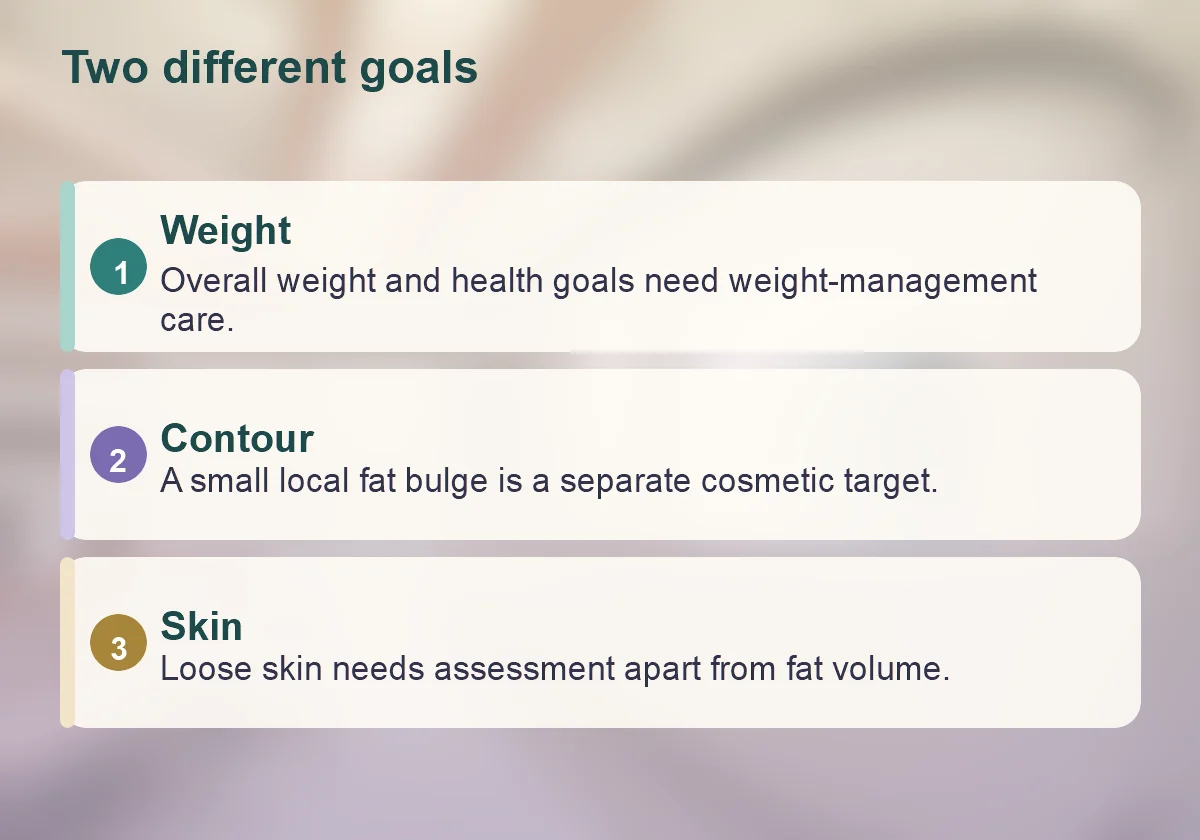
It helps to separate three questions: Do I want a change in overall weight, a change in one area's shape, or an improvement in loose skin? These goals can coexist, but measuring one does not establish progress in the others. The number on a scale cannot describe skin laxity, while a smoother outline cannot establish metabolic health.
Fat-cell size and fat-cell reduction are different
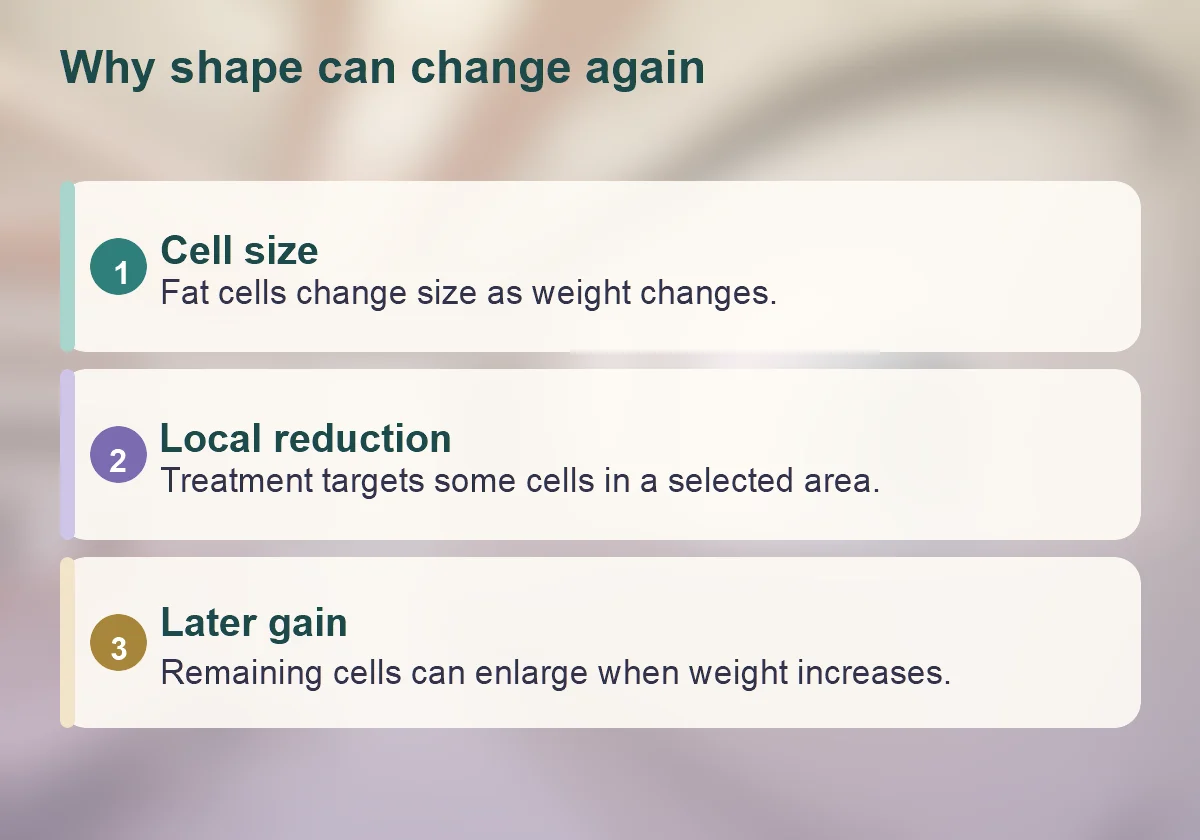
When weight rises or falls, fat cells change in size. Local fat reduction aims to reduce some fat cells in the selected area instead. Reducing some cells does not prevent the remaining cells from enlarging with later weight gain. It therefore does not make that area immune to future change.
| Process | What changes |
|---|---|
| Weight change | Fat cells can become smaller or larger. |
| Local fat reduction | Some targeted fat cells are reduced in a selected area. |
| Later weight gain | Remaining fat cells can enlarge and alter the contour. |
This is why maintaining a stable weight matters to expectations. A local result is not a substitute for ongoing weight management. Ageing and pregnancy can also affect body shape later, even when a treatment initially produces a visible difference.
Non-invasive does not describe one single method
Devices may use cold, heat or sound energy to affect targeted fat cells. Cryolipolysis uses cooling to damage targeted fat cells, while radiofrequency fat reduction uses heat; these are not interchangeable mechanisms. Changes develop gradually rather than as an immediate drop in body weight. The relevant question is what a particular device is designed to target, in which area, and whether the proposed change matches your concern.
Device-based non-invasive treatment is also distinct from an injection or liposuction. An injection introduces a substance; liposuction is an invasive procedure that removes fat. Their preparation, risks and recovery should not be borrowed from a description of a non-invasive device. Non-invasive fat reduction can produce subtler changes than liposuction.
Judge the contour without promising a health result
Consider the specific bulge and the condition of the skin over it. Loose skin is a separate issue, and reducing fat does not automatically address it. If laxity is substantial, the sequence or type of treatment may need to differ. A plan should explain the expected local change and the limits that remain.
Before proceeding, identify the exact method, relevant medical history, possible discomfort and complications, and the follow-up arrangements. Non-invasive does not mean risk-free. Ask which reactions are expected and which need medical review; do not assume that another device's safety or recovery information applies. Keep any plan for obesity or weight-related illness separate from the cosmetic goal.
Frequently asked questions
Can a smaller bulge mean that obesity has been treated?
No. A local contour change does not establish overall weight loss or the health benefits of obesity treatment.
Can the treated area become fuller again?
Yes. Remaining fat cells can enlarge if weight increases. Ageing and pregnancy can also change the contour.
Does fat reduction automatically tighten loose skin?
No. Skin laxity is a different target and needs its own assessment; the same plan may not suit both concerns.
Sources: AAD: Non-invasive fat removal; The Aesthetic Society: Nonsurgical fat reduction.
Questions before your visit?
For treatment enquiries and appointment requests, message us on WhatsApp with the treatment you are considering and your preferred visit date.
Individual results may vary.
Back to Blog →