Sweat or Body Odour: Which Target Does Sweat Botox Address?
Sweat volume and body odour are different concerns. Learn how normal sweat works, how everyday products differ, and why local botulinum toxin treatment is not permanent odour removal.
Published by Beauty Blossom
Botulinum toxin for sweating targets the amount of sweat produced in a treated area, not every cause of body odour. Wet clothing and an unwanted smell can happen together, but they are not the same measurement. Before choosing a product or procedure, separate the question ‘How wet does this area become?’ from ‘Has its smell changed?’ That distinction makes the purpose and limits of each option easier to understand.
Sweat has a normal job
Sweating helps regulate body temperature. Eccrine glands produce sweat that is normally odourless; sweating itself is not evidence of poor hygiene. Apocrine secretions, associated with areas such as the underarms, are also initially odourless. Calling either normal secretion inherently foul-smelling skips an important part of how body odour develops.
Body odour commonly arises when skin bacteria break down sweat, sebum and shed skin material. The amount of moisture and the intensity of smell therefore do not have a simple one-to-one relationship. A wet shirt tells you about moisture, but it does not identify the source of an odour or explain why that odour has changed.
Choose by purpose, not the label's freshness claim
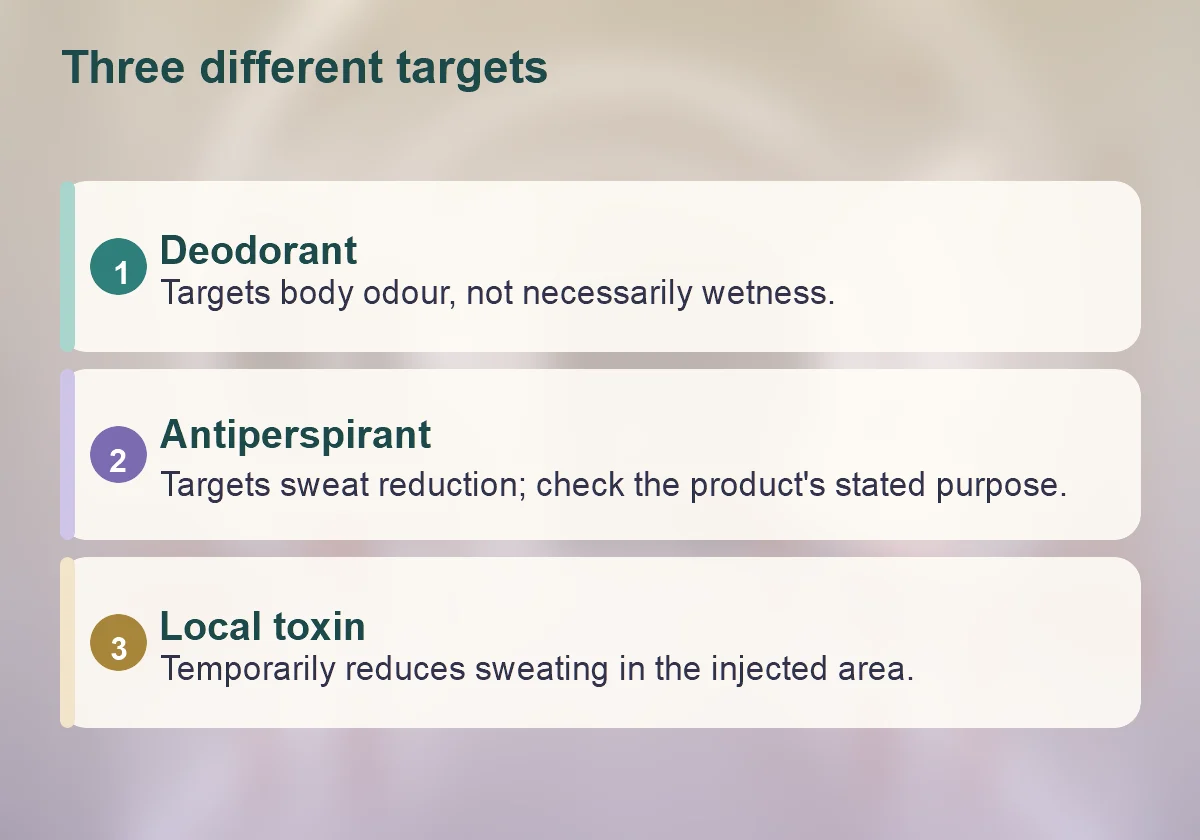
Deodorants aim to control odour. Antiperspirants aim to reduce sweating. Some products combine these roles, so read the stated purpose and directions rather than treating all underarm products as interchangeable. If wetness is the main difficulty, an odour-only product is not addressing the same target.
| Option | Main target |
|---|---|
| Deodorant | Body odour |
| Antiperspirant | Sweat reduction |
| Local botulinum toxin | Temporary reduction of sweating in the injected area |
Keep your observations equally specific: note wet patches separately from odour, and record what product you used. This is more informative than calling everything ‘sweat trouble’. It also avoids judging a sweat-reduction treatment solely by a smell that may have another explanation.
How the nerve signal is reduced
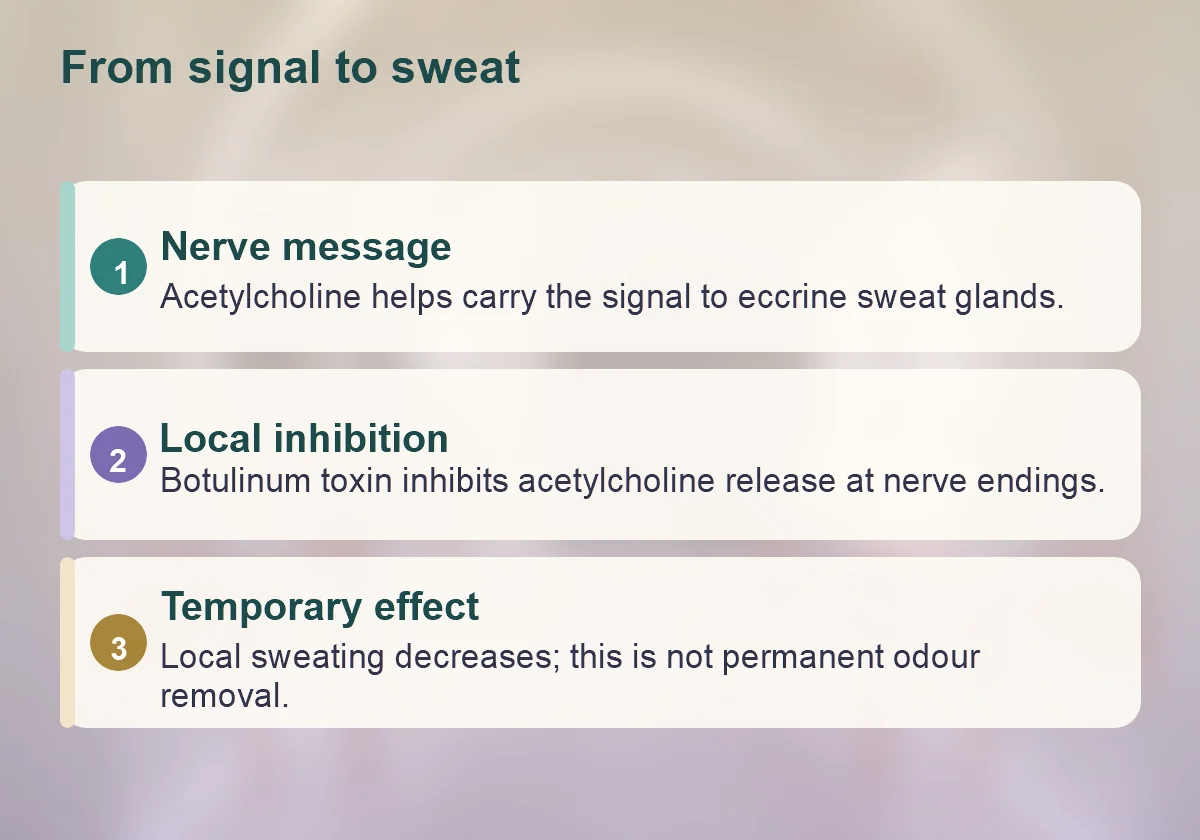
Botulinum toxin inhibits the release of acetylcholine from nerve endings. For local excessive sweating, injections into the skin target signalling to eccrine sweat glands, temporarily reducing sweat production in that area. It is a local pharmacological action, not a removal of the body's need to regulate temperature.
The distinction matters when setting a goal. Less underarm wetness is a sweat-related goal; permanently eliminating all body odour is a different and unsupported promise. Local injections also do not remove the cause of generalised or night-time sweating. Their effects are temporary, and neither a fixed duration nor an identical response should be assumed.
Follow changes, not just dryness
Record where sweating happens, when it started, whether it occurs during sleep, and how it affects clothing or daily tasks. Include medicines and any new or persistent odour. Odour can be associated with infection, foods, medicines or metabolic problems, so a changing smell deserves its own assessment rather than an automatic increase in sweat treatment.
Injections can cause pain, bruising, muscle discomfort or weakness. Discuss the treatment area's suitability and a follow-up plan before proceeding. Persistent sweating, night sweats or symptoms affecting everyday life call for assessment of the pattern and possible causes. Bring a medicine list; do not stop prescribed treatment on your own.
Frequently asked questions
Does more sweat always mean more body odour?
No. Normal eccrine and apocrine secretions are initially odourless. Bacterial breakdown and other contributors affect odour, so wetness and smell should be tracked separately.
Is deodorant the same as antiperspirant?
No. Deodorant targets odour; antiperspirant targets sweat reduction. Check whether a product offers one role or both.
Does sweat Botox permanently remove odour?
No. It temporarily reduces local sweat through nerve-signal inhibition. It cannot guarantee permanent odour removal or solve the underlying causes of whole-body sweating.
Sources: AAD: hyperhidrosis treatment; DermNet: body odour; DermNet: botulinum toxin; NHS: excessive sweating.
Questions before your visit?
For treatment enquiries and appointment requests, message us on WhatsApp with the treatment you are considering and your preferred visit date.
Individual results may vary.
Back to Blog →