A Spot in a Photo Is Not a Diagnosis: What to Ask Before CO2 Laser Mole Removal
A photo can describe a spot but cannot assess it. See which assessment and wound-covering questions to bring to a CO2 laser mole removal visit at Beauty Blossom.
Published by Beauty Blossom
A phone photo is a handy way to point at a spot and say “this one”. It is not a way to learn what the spot is. Lighting, angle, shadow and camera processing all change how a mark looks, and one picture can seem harmless on Monday and worrying on Tuesday. This article is about the part that happens in the visit: what should be looked at first, and what you should be told about covering the area afterwards. It draws on the clinic’s Mole Removal page and says nothing about any particular spot.
Short answer: The clinic’s Mole Removal page describes CO2 laser removal and says the laser is chosen according to the size and depth of the mole. A photo can help you describe where a spot is and when you noticed it, but whether the spot is suitable for laser removal is for the examining clinician to judge in person. Before treatment, ask how the spot will be assessed, what the plan is, and how the treated area will be covered and looked after.
What the clinic’s page says about mole removal
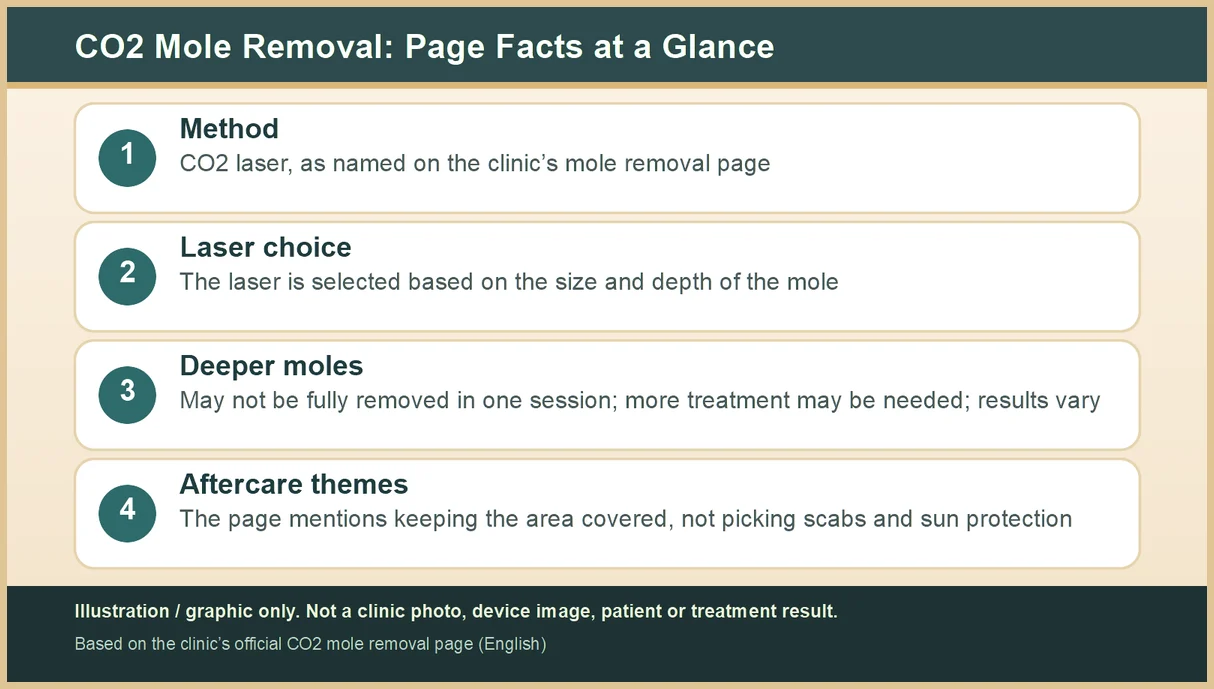
The page describes a laser treatment using a CO2 laser and says consultations are available. It states that the laser is selected based on a mole’s size and depth, and it separates shallower spots from deeper ones: a shallower one may be dealt with in a single visit, while a deeper one may not be fully removed at once and may need further visits. It adds that results vary by person.
How a treated spot heals depends on the person and the area; ask what is realistic for yours.
Why a photo cannot answer the real question
- A flat image hides depth, texture and what lies under the surface
- Light, angle, zoom and filters can all change colour and edges
- A single picture cannot show whether a spot has changed over time
- A photo cannot tell a clinician what you feel, what you have noticed, or what your skin history is
What a photo can do is help you describe: where the spot is, roughly when you first noticed it, and whether anything about it seems different. Whether a spot should be examined more closely, treated with a laser, or handled some other way is a decision for a clinician who sees it in person. If a spot has changed and it worries you, that is a reason to ask someone qualified to look, not to rely on a picture.
What belongs in the assessment part of the visit
Questions about the spot itself
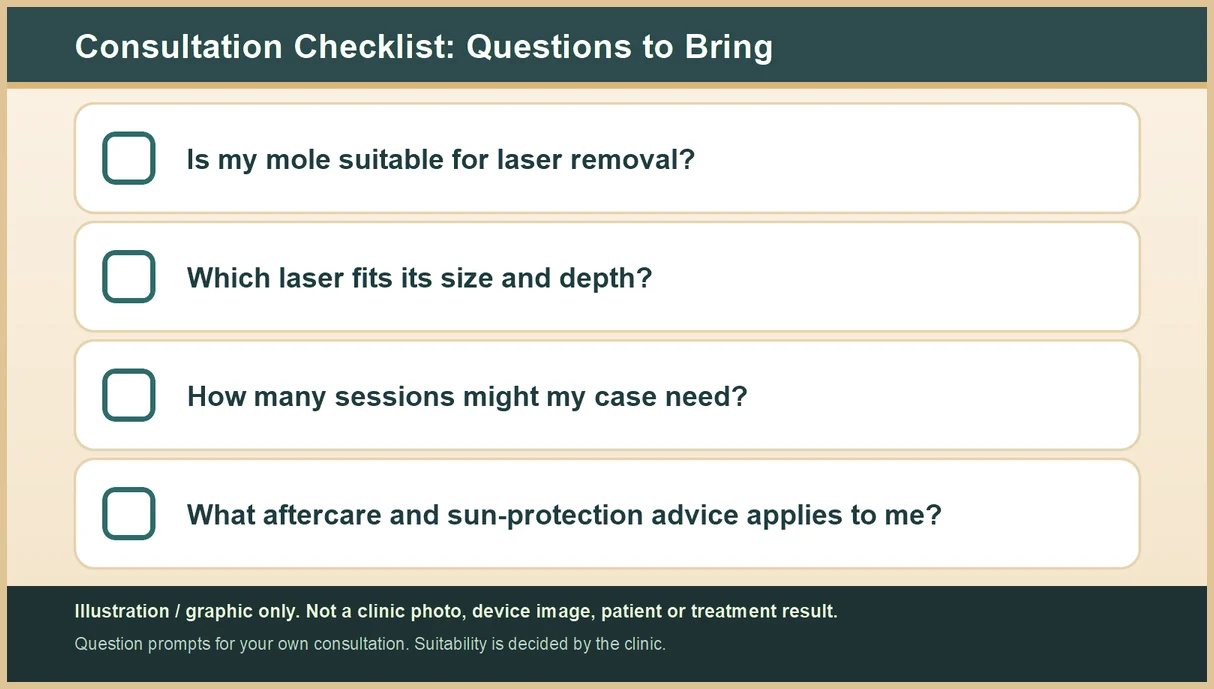
- Who will examine the spot, and how will it be looked at?
- Is it suitable for laser removal, or does it need a different approach or a closer look first?
- What do you need me to tell you, such as how long it has been there and whether it has changed?
- If you decide not to treat it today, what would you suggest I do next?
Questions about the laser and the plan
- The page says the laser is chosen by size and depth. Which laser would you use on this spot, and why?
- Would you expect one visit or more than one for my spot?
- If I have several spots, would you treat them all, or decide one by one?
- What realistic marks, scars or colour changes should I be prepared for?
Questions about covering the treated area
The page’s aftercare note talks about keeping the treated area covered, leaving scabs alone so they fall off naturally, and protecting the area from the sun to help guard against pigmentation. The exact covering, how long to keep it and how to handle it are things the clinician should explain for your own wound, and the wording on the clinic’s pages is general. It is worth asking:
- What will cover the area right after treatment, and what will I be given to use at home?
- How should I manage washing, sweat, makeup or clothing rubbing on it?
- What does a normal healing area look like, and what should make me call the clinic?
- Who do I contact, and how, if the covering comes off or the area looks different to what you described?
- What sun protection do you want me to use on that area?
At a glance: what the page mentions and what to ask
| Topic | What the clinic’s page mentions | Worth asking |
|---|---|---|
| Method | CO2 laser, with the laser chosen by the mole’s size and depth | Which laser for this spot, and why? |
| Assessment | Consultations are offered; the page gives no detail about how a spot is examined | Who examines it, what do they look at, and is laser removal appropriate? |
| Number of visits | Shallower spots may be single-visit; deeper ones may need more; results vary | What do you expect for mine, and how will you know? |
| Covering the area | The treated area is kept covered; scabs should not be picked | What covering do I get, how do I manage it, and when do I call? |
| Sun protection | Described as important for helping prevent pigmentation | What routine do you want me to follow for this area? |
| Outcome | Results vary by individual | What marks or colour changes are possible, and how would you handle them? |
Caution: Laser removal affects the skin and leaves a wound that needs care. Please do not scratch, pick or peel a treated area. Follow the written and spoken aftercare you receive personally, and contact the clinic if the area looks or feels different from what you were told to expect. This article cannot tell you whether a spot is suitable for removal.
Frequently asked questions
Can I send a photo and be told what a spot is?
No. A photo can help you describe a spot, but it cannot replace being examined. Ask the clinician how they will assess it in person.
Does laser removal mean the spot has been checked?
Not necessarily. Removing a spot and assessing a spot are different steps. Ask the clinician what assessment comes before treatment and what happens if they would rather not treat it.
Will I have a scar or colour change?
The clinic’s page says results vary by individual, and this article cannot predict your outcome. Ask what is realistic for the size, depth and location of your spot.
Can a mole need more than one visit?
The page says deeper ones may need further treatment while shallower ones may be done in one visit. Ask which you are likely to be and what that would mean.
Can I pick the crust or scab that forms?
The page advises against it and says to let scabs fall off naturally. Follow the specific instructions your clinician gives you.
What should I bring to the visit?
- The photos you have, and a note of where the spot is and when you first noticed it
- Anything you have noticed about it changing
- Your skin history and any medicines you use, so you can mention them
- Your list of questions from this article
Visit Beauty Blossom Clinic in Seoul
Beauty Blossom Clinic is at Mediwon Medical Center, 66 Yanghwa-ro, Mapo-gu, Seoul, on the sixth and eighth floors. Reception is on the sixth floor, close to Hapjeong Station Exit 3. For current opening hours, including public holidays, please check the map and directions page or contact the clinic directly before you travel.
- See the map and directions
- Read the clinic’s Mole Removal page
- Read clinic notices
- Request a consultation (booking page)
- View the events page (this article quotes no price and does not guarantee any offer)
- Return to the clinic homepage
This article provides general information, not an individual diagnosis or treatment plan. Suitability, treatment experience, recovery and results differ. Discuss potential benefits, limitations and risks with a qualified treating clinician.
Location
Beauty Blossom Clinic
Mediwon Medical Center, 66 Yanghwa-ro, Mapo-gu, Seoul, South Korea (reception: 6F)
Individual results may vary.
Back to Blog →