Line-Based vs Point-Based HIFU: A Plain-Language Vocabulary Guide
What do “line-based” and “point-based” HIFU mean? A plain vocabulary guide based on the clinic’s LinearZ page, with no claim that either pattern is better.
Published by Beauty Blossom
If you have read about HIFU lifting, you have probably seen the words “point”, “dot” and “line” used as if everyone already knew what they meant. They describe how focused ultrasound energy is delivered, and they are easy to mix up with words about depth, area and results. This guide explains the vocabulary in plain language, using the clinic’s LinearZ page as the reference. It does not rank one pattern above the other.
Short answer: HIFU stands for high-intensity focused ultrasound. “Point-based” (or dot) describes energy delivered as separate spots, and “line-based” (or linear) describes energy delivered along a continuous line. The clinic’s LinearZ page says the device can deliver both types. Which one suits you, and in which area, is a decision for the clinician at a consultation. This article makes no claim that either pattern gives a better outcome.
What does HIFU mean?
On its LinearZ page the clinic describes HIFU as a lifting treatment that sends ultrasound energy into deeper layers of the skin. “Focused” means the energy is concentrated at chosen locations beneath the surface rather than spread evenly across it. The vocabulary below is about how that focused energy is arranged.
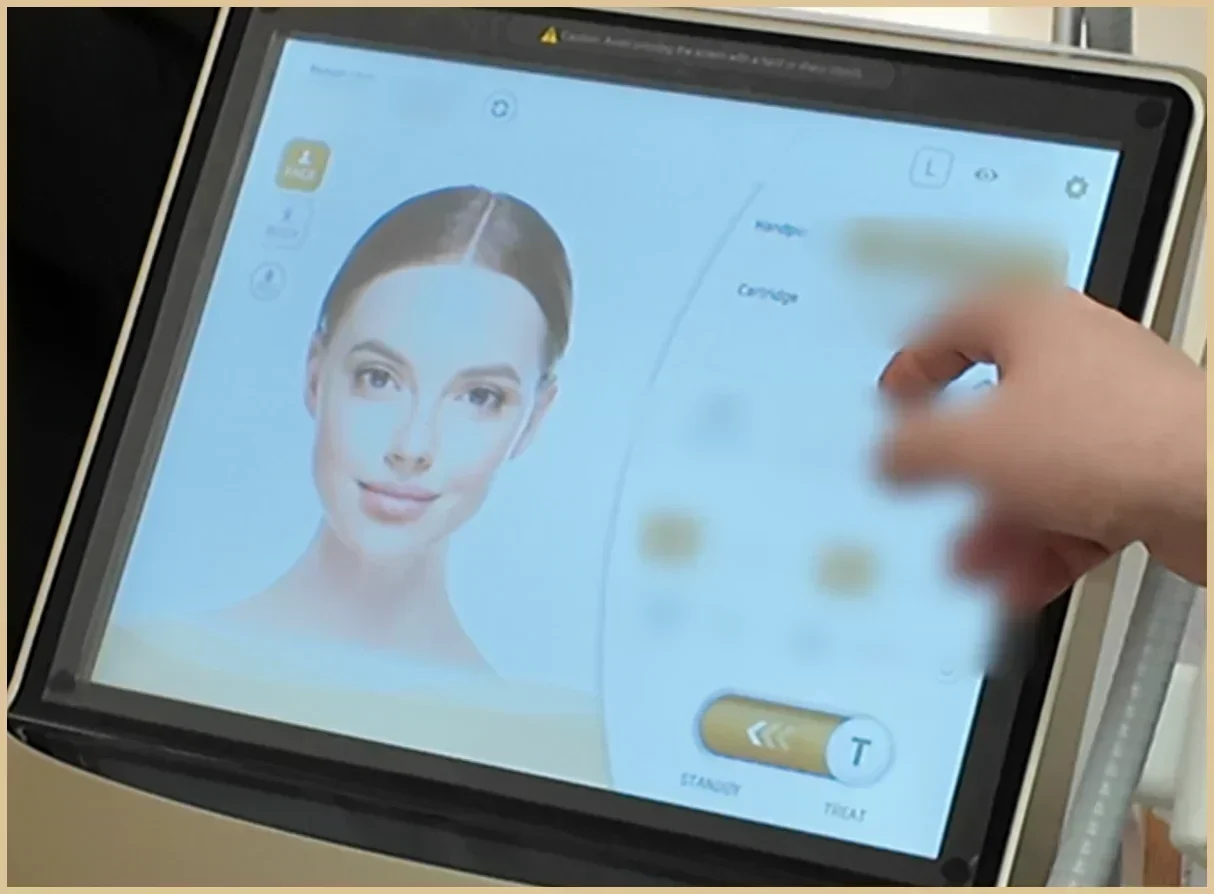
Point-based and line-based: the words, not a verdict
In a point-based (dot) pattern, each delivery of energy lands at a separate spot, and the treatment builds up from many spots. In a line-based (linear) pattern, the energy is delivered along a continuous line instead. The clinic’s page uses the names “Dot Type” and “Linear Type” and says LinearZ offers both.
The clinic’s page presents the two patterns side by side as options within one device. This article uses those names only as vocabulary and draws no comparison between them, because a pattern name does not tell you what will happen in your case.
Point-based and line-based, side by side (wording only)
- Mode: the pattern setting on the device, here linear or dot.
- Pass: one run of the handpiece over an area.
| Aspect | Point-based (dot) | Line-based (linear) |
|---|---|---|
| How the energy is arranged | Separate spots | A continuous line |
| Name on the clinic’s page | “Dot Type” | “Linear Type” |
| Offered by LinearZ, per the clinic | Described as one of two types | Described as one of two types |
| What the name alone settles | Only how the energy is arranged | Only how the energy is arranged |
| Still decided by the clinician | Area, depth, energy level, number of passes, comfort measures | The same list |
| What it implies about outcome | Nothing | Nothing |
Why the pattern is only one part of the plan
Pattern is one setting among several. A clinician also considers the area being treated, the depth to be targeted, the energy level and how the treatment fits with your history and goals. Because those choices interact, comparing “line versus point” on its own can be misleading.
If you are looking for how depth and treatment areas are planned, that is a separate topic, and this article does not cover it.
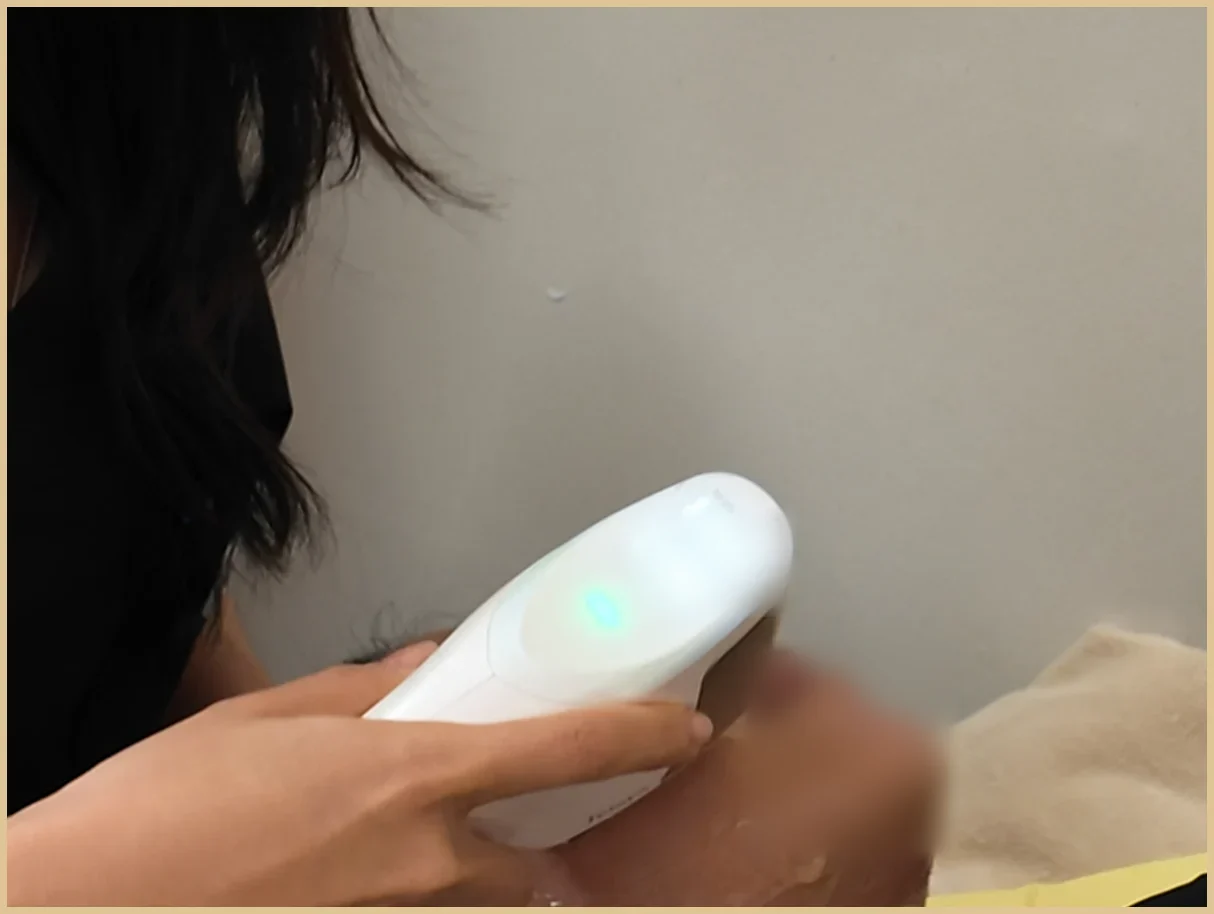
Questions to ask at a consultation
- Which pattern or mode do you propose for me, and what is the reason?
- Would the pattern differ from one area to another?
- How does the pattern relate to the depth, energy level and number of passes you would choose?
- How would you adjust if I feel discomfort during the session?
- What aftercare would you give me, and when should I contact the clinic?
Caution: Energy-based treatments, including ultrasound, can cause reactions. Tell the clinic about your medical history, medicines, recent procedures and anything unusual you notice afterwards. This article does not predict how your skin or face will respond, and it cannot determine whether LinearZ is suitable for you.
Frequently asked questions
Is line-based HIFU better than point-based HIFU?
This article does not say so. The words describe how energy is delivered. Which approach fits you depends on your clinician’s assessment and plan.
Does LinearZ offer both patterns?
The clinic’s LinearZ page describes a Linear type and a Dot type. Ask the clinician which would be used for you, if any.
What do “mode” and “pass” mean?
A mode is the pattern setting on the device, such as linear or dot. A pass is one run of the handpiece over an area. Ask how many of each your plan involves.
If a clinic says “line-based”, what should I ask next?
Ask which areas it would be used on, how it ties in with depth and energy choices, and why it was chosen for you. The pattern name alone does not answer those points.
Can I choose the pattern myself?
You can state your goals and preferences, but the plan is made with the clinician after an assessment. Nobody can promise a specific setting in advance.
Visit Beauty Blossom Clinic in Seoul
Beauty Blossom Clinic is at Mediwon Medical Center, 66 Yanghwa-ro, Mapo-gu, Seoul, on the sixth and eighth floors. Reception is on the sixth floor, close to Hapjeong Station Exit 3. Opening hours can change, so please check the current hours through the map page or by contacting the clinic before you visit.
- See the map and directions
- Read the clinic’s LinearZ page
- Read clinic notices
- Request a consultation (booking page)
- View the events page (this article quotes no price and does not guarantee any offer)
- Return to the clinic homepage
This article provides general information, not an individual diagnosis or treatment plan. Suitability, treatment experience, recovery and results differ. Discuss potential benefits, limitations and risks with a qualified treating clinician.
Location
Beauty Blossom Clinic
Mediwon Medical Center, 66 Yanghwa-ro, Mapo-gu, Seoul, South Korea (reception: 6F)
Individual results may vary.
Back to Blog →