Skincare After Skin Boosters: A Gentle Routine and Warning Signs
Gentle cleansing, a plain moisturizer and sunscreen keep the skin surface comfortable, but they do not do what an injection does. Here is how to keep a routine simple and what to ask your clinic about the treated skin.
Published by Beauty Blossom
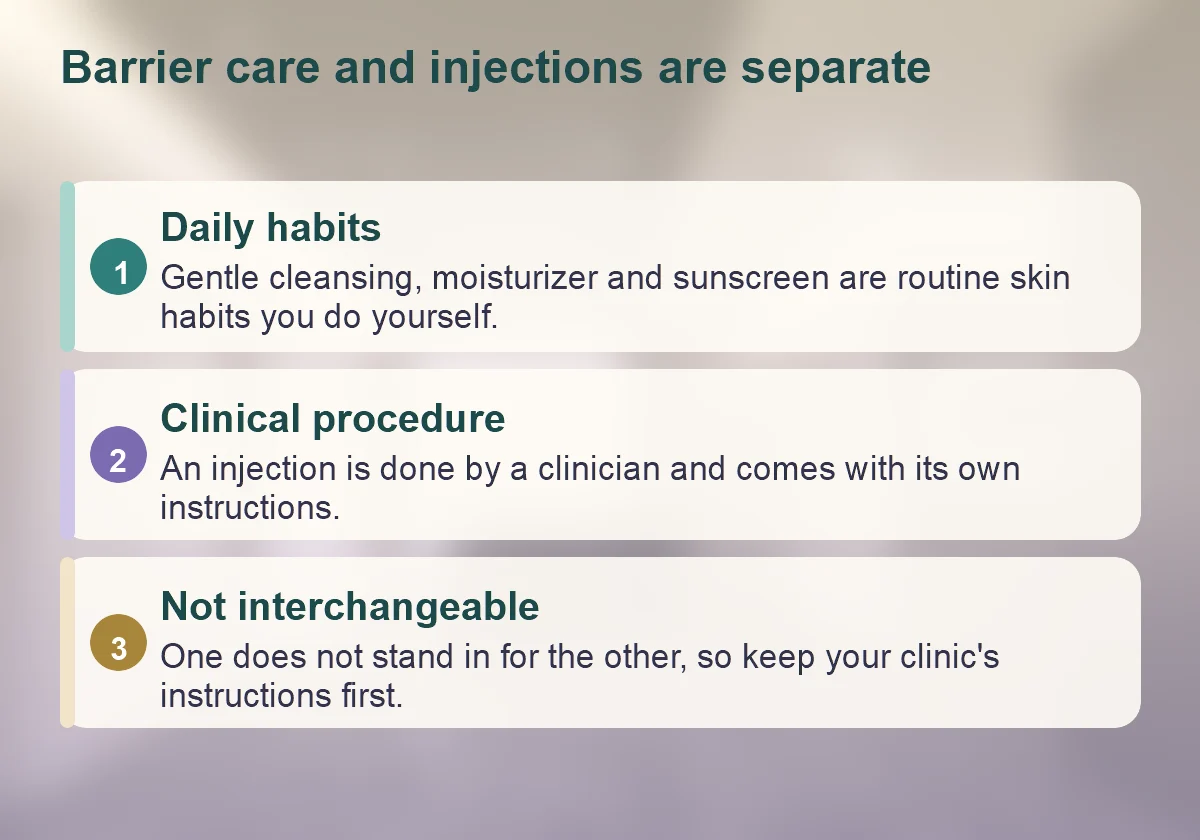
A moisturizer and a skin-booster injection are not the same thing. A moisturizer sits on the surface, adds moisture and slows water loss. A skin booster is a clinic procedure, and its product, plan and aftercare come from that clinic. So for the treated skin, your clinic's instructions come first. General barrier habits are for keeping the rest of your skin comfortable, not for copying or boosting what an injection does.
Barrier care and injections are different things
| Question | Daily barrier care | Skin-booster injection |
|---|---|---|
| What it is | Habits you do yourself: cleansing, moisturizing, sun protection | A procedure done by a clinician, with the clinic's own instructions |
| What it does | Adds moisture to the surface, slows water loss, limits irritation | Depends on the product and plan your clinic uses; ask them |
| What not to assume | That it gives the same effect as an injection | That home habits can override the clinic's instructions |
Treated skin first: tiny marks and what to leave alone
Injection sites can show small puncture marks, redness or bumps. Before you leave, ask when you can wash the area, put on makeup, apply sunscreen and restart any active products, and get the answers in writing if you can.
- Do not scrub, pick or press on the marks, and do not start a new product on them.
- If a spot is open, bleeding, crusted or oozing, keep moisturizer, makeup and other routine products off it and ask the clinic for wound instructions.
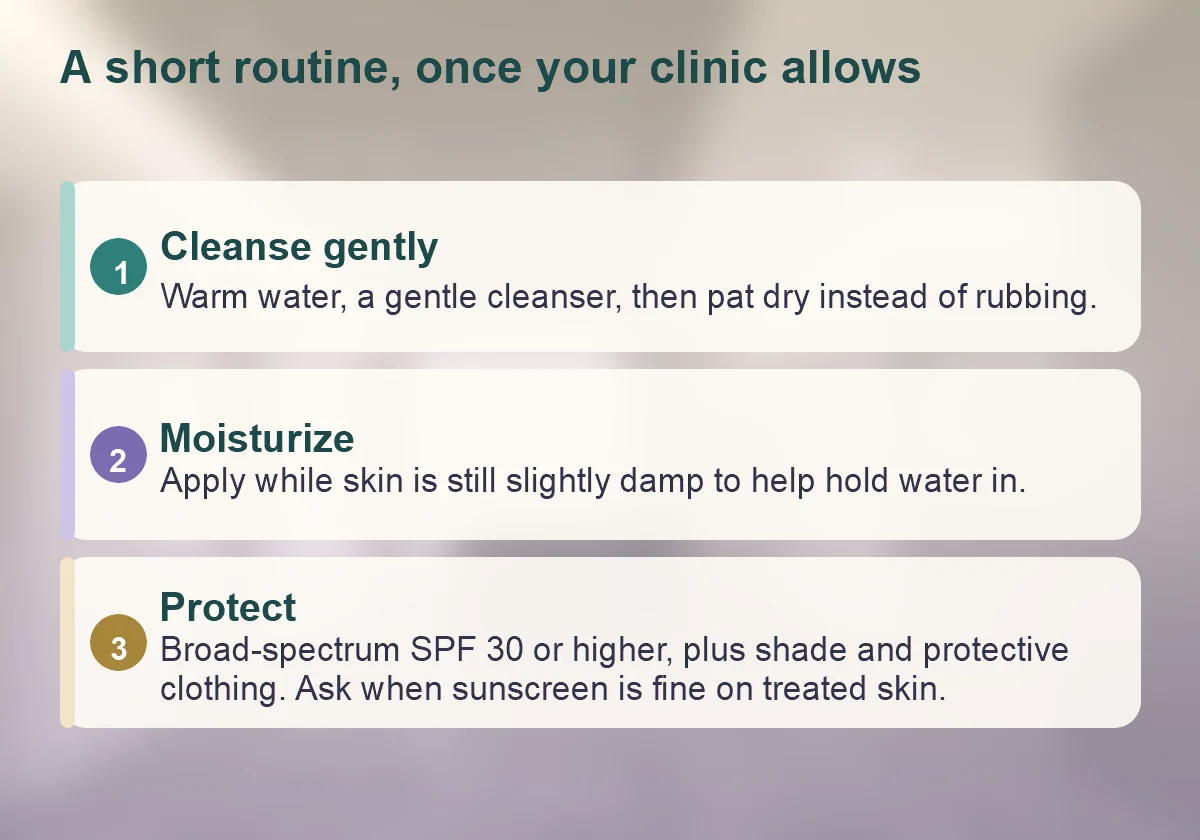
A short routine for everyday skin: cleanse, moisturize, protect
These are general habits for dry or sensitive skin, not an injection protocol. Use them on treated spots only once your clinic's instructions allow.
- Cleanse gently. Use a gentle cleanser with little lather and warm rather than hot water. Keep showers to five to ten minutes and pat skin dry instead of rubbing.
- Moisturize while skin is damp. Applied soon after washing, moisturizer helps trap water in the skin.
- Protect from the sun. Use a broad-spectrum, water-resistant sunscreen of SPF 30 or higher, plus shade and protective clothing. Ask when sunscreen is fine on the treated area, and use shade and a hat until then.
Keep it to these three steps unless your clinician says otherwise. Every extra product is another possible irritant and makes it harder to tell what caused a reaction.
Moisturizer types compared
A gel is usually water-based and light. A lotion sits in the middle. A cream is thicker with more oil, so it is more hydrating. An ointment is the thickest and works best on very dry skin.
- Dry skin: start with a cream or ointment rather than a lotion.
- Oily skin: a lighter gel, or skipping moisturizer, since too much can clog pores.
- Combination skin: moisturize the dry areas and skip the oily centre of the face.
Look for products labelled fragrance-free. "Unscented" is different: those products can contain chemicals that mask odours, and these can irritate sensitive skin.
What to leave out while skin is irritated
Alcohol, fragrance (including deodorant soaps), retinoids and alpha-hydroxy acids are common irritants for dry, sensitive skin, and exfoliating dry, peeling skin strips away more moisture. Add any new product on its own so you know the cause if skin reacts. If a doctor prescribed a retinoid or any other medicine, do not stop or restart it on your own. Ask the prescriber, and tell the clinic doing the injection what you use.
When to get it checked
- Skin around a mark that is red or sore, feels hot and swollen, green or yellow pus, or you feel unwell or have a fever: contact the clinic or a doctor right away.
- Burning or stinging after a product, or dryness that is painful, cracked or bleeding: stop adding products and have a doctor look at it.
- Sudden swelling of the lips, mouth, tongue or throat, trouble breathing, a tight throat or trouble swallowing, sudden loss of vision or severe eye pain: get emergency medical care immediately.
- New blurred or double vision: get urgent medical care the same day.
FAQ
Can a rich moisturizer replace a skin booster?
No. A moisturizer works on the skin's surface, while an injection is a clinic procedure with its own effects and instructions.
Is a longer routine safer?
No. Extra steps add chances for irritation.
Does "natural" mean gentle?
No. "All natural" does not mean hypoallergenic.
Sources
- American Academy of Dermatology: Dermatologists' top tips for relieving dry skin
- American Academy of Dermatology: How to pick a moisturizer
- Guy's and St Thomas' NHS Foundation Trust: Surgical wounds and preventing infections (general wound warning signs)
- NHS: Anaphylaxis (general emergency signs)
- NHS: Vision loss (general emergency guidance)
Clinic information and contact
For treatment details or appointment enquiries, use the clinic's official channels.
Location
Beauty Blossom Clinic
66 Yanghwa-ro, Mapo-gu, Seoul, Republic of Korea (6th and 8th floors)
Individual results may vary.
Back to Blog →