Upper-Arm ONDA in Seoul: How Is the Area Mapped?
Upper-arm ONDA mapping compares arm positions and separates fullness from skin laxity before defining a treatment boundary.
Published by Beauty Blossom · Updated
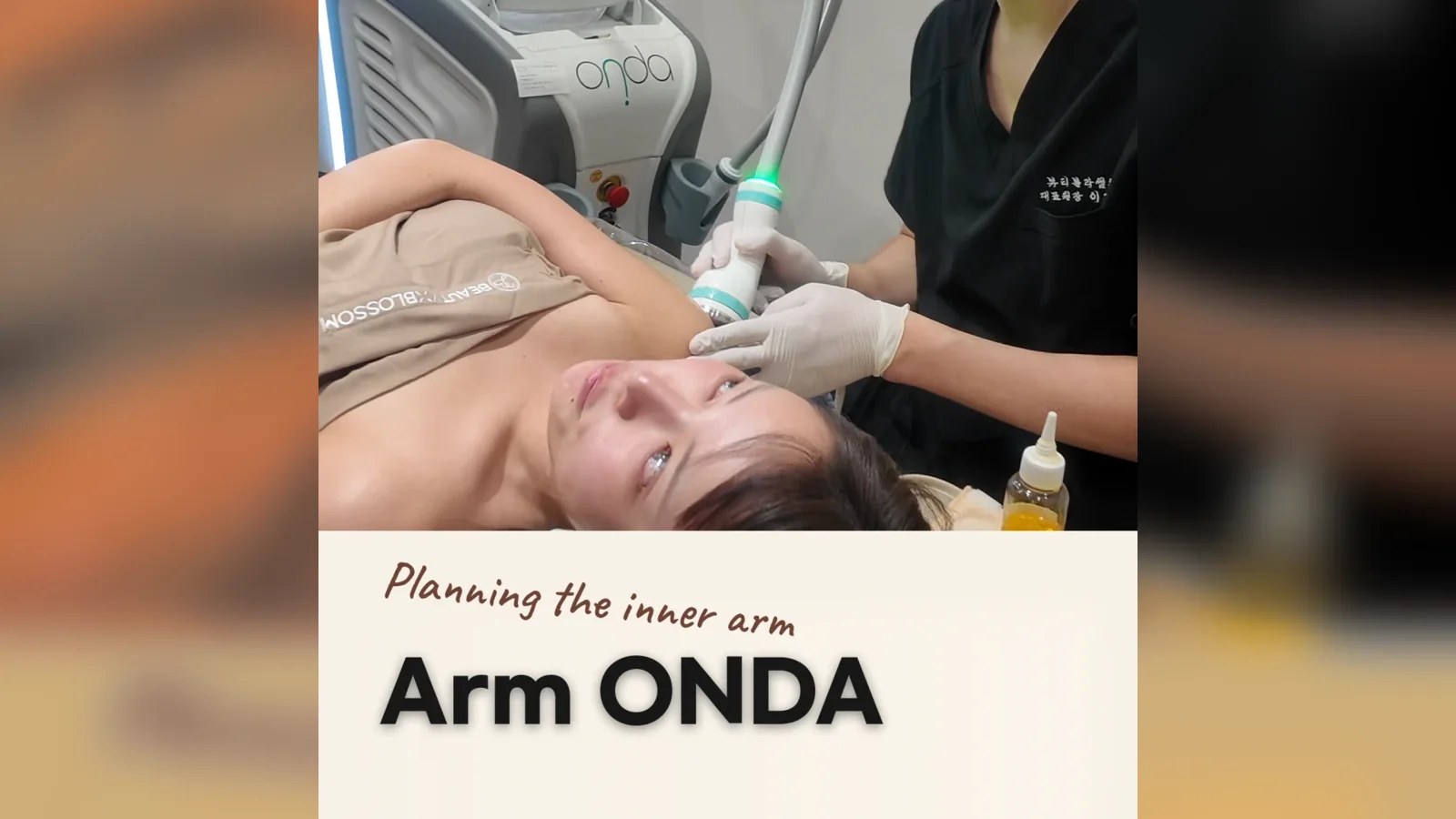
Short answer: Mapping upper-arm ONDA begins by comparing the inner and back surfaces of the arm in different positions, then discussing whether the concern is fullness, loose skin or both. The treatment boundary and handpiece choice require an in-person assessment. Neither a photograph nor a pinch at home can identify the tissue layer or predict a contour change.
An upper arm can look different when it is resting, raised overhead or folded across the chest. A soft area near the back of the arm and fine, hanging skin closer to the underarm may call for different conversations. At Beauty Blossom Clinic in Seoul, the published body ONDA information lists the upper arm as a possible treatment area, not a universal coverage pattern.
What does an upper-arm map include?
Mapping means identifying your concern, examining the tissue and defining where a device might reasonably be used before treatment starts. Point to the exact area that bothers you. The clinician may compare the arm relaxed and raised, and may check where a fold or underarm crease begins. That visible edge is not automatically the appropriate edge for energy delivery.
The arm’s shape changes with position. Raising it can expose the inner surface; folding it across the chest presents the back and inner arm differently. This is why a marked area on a single photograph should not be treated as a fixed plan. Ask which surfaces the clinician is assessing and which areas would be excluded.
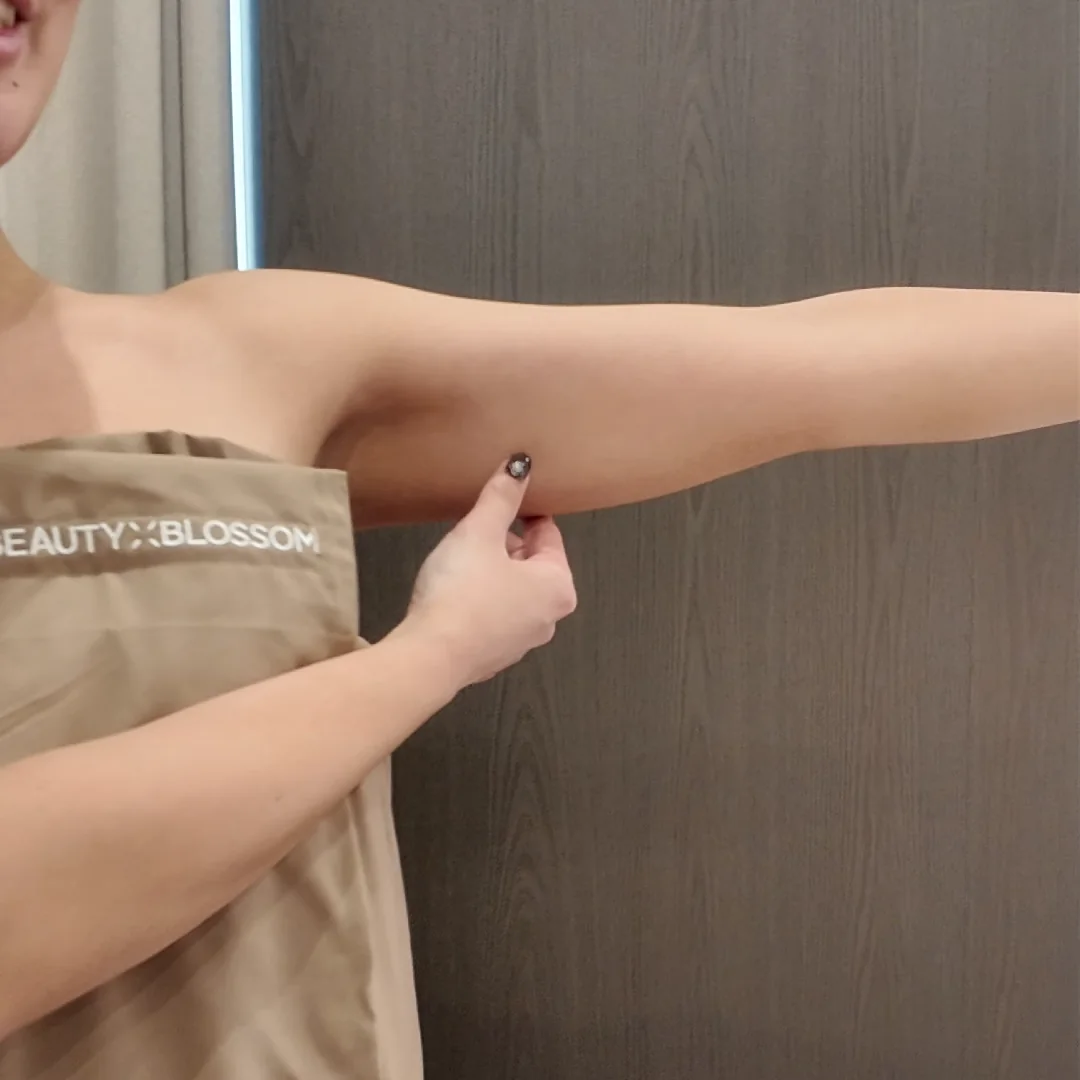
Separate fullness from skin laxity
A thicker, soft fold may suggest a different concern from thin, finely creased or hanging skin. Both can be present. A simple pinch is a conversation aid, not a way to measure the fat layer or decide which handpiece should be used. Significant loose skin may have limits that an energy-based treatment cannot overcome.
ONDA uses 2.45 GHz microwave energy, called Coolwaves in the clinic’s information, and includes contact cooling. The clinic describes body-area use and handpieces with different depth aims. Those device details do not establish that your particular arm needs one handpiece, a certain number of passes or a particular amount of circumference change.
Upper-arm mapping checklist
- Which part of the arm concerns me when relaxed, raised and folded, and does that concern change with position?
- Is the discussion primarily about fullness, skin laxity or both, and what can this device realistically address?
- Where would the treatment boundary stop near the underarm, and why?
- Which handpiece is being considered for my examined tissue and what comfort measures are available?
- What aftercare and follow-up would apply, and what changes should prompt a call to the clinic?
The clinic describes a deeper body-oriented handpiece and a more superficial focused one; this is a device description, not a home selection guide. It also presents differing timing and interval information across its pages, so do not rely on a fixed session schedule from an overview. Ask for the current plan directly at your appointment.
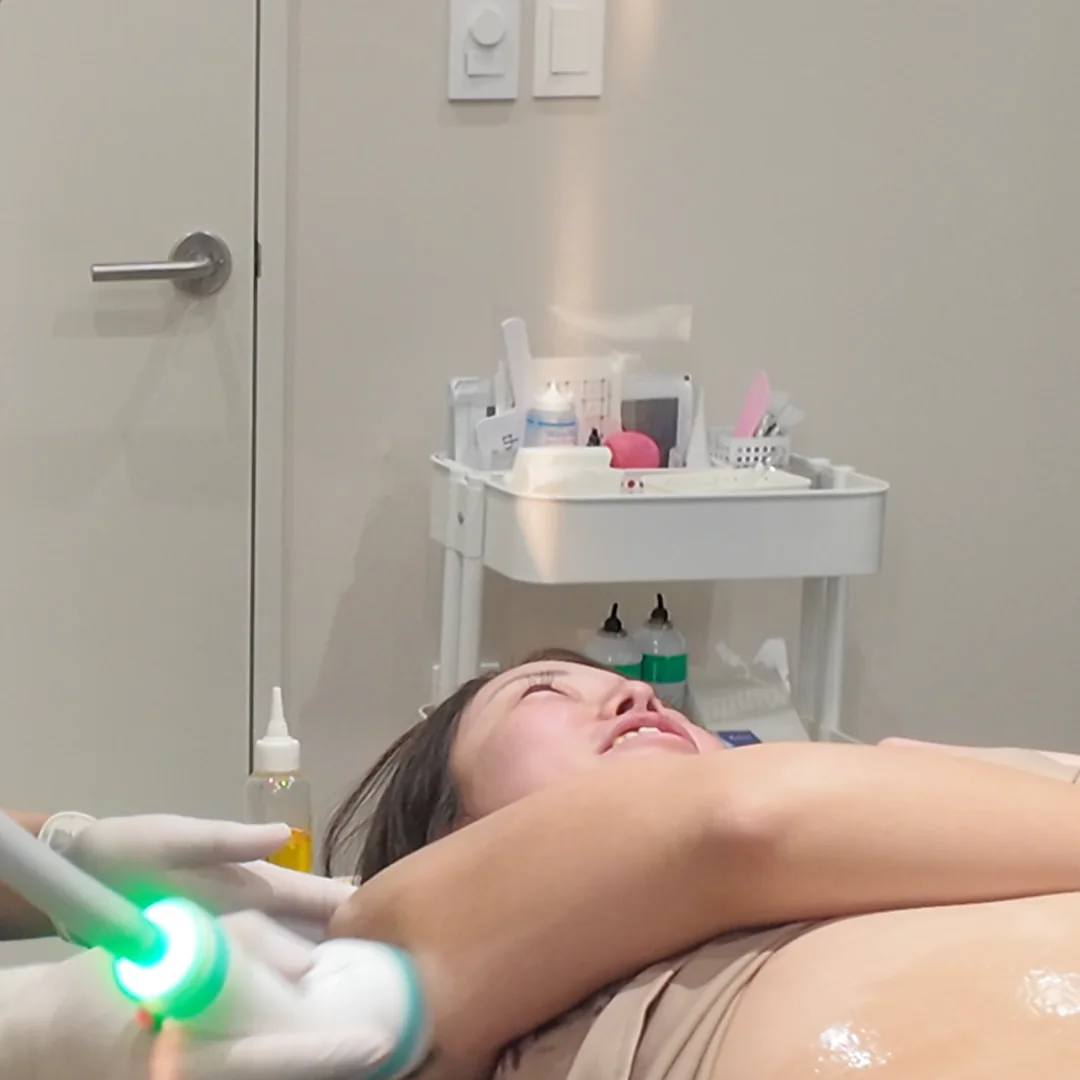
During and after a selected treatment area
Once an area is agreed, the clinician uses the handpiece against the selected skin. Contact cooling is part of the system, but warmth or discomfort can vary. Tell the operator if a section feels unexpectedly uncomfortable. A change in arm position may reveal a different edge of the planned zone, which should be reassessed rather than assumed.
Caution: Tell the clinician about relevant medical conditions, prior procedures in the area and unusual skin sensitivity. New swelling, a painful lump or a sudden change in one arm should not be treated as a cosmetic mapping problem alone; seek medical assessment. The clinic’s general aftercare information mentions avoiding alcohol and sauna on the treatment day, plus hydration, moisturizing and sun protection. Follow the instructions given for your circumstances.
Frequently asked questions
Can I select the exact patch from a photograph?
You can indicate what bothers you, but a photo cannot establish the tissue layer or show every arm position. The final treatment boundary needs an in-person examination and discussion of exclusions.
Does ONDA always treat the entire upper arm?
No. The clinic lists the upper arm as a possible body area. Actual coverage and handpiece choice depend on individual findings. The transition near the underarm needs particular attention.
Will everyone feel the same sensation?
No. The device includes surface cooling, but individual sensation differs. Tell the clinician during the session if a spot feels unusually uncomfortable, and ask about the expected aftercare before leaving.
Visit Beauty Blossom Clinic
Beauty Blossom Clinic is at Mediwon Medical Center, 66 Yanghwa-ro, Mapo-gu, Seoul, South Korea. Reception is on the 6th floor. The clinic is near Hapjeong Station Exit 3. For an individual assessment, contact the clinic or request a consultation. View the location map.
Individual-results disclaimer: This article is general information, not a diagnosis or a promise of treatment suitability or results. Response, recovery and risks differ by person; a clinician must assess your circumstances before recommending a plan.
Location
Beauty Blossom Clinic
Mediwon Medical Center, 66 Yanghwa-ro, Mapo-gu, Seoul, South Korea (reception: 6F)
Individual results may vary.
Back to Blog →