Densiti RF Treatment Plan: A Record of Goals and Follow-Up, Not a Promise
Read a Densiti RF treatment plan as a record of your goal, areas, follow-up and contact points rather than a promise. Includes a checklist and consultation questions.
Published by Beauty Blossom
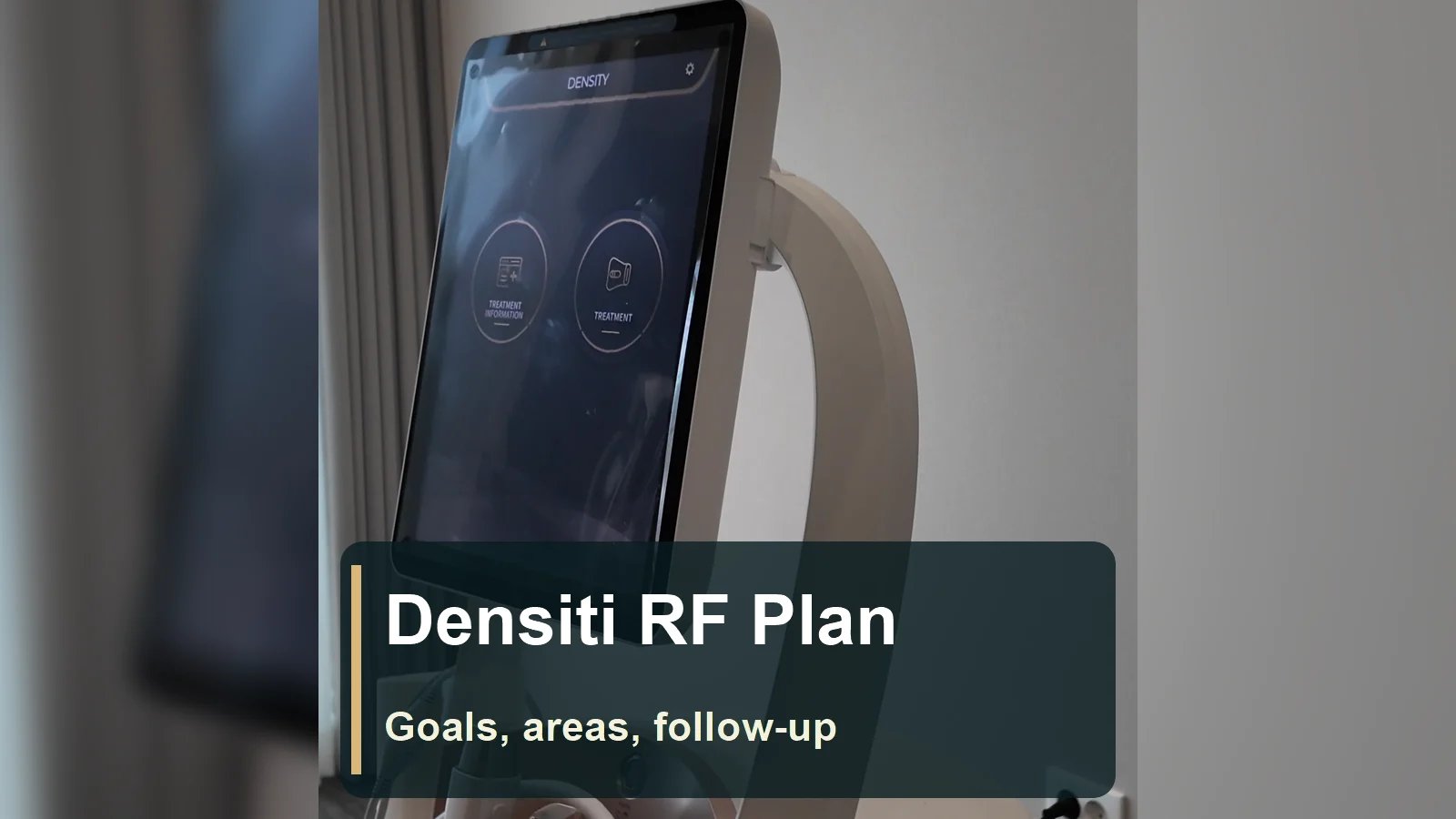
A treatment plan is easy to read as a forecast: this device, this many visits, this outcome. For Densiti RF, a radiofrequency (RF) lifting treatment, it is more useful to read the plan as a written record. It should say what you asked for, what the clinician saw, what was agreed and when the plan will be looked at again. A plan that records those things gives both sides something to check later. A plan that only names a device does not.
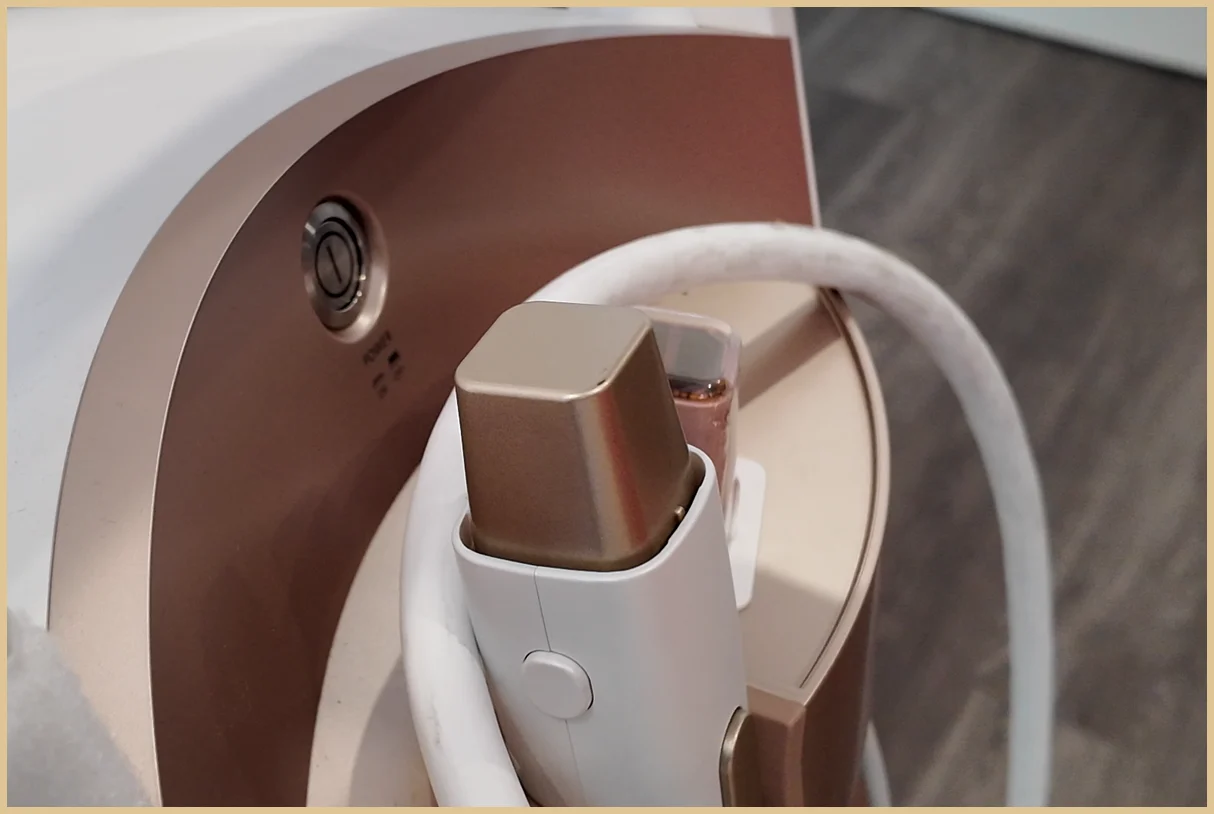
Short answer: The clinic describes Densiti RF (its menu lists it as “Density”) as a lifting treatment that uses dual monopolar and bipolar RF energy, planned individually after an assessment, and says results vary from person to person. So read the plan as a record of your goal in your own words, the areas, what was decided, how follow-up will be judged and who to contact. It is not a promise that any particular change will happen.
What should a Densiti RF treatment plan actually record?
The table below is a checklist, not a clinic form. It shows what a useful plan can contain and a question you can ask for each row. It does not describe what the clinic will write for you.
| Plan element | What it can record | Question to ask |
|---|---|---|
| Your goal | The concern in your own words, such as “the skin along my jawline feels less firm than before” | “Is this how you have written down my goal?” |
| Area | Which parts of the face are included, and which are not | “Why these areas and not others?” |
| Scope | Whether Densiti RF is planned on its own or alongside other treatments | “Is anything else planned, and in what order?” |
| Follow-up | When progress will be reviewed and what will be compared | “What will we look at to decide whether this is working?” |
| Next steps | What the clinician would consider if the change is unclear | “What would we do if I see little change?” |
| Contact | Which reactions to report and how to reach the clinic | “Which symptoms should I call about?” |
None of these rows contains a result. A plan can say what will be reviewed. It cannot honestly say what you will see.
How do you write a goal that can be followed up later?
A vague goal is hard to review. “I want to look better” gives nobody anything to compare. A goal that can be followed up usually has three parts:
- What you notice, for example “my lower face looks softer than it used to”.
- Where you notice it, named as specifically as you can.
- How you will judge it later, such as how it looks in daylight, or in your own photos taken the same way each time, if the clinic agrees that is useful.
Ask the clinician to write your wording into the plan or read it back to you. If the clinician’s wording differs from yours, ask what the difference means. That short conversation tells you more than a product description can.
What does the clinic say about planning and follow-up?
The clinic’s Densiti page describes dual RF energy, monopolar plus bipolar, meant to act from the superficial to the deeper layers of skin. It says the plan is customised after an assessment, that the interval between treatments is adjusted at the physician’s discretion, and that results vary by individual. It also says Densiti can be discussed within the clinic’s Personal Layered Lifting approach, where the medical team designs a combination around your skin condition and concerns.
Timing, session length, comfort and how long any change lasts differ from person to person and from plan to plan, so this article gives no figures for them. Ask the clinician to explain what applies to your own plan and to confirm it with you at the consultation.
How should you read the wording in a plan?
| Wording you may see | How to read it |
|---|---|
| “Planned for…” | A decision made at that visit, on that assessment. Ask what could change it. |
| “Usually” or “typically” | A general statement about groups of people, not a prediction for you. |
| “May be combined with…” | An option to discuss, not a requirement. Ask what the clinician would need to see first. |
| “Review at…” | A follow-up point. Ask what will be compared and who will do it. |
| “Results vary” | The honest limit of any plan. Ask how the clinician will tell whether your own change is clear. |
What if the plan changes?
Plans are allowed to change. A good record makes the change visible: what is different, why, and who decided. If a follow-up visit shows little change, the useful question is not “did it fail?” but “what does the plan say now?” Ask for any revised plan to keep the same headings: goal, area, scope, follow-up and contact.
Caution: RF treatment works through heat. The clinic’s page says redness, swelling, pain, a warm sensation or facial discomfort can occur, and asks patients to contact the clinic if anything unusual or severe happens. Tell the clinic about anything you want considered when it assesses you, and ask which aftercare applies to you. This article cannot tell you whether Densiti RF is suitable.
Questions to bring to your consultation
- How have you written down my goal, and may I read it?
- Which areas does the plan include, and why?
- Is Densiti RF planned alone or with other treatments?
- When will progress be reviewed, and what will be compared?
- What would the plan look like if I see little change?
- Which symptoms should I report, and how do I reach the clinic?
Frequently asked questions
Is a treatment plan a promise of results?
No. A plan records goals, decisions and follow-up. The clinic’s own page says results vary by individual, and this article cannot predict yours.
Does the plan tell me how many sessions I will need?
The clinic’s page says the interval between treatments is adjusted at the physician’s discretion. This article gives no session count. Ask what your plan records and when it would be revisited.
Do I need to take my own photos?
Not necessarily. If you want a visual record, ask the clinic whether comparison photos are useful and how they should be taken.
Why does this article give no times or durations?
Timing, session length and how long any change lasts depend on the individual plan, so they are best confirmed by the clinician at your consultation. This article gives no figures.
Visit Beauty Blossom Clinic in Seoul
Beauty Blossom Clinic is at Mediwon Medical Center, 66 Yanghwa-ro, Mapo-gu, Seoul, on the sixth and eighth floors, directly in front of Hapjeong Station Exit 3. Reception is on the sixth floor. For current opening hours, check the map and directions page or contact the clinic directly.
- See the map and directions
- Clinic information: Densiti page on the clinic’s English site (general clinic information; it is not an event or price page)
- Read clinic notices
- Request a consultation (booking page)
- View the events page (this article quotes no price and does not guarantee any offer)
- Return to the clinic homepage
This article provides general information, not an individual diagnosis or treatment plan. Suitability, treatment experience, recovery and results differ. Discuss potential benefits, limitations and risks with a qualified treating clinician.
Location
Beauty Blossom Clinic
Mediwon Medical Center, 66 Yanghwa-ro, Mapo-gu, Seoul, South Korea (reception: 6F)
Individual results may vary.
Back to Blog →