Why Pores Look Larger: Oil, Blockages and the Skin Around Them
Visible pores are not just a cleansing problem. Oil, plugs, irritation and loss of skin firmness call for different expectations and a gentler routine.
Published by Beauty Blossom

Pores can look larger when oil and dead skin cells accumulate, when the skin is irritated, or when the surrounding skin loses firmness. The useful goal is to make them less noticeable while keeping skin comfortable, rather than treating each visible opening as something that must be closed. More forceful cleansing is not necessarily the answer: the reason a pore stands out matters.
Start with what makes the opening noticeable
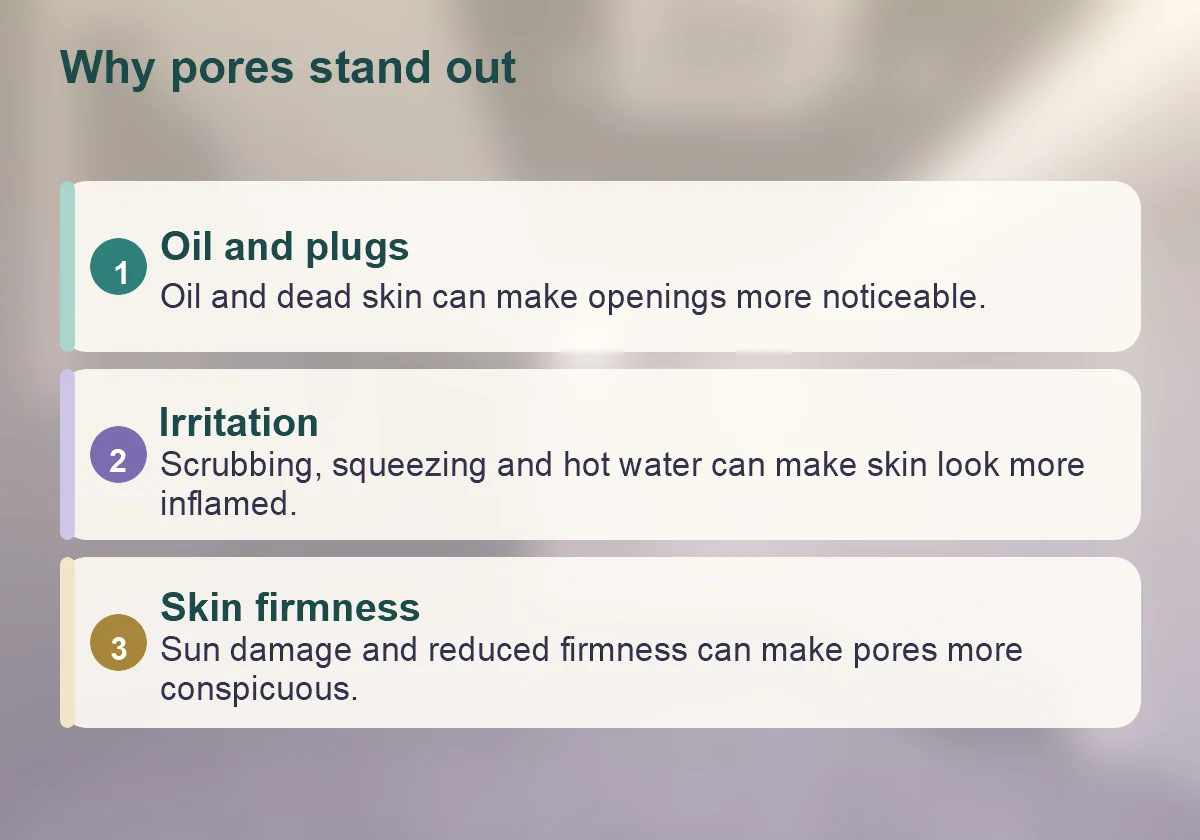
Oiliness and a plug can make pores appear more prominent. However, a visible opening does not automatically mean it is blocked. Sun damage and reduced skin firmness can also change how conspicuous pores look. A routine aimed only at removing oil may therefore miss part of the concern, especially if it leaves the skin sore or inflamed.
- Oil and plugs: gentle cleansing and products that do not clog pores can help address this part of the problem.
- Irritation: scrubbing, squeezing and hot water can make pores more noticeable rather than refine them.
- Surrounding skin: sun protection matters because sun damage can reduce firmness.
Not every dot is a blackhead
A blackhead is an open acne lesion in which oil and dead skin cells have blocked a pore. A sebaceous filament is different: it is a normal structure that helps oil travel to the skin surface. Filaments tend to be small and flat and may look grey, light brown or yellow. These are useful general distinctions, not a way to diagnose an individual spot from a photograph.
Squeezing a filament does not switch off oil movement. It can fill again, while repeated pressure can injure the skin. If the aim is fewer visible dots, repeatedly trying to empty every opening may work against the aim of calmer skin.
Choose a routine that does not add irritation
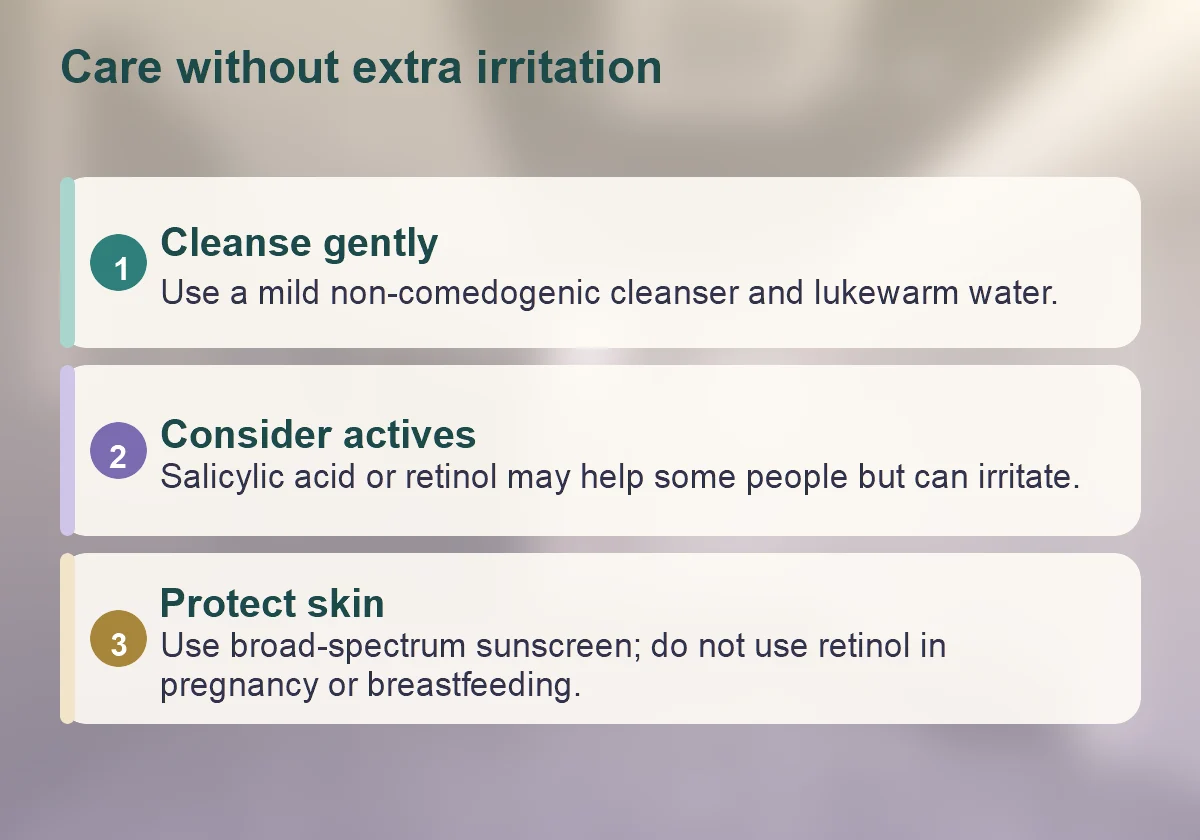
Wash gently with a mild, non-comedogenic cleanser and lukewarm rather than hot water. Non-comedogenic means formulated not to clog pores; it is a useful label when choosing cleansers, moisturisers and makeup. Avoid using a rough scrub or pressing harder because the skin still looks textured after washing. Cleansing is care, not a test that the skin must pass by looking completely smooth.
Use broad-spectrum sunscreen as part of everyday care. This addresses sun exposure, one factor involved in loss of skin firmness, rather than promising that sunscreen will immediately change pore size. Judge the routine by comfort as well as appearance: persistent stinging, dryness or redness is not a sign that stronger exfoliation is needed.
Where salicylic acid and retinol may fit
Salicylic acid may help unclog pores, but it can also dry or irritate skin. If a salicylic-acid cleanser is drying, alternating it with a mild cleanser can reduce irritation. Adding several exfoliating products at once makes it harder to keep care gentle. The aim is an appropriate routine, not the strongest combination available.
Retinol may help some people with visible pores, but it can irritate skin. Do not use retinol during pregnancy or breastfeeding; ask a clinician about suitable alternatives. Discuss existing prescription treatment with its prescriber rather than changing or stopping a medicine on your own. Product suitability depends on the skin and other care already being used.
When an assessment is more useful than another cleanse
Severe acne, persistent discomfort or a concern that does not improve with everyday care is a reason to have the skin assessed. The useful questions are whether there are acne plugs, normal filaments, irritation or changes in firmness, and which of these a proposed treatment is intended to address. Keep the goal specific: calmer skin and less conspicuous pores, without a promise of permanent closure.
Frequently asked questions
Does a visible pore mean my face is dirty?
No. Oil transport is a normal skin function, and visible dots may be filaments rather than acne plugs. Scrubbing harder is not a reliable way to tell them apart.
Will squeezing keep pores clear?
Filaments can fill again, and squeezing can damage skin. Avoid repeated self-extraction as a way to maintain a pore-free appearance.
Should everyone with visible pores use retinol?
No. It may help some people, but irritation and individual circumstances matter. It should not be used during pregnancy or breastfeeding; seek advice about alternatives.
Sources: American Academy of Dermatology: large facial pores; Cleveland Clinic: sebaceous filaments.
Questions before your visit?
For treatment enquiries and appointment requests, message us on WhatsApp with the treatment you are considering and your preferred visit date.
Individual results may vary.
Back to Blog →