IV Drips Are Not Just Vitamins: Fluid Balance and Medicine History Come First
An IV drip puts fluid straight into a vein and can change water and electrolyte balance, so heart and kidney health, regular medicines and past reactions matter. Here is what to tell the clinic and ask.
Published by Beauty Blossom

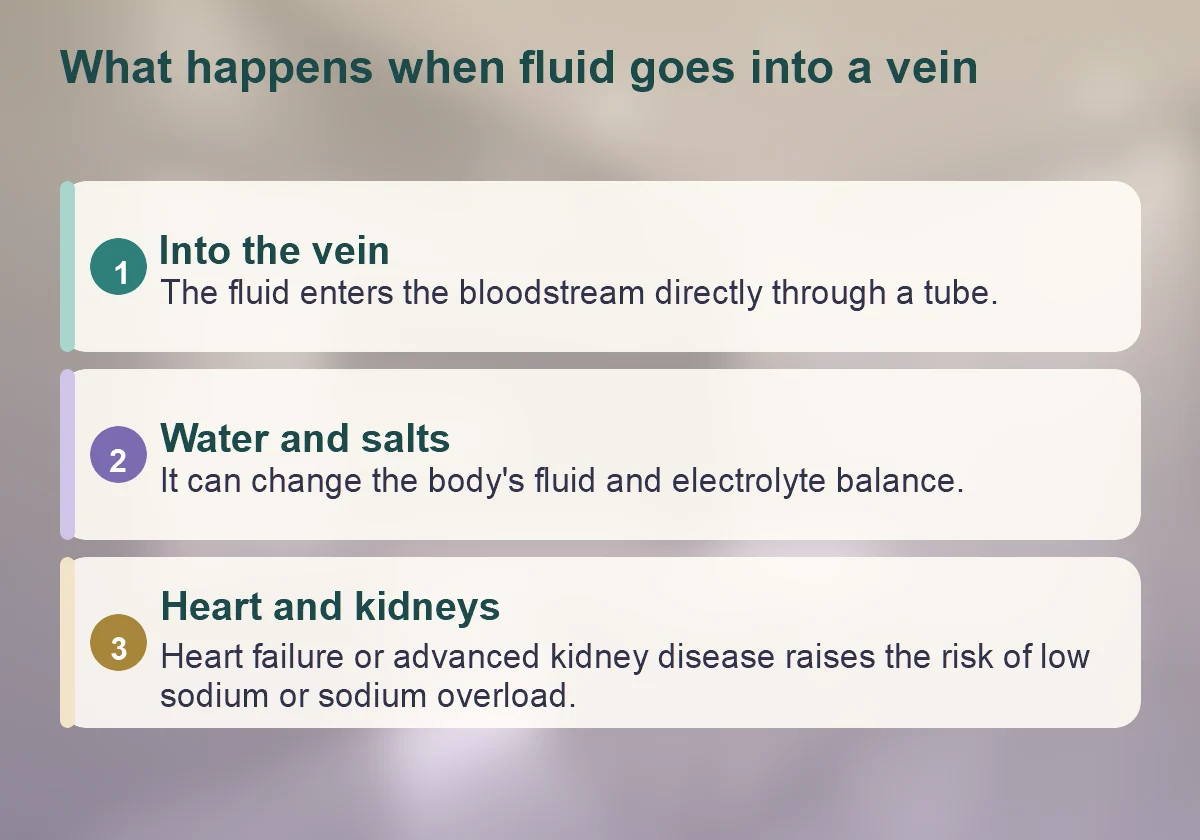
An IV drip puts fluid straight into a vein, so it can change the body's water and electrolyte balance. That is why heart and kidney conditions, regular medicines and past reactions matter before a drip is started. A bag on a stand is a medical treatment first, not just a vitamin delivery.
What an IV fluid actually is
IV fluids are liquids given through a tube into a vein to prevent or treat dehydration and electrolyte imbalance. They are used for people who are sick, injured, dehydrated by exercise or heat, or having surgery. Common types are crystalloids such as normal saline (salt in water), D5W (sugar in water) and lactated Ringer's, and colloids, larger molecules that tend to stay in the blood vessels. A healthcare provider chooses the type, and the same line can also carry medicines or nutrition.
The base fluid and any added medicine or nutrient need separate explanations. Before a drip starts, ask what is in the bag, why it is being proposed and whether it suits your medical history.
Why fluid balance comes before the add-ins
The provider decides the amount of fluid and how fast it runs, based on weight, age and medical conditions. Too much fluid too quickly can cause fluid overload, with headache, high blood pressure and trouble breathing. It usually resolves with an adjustment, but it can be dangerous.
Hospital guidance on maintenance fluids shows how many factors clinicians weigh: volume status, baseline sodium and kidney function, conditions or drugs that affect antidiuretic hormone (a hormone involved in how the body handles water), whether the patient can eat and drink, and unusual fluid losses. People with heart failure or advanced kidney disease are at risk of low sodium or sodium overload, so their fluids are chosen carefully and followed with daily weights, examinations and blood tests.
That guidance is written for hospitalized adults. Its amounts and rates are set by a monitored hospital team and are not a yardstick for a clinic drip. Never adjust the flow of your own drip; tell the nurse instead.
What a careful assessment weighs
| Factor | Why it matters |
|---|---|
| Heart conditions, such as heart failure | Higher risk of low sodium or sodium overload, so fluids are chosen with care |
| Kidney function, especially advanced disease | The same risk, with daily weights and blood tests used to watch for it |
| Regular medicines | Some drugs affect antidiuretic hormone and so how the body handles water |
| Recent vomiting, diarrhea, heat or not drinking | Common causes of dehydration, the reason fluids are given |
What to tell and ask before a drip
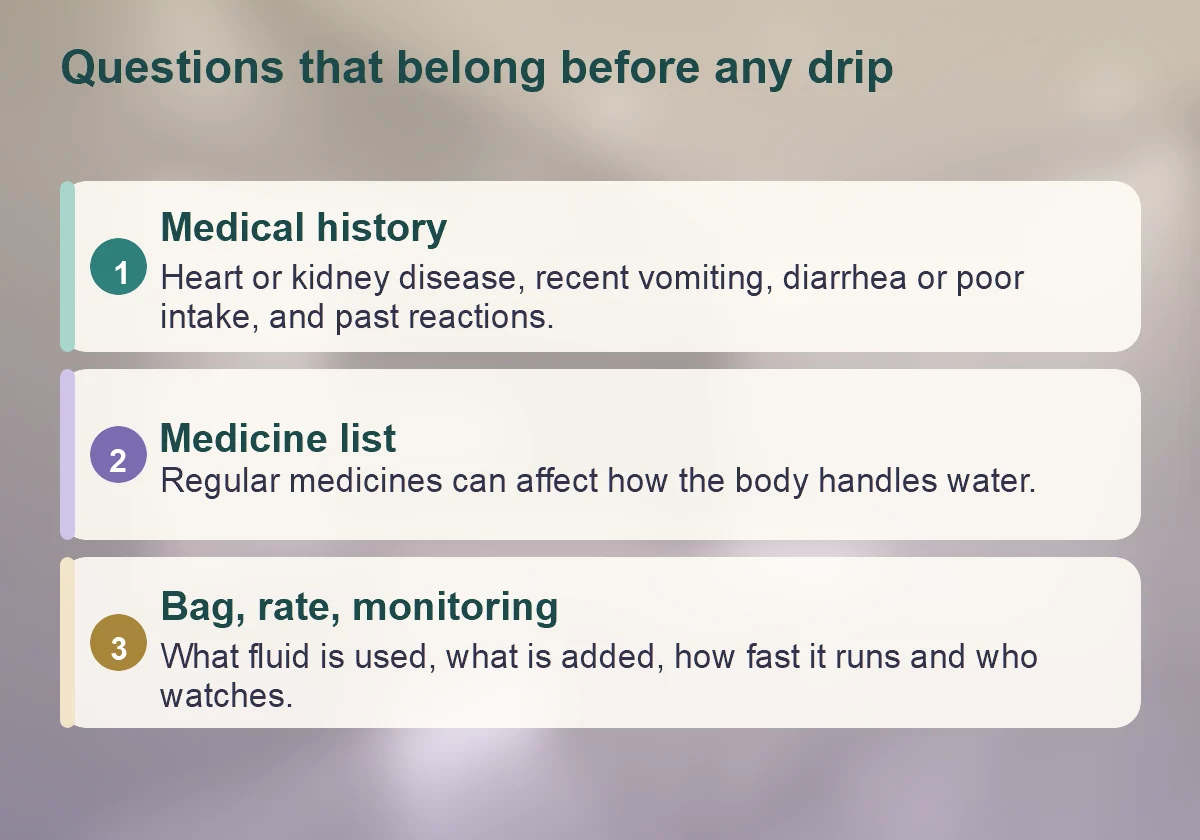
- Say whether you have heart or kidney disease, and list every medicine you take regularly. Do not stop any of them on your own to prepare; ask the prescriber or the clinic.
- Mention recent vomiting, diarrhea, or not eating and drinking.
- Mention anything that went wrong after a previous drip or injection, and when it happened, so the team knows your history.
- Ask which base fluid is used, what is added and why, how fast it will run, and who monitors you.
These are the same facts a care team collects before choosing a fluid. If nobody asks about your heart, kidneys or medicines, bring them up yourself.
During and after: what to report
Intravenous rehydration is common and low-risk in a medical setting, but complications are possible: infiltration (fluid leaking into tissue), phlebitis (a swollen vein), hematoma, infection, a collapsed vein and, rarely, air embolism. Tell the nurse or doctor if the drip seems too slow or too fast, if the site hurts, if the needle feels loose, or if you develop a headache or trouble breathing. Trouble breathing is urgent: say so at once, and if it starts after you leave, seek emergency medical care.
FAQ
Is a drip just a quicker way to hydrate?
No. A person needs IV fluids when dangerously dehydrated, for example with vomiting and diarrhea, too much heat or exercise without drinking, serious injury, or surgery. If you are unsure whether a drip suits you, ask a doctor.
Does more fluid mean better?
No. Too much, too fast can cause fluid overload.
Can I change the drip speed or my medicines myself?
No. Tell the nurse if the flow seems wrong, and ask your prescriber before changing any regular medicine.
Sources
- Cleveland Clinic: IV fluids
- Cleveland Clinic Journal of Medicine: review of maintenance intravenous fluids for hospitalized adults
Clinic information and contact
For treatment details or appointment enquiries, use the clinic's official channels.
Location
Beauty Blossom Clinic
66 Yanghwa-ro, Mapo-gu, Seoul, Republic of Korea (6th and 8th floors)
Individual results may vary.
Back to Blog →