Swelling After Filler: Common Changes and Signs That Should Not Wait
Swelling and bruising are common after filler, but unusual pain, vision changes, white, gray or blue skin and stroke signs need medical attention right away.
Published by Beauty Blossom

Is swelling after filler normal, and when should you not wait it out? Swelling, bruising, redness and tenderness are listed by the FDA as common risks of dermal filler. Most appear shortly after injection, and many settle within a few days to weeks. A different set of changes should never be watched at home: unusual pain, a change in vision, white, gray or blue skin near the injection site, and any sign of a stroke. If one of these appears, get medical attention right away.
Common changes versus signs that should not wait
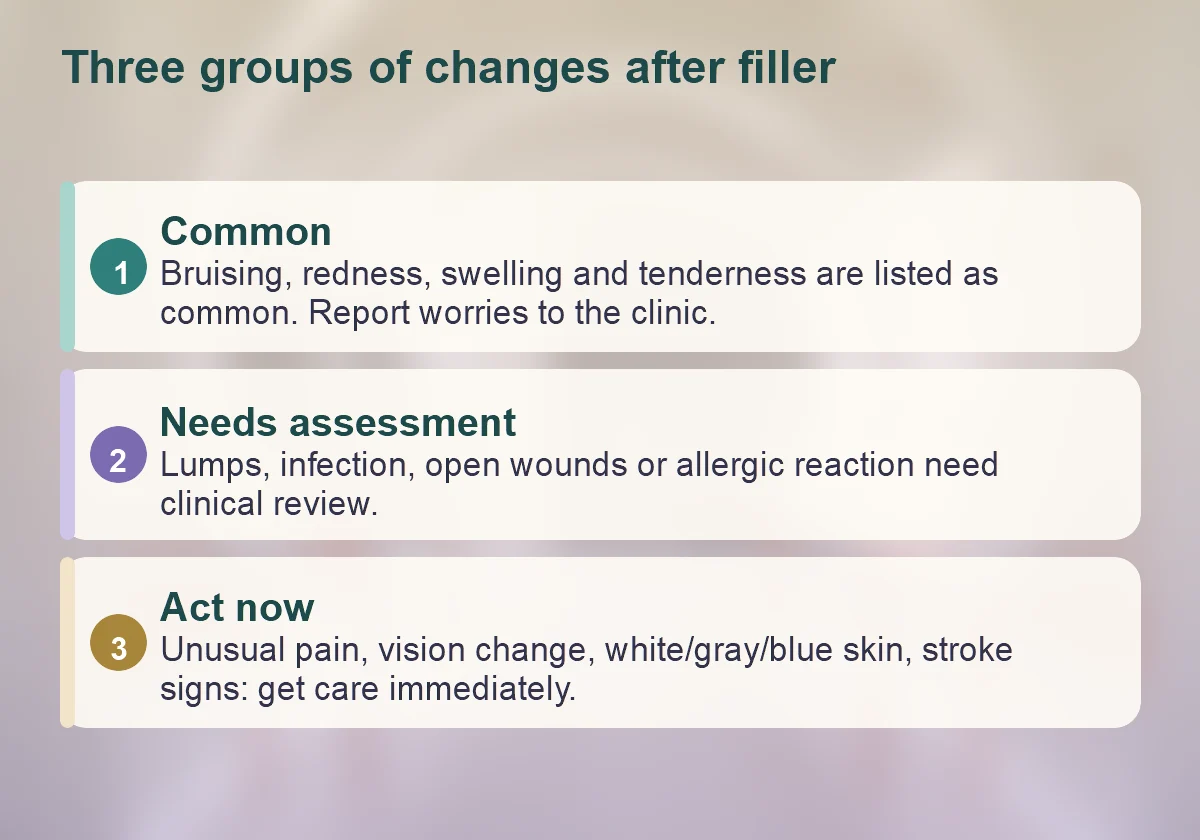
For approved dermal fillers, the FDA lists these as common risks: bruising, redness, swelling, pain, tenderness, itching and rash. Most swelling and bruising occurs shortly after injection, and many cases resolve in a few days to weeks. Common does not mean every change is harmless. Some side effects first appear weeks, months or even years later, so tell the treating clinic about anything that worries you instead of judging it yourself.
The FDA tells patients to seek immediate medical attention if any of these occur during or shortly after the procedure:
- Unusual pain
- Vision changes
- A white, gray or blue appearance of the skin near the injection site
- Signs of a stroke: sudden difficulty speaking, numbness or weakness in the face, arms or legs, difficulty walking, a drooping face, severe headache, dizziness or confusion
Pain that feels different from what you were told to expect, or that keeps getting stronger instead of easing, is a reason to call the clinic or be examined at once. Stroke signs call for emergency services. While you are getting care, do not diagnose it yourself, massage the area, try to dissolve the filler, or stop or change any medicine on your own. Those decisions belong to a clinician who has examined you.
| Group | Examples on the FDA pages | What it points to |
|---|---|---|
| Common | Bruising, redness, swelling, tenderness, itching | Report anything that worries you to the treating clinic |
| Less common | Lumps, infection, open wound, allergic reaction | Needs assessment; some cases need treatment |
| Act now | Unusual pain, vision change, white/gray/blue skin, stroke signs | Immediate medical attention; emergency services for stroke signs |
Why a blood vessel is the main concern
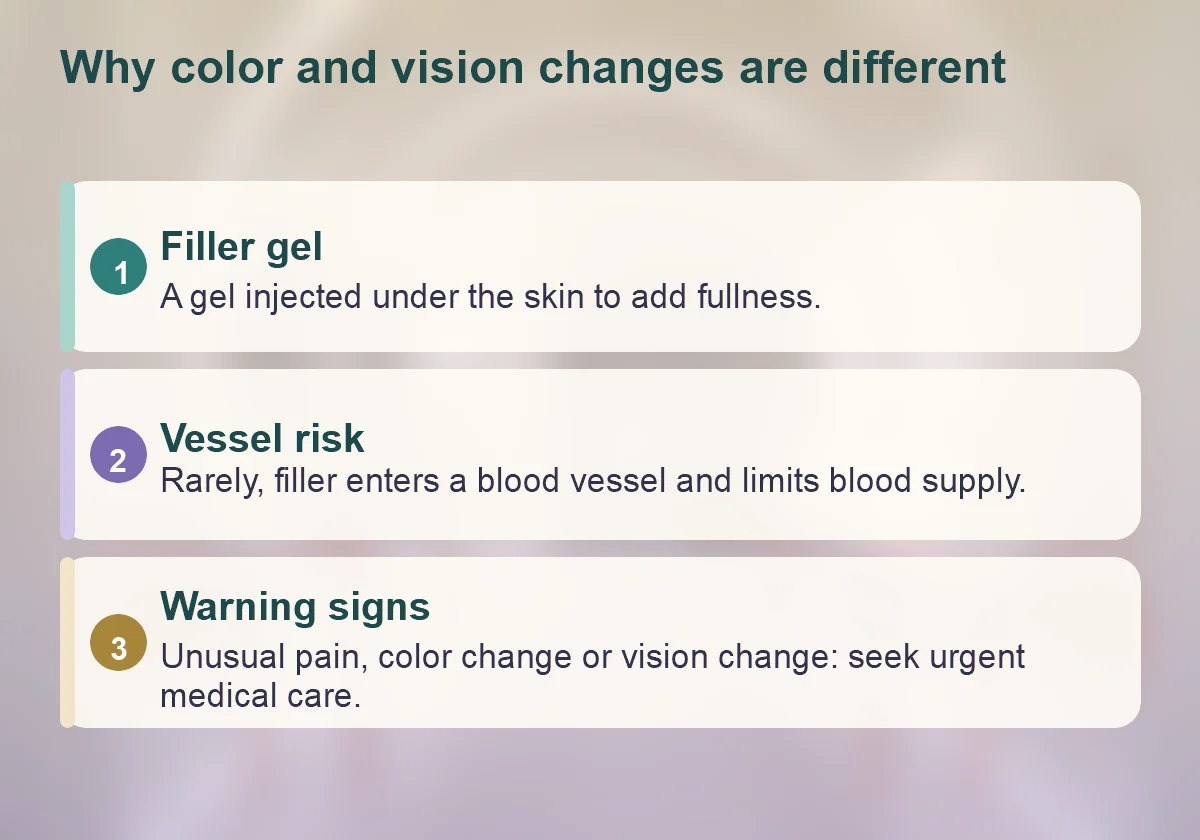
The FDA calls unintended injection into a blood vessel the most concerning risk of dermal fillers. It can block the vessel and cut the blood supply to tissue. The chance is low, but reported complications include tissue death (necrosis), vision abnormalities including blindness, and stroke, and they may be permanent. Providers are told to stop injecting immediately if blanching of the skin, a change in vision, signs of a stroke or unusual pain appear. These are the same signs patients are told to act on.
Other problems the FDA lists are slower and different in kind: nodules or granulomas that may need injections, oral antibiotics or surgical removal, infection, open or draining wounds, and allergic reaction. A severe allergic reaction (anaphylactic shock) needs immediate emergency assistance. Swelling or redness near a filler site can also appear after a viral or bacterial illness, a vaccination or a dental procedure.
What to prepare before the visit and what to do afterward
- Choose a licensed provider with experience injecting fillers, and ask which product and which area will be treated. Ask to read the patient labeling for that specific filler. The FDA recommends this.
- Ask what changes to expect, what would justify a same-day call, and how to reach the clinic after hours.
- Tell the provider beforehand about a bleeding disorder, severe allergies, an allergy to lidocaine or animal products, or active skin inflammation or infection.
- After the visit, save the product name and treated area in your phone so any clinician can see what was injected.
- If you are unsure about a change, contact the treating clinic and describe the location, color, pain, any vision symptoms and the time since injection.
- If a sign from the "act now" list appears, seek immediate medical care instead of waiting for a scheduled follow-up or a call back.
- Leave any decision about reducing or removing filler to a clinician who has examined you. Removal can require injections, surgery or other interventions with their own risks, and may be difficult or impossible for some materials.
Frequently asked questions
Does swelling that lasts beyond a few days always mean a problem?
Not always. Many cases resolve within a few days to weeks, so the day count alone does not decide it. What matters is what comes with the swelling. Color change, unusual pain or vision symptoms need immediate care. Swelling that persists, returns or keeps growing should be reported to the clinic, since inflammation near a filler site can also develop later, for example after an illness, vaccination or dental work.
Is a white or gray patch urgent if it does not hurt?
Yes. White, gray or blue skin near the injection site is a reason to get medical attention immediately all by itself. Pain does not have to be present, so do not wait to see whether it develops.
Who should I contact first?
For anything on the "act now" list, go for immediate medical care and tell the clinician you had filler, which product and where. The note on your phone helps. Use emergency services for stroke signs. You can phone the treating clinic as well, but do not hold off on care while waiting for a reply. For smaller worries, describe the location, color, pain and timing to the treating clinic.
Sources
- FDA: Dermal Fillers (Soft Tissue Fillers)
- FDA: Dermal Filler Do's and Don'ts for Wrinkles, Lips and More
Clinic information and contact
For treatment details or appointment enquiries, use the clinic's official channels.
Location
Beauty Blossom Clinic
66 Yanghwa-ro, Mapo-gu, Seoul, Republic of Korea (6th and 8th floors)
Individual results may vary.
Back to Blog →