ONDA Facial Treatment Photos: What the Cart, Handpiece and Treated Area Can Show, and What They Cannot
A facial ONDA treatment photo can show a device cart, a handpiece and the region treated. It cannot show settings, sensation or results. Here is how to read it.
Published by Beauty Blossom
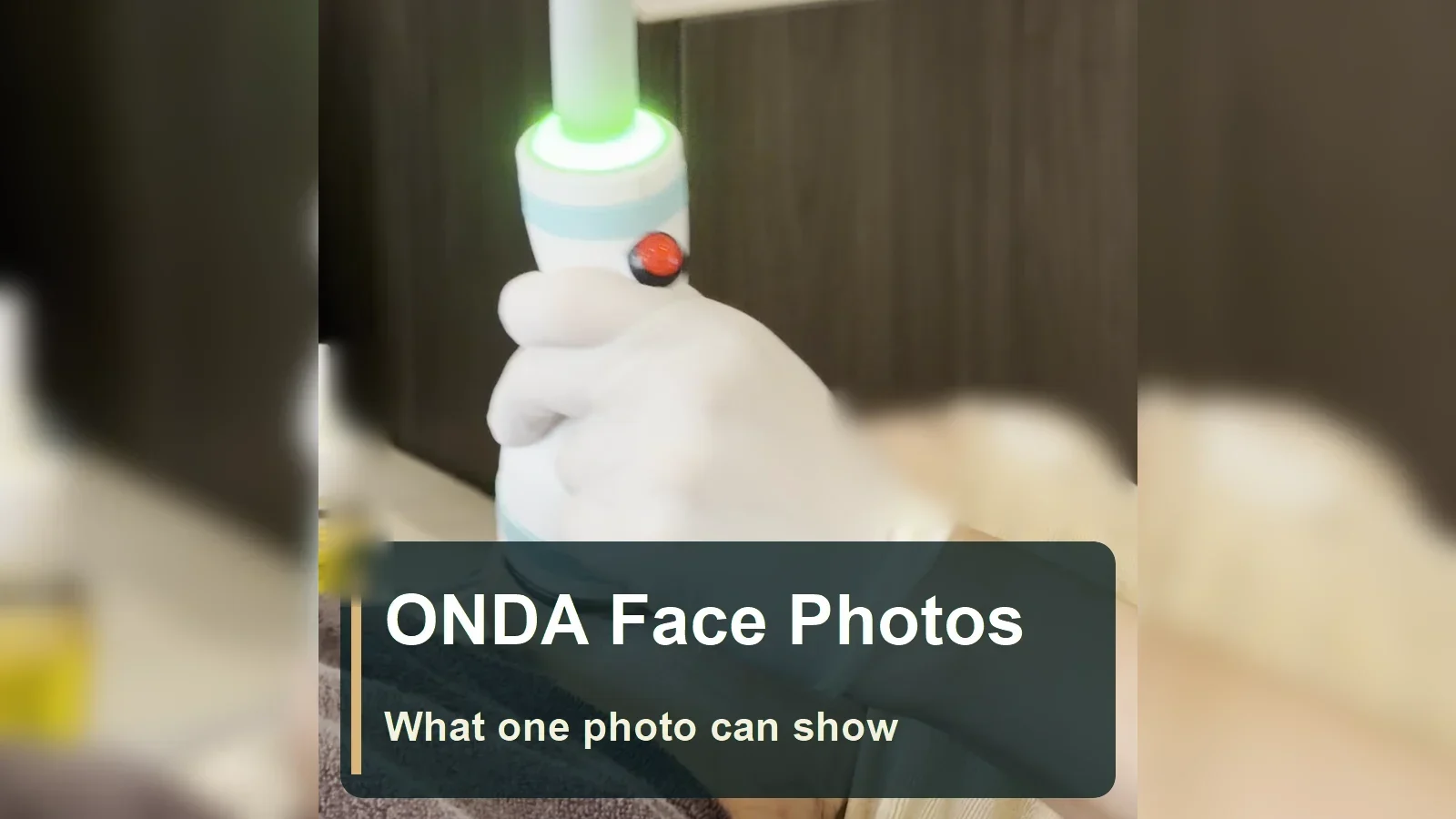
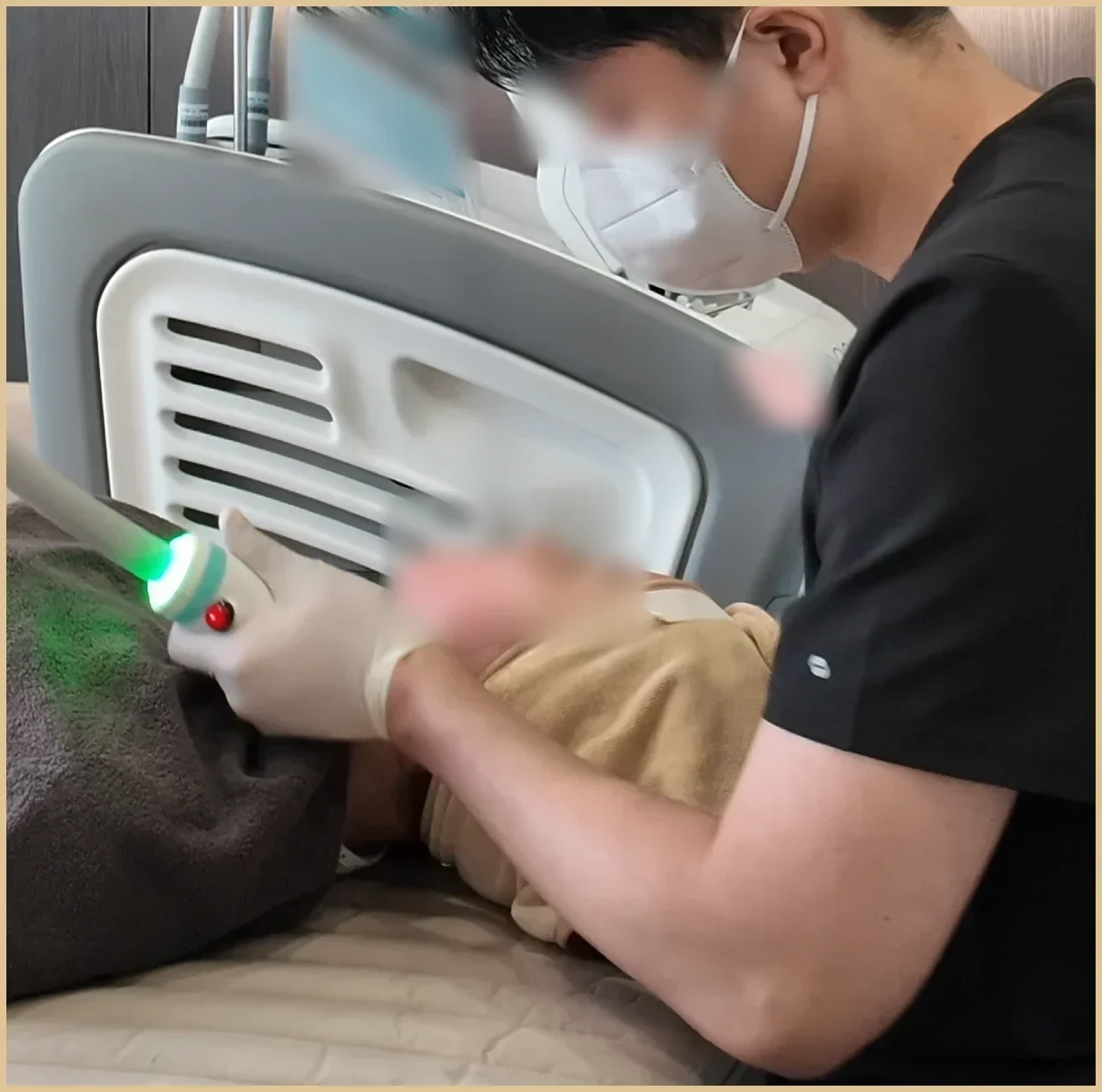
A photo from a treatment room is easy to read too quickly. You see a wheeled machine, a hand-held applicator held near a cheek or jawline, and it feels as if you know what happened. In fact, a photo of this kind records one moment: which equipment was in the room and roughly where the applicator was pointed. It does not record how the skin responded.
This article is about reading that kind of photo for ONDA, the microwave-based system on Beauty Blossom Clinic’s English site. It looks at what the cart, the handpiece and the treated region in a facial treatment photo can and cannot tell you. It does not suggest any outcome.
Short answer: A facial treatment photo can show that a device cart and a handpiece were in use, and which part of the face the handpiece was near. It cannot show the settings, how deep or how long energy was applied, how the person felt, or what changed afterwards. The clinic’s ONDA page describes the system in general terms and does not give a face-specific protocol, so a single photo is a scene, not evidence of a result.
What can a facial treatment photo actually show?
It helps to separate what is visible from what stays invisible. The table uses the elements that tend to appear in an ONDA treatment photo.
| What is visible | What it can tell you | What it cannot tell you |
|---|---|---|
| The device cart | That a cart-mounted system was in the room, and roughly what it looks like | Which settings were chosen, or whether the treatment suits any particular person |
| The handpiece | That a hand-held applicator was used, and how the operator holds it | Which handpiece size or mode it is, how long it stayed in one spot, or how much energy was delivered |
| The treated region | Which side or area of the face the handpiece was near at that moment | Whether that area was a planned focus, how large the plan was, or what the clinician decided |
| The person’s face | Little beyond posture and expression at one instant | How it felt, or any response of the skin |
| The room and lighting | The general clinic setting | Anything about a result, because room light changes how skin looks |
What does the clinic’s ONDA page say?
The clinic’s English ONDA page describes ONDA as a non-invasive microwave-energy system (the page uses the name Coolwaves) that delivers heat into the skin. It mentions patented 3 mm and 7 mm handpieces and says contact cooling is used. It also lists collagen and fat-related effects as general descriptions of the technology, which this article does not repeat as expectations.
Two points matter when you set that text beside a photo. First, a handpiece in a photo does not tell you whether it is the 3 mm or the 7 mm one, so do not guess. Second, the page is a general ONDA page. It does not list which facial areas may be treated, how many passes there would be, or what settings suit which person. Those are decided in a consultation.
The clinic also lists a separate Body Lifting menu. This article is only about a face-region photo and carries no statement over to the body.
How can you read a treatment photo without over-reading it?
- Start with what you can name: cart, handpiece, region of the face. Stop there before adding a conclusion.
- Ask whether the picture shows one moment or a sequence. A single frame cannot show duration or repetition.
- Treat cooling, warmth, energy level and depth as invisible. A photo cannot confirm any of them.
- Remember that skin looks different under different light, angle and camera settings, so two photos taken in different conditions say little about change.
- If a caption mentions a result, ask where it came from and whether the same conditions were used each time.
What can only the clinic tell you?
- Whether ONDA is considered for you at all, and for which area.
- Which handpiece and settings would be chosen, and who makes that decision.
- How your earlier treatments, skin reactions or health history affect the plan.
- What follow-up the clinic arranges, and which changes should make you get in touch.
Caution: The clinic’s ONDA page says you may feel some warmth, and what you experience depends on you. This article does not describe any pain level, downtime or recovery schedule, and it cannot say whether ONDA is suitable for you. Tell the clinic about your medical history and any earlier treatment in the area before any decision is made.
Questions to bring to your consultation
- Which part of my face would be considered, and why?
- Which handpiece and settings would you consider, and who decides them?
- Is there anything in my history that changes your plan?
- How will you check how my skin is doing, and when?
- Which symptoms should make me contact the clinic?
Frequently asked questions
Can a treatment photo show whether ONDA worked?
No. A treatment-room photo records equipment and position at one moment. Judging change needs comparable photos in the same conditions and a clinician’s assessment, and this article promises no outcome in any case.
Can I tell which handpiece was used from a photo?
Not reliably. The clinic’s page names two handpiece sizes, but a photo seldom shows the size clearly. Ask the clinic rather than guessing.
Does the treated area in a photo mean that area is right for me?
No. It shows where the handpiece was for that person at that moment. Which area is considered for you is decided at your own consultation.
Does the ONDA page cover the body too?
The English ONDA page is a general page, and its FAQ mentions body lifting consultations alongside ONDA. The clinic also has separate body menu pages. Ask which applies to you; this article is about face photos only.
Can room-light photos tell me how my own skin looks?
Light and angle change how skin looks, so photos in different conditions are hard to compare. A clinician’s in-person assessment is more informative.
Visit Beauty Blossom Clinic in Seoul
Beauty Blossom Clinic is at Mediwon Medical Center, 66 Yanghwa-ro, Mapo-gu, Seoul, on the sixth and eighth floors, about a one-minute walk from Hapjeong Station Exit 3, according to the clinic’s page. Reception is on the sixth floor. Opening hours and holiday schedules can change, so check the map and directions page or contact the clinic for current hours before you travel.
- See the map and directions
- ONDA page on the clinic’s English site
- Read clinic notices
- Request a consultation (booking page)
- View the events page (this article quotes no price and does not guarantee any offer)
- Return to the clinic homepage
This article provides general information, not an individual diagnosis or treatment plan. Suitability, treatment experience, recovery and results differ. Discuss potential benefits, limitations and risks with a qualified treating clinician.
Location
Beauty Blossom Clinic
Mediwon Medical Center, 66 Yanghwa-ro, Mapo-gu, Seoul, South Korea (reception: 6F)
Individual results may vary.
Back to Blog →