Re2O ECM Booster: The 4th Gen Skin Solution for Direct Dermal Restoration
Have you ever wondered why, despite using various skincare products and treatments, your skin doesn't quite regain its youthful bounce and resilience?
Published by Beauty Blossom · Updated
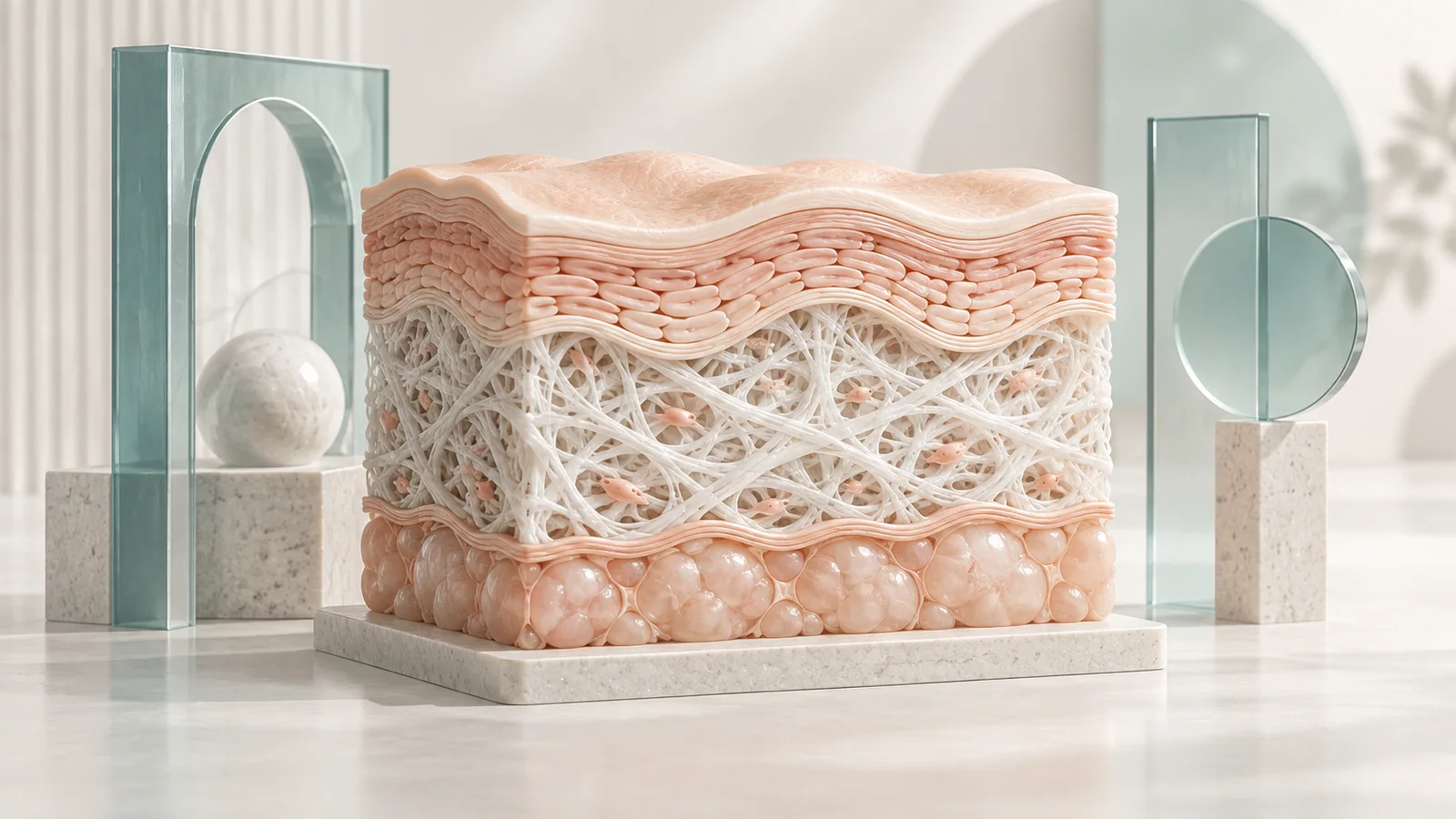
Have you ever wondered why, despite using various skincare products and treatments, your skin doesn't quite regain its youthful bounce and resilience? It's a common concern many of us share. We often focus on collagen, but what if the real key lies in something more fundamental? Today, I want to talk about Re2O, an ECM Booster, and how it's carving out a new path in the world of skin boosters, moving beyond just collagen stimulation to directly replenish what your skin truly needs.
What is ECM? The Foundation of Youthful Skin
When we think of aging skin, our minds usually go straight to collagen loss. But it's not just collagen; the entire surrounding structure, known as the Extracellular Matrix (ECM), also weakens over time. Think of ECM as the scaffolding that supports your skin cells, providing structural integrity, elasticity, and hydration. As we age, elastin deteriorates, GAGs (Glycosaminoglycans, including hyaluronic acid) decrease, and the overall density of the dermal layer thins. This leads to those familiar signs of aging: wrinkles, sagging, and a dull complexion.
Re2O takes a different approach by directly replenishing the lost components of the ECM. It uses hADM (human Acellular Dermal Matrix), which is essentially human-derived tissue. This isn't about indirectly stimulating your skin to produce more collagen; it's about providing the fundamental building blocks that have been depleted. Imagine trying to rebuild a house with just more bricks when the entire foundation is crumbling; Re2O aims to fix that foundation.
hADM is rich in essential ECM components:
Collagen (89%): The primary protein that provides structural support.
Elastin (3%): The fibrous protein responsible for skin's elasticity and ability to snap back.
GAGs (including Hyaluronic Acid, 0.4%): Helps retain moisture and supports tissue communication.
Other ECM components: Including fibronectin and laminin, crucial for regeneration.
This comprehensive composition, manufactured under strict AATB, FDA, and MFDS guidelines, ensures that Re2O is delivering a complete and direct solution for dermal restoration.
Re2O's 3-Step Structural Rejuvenation Process
How does Re2O work its magic? It’s a systematic three-step process designed to care for the skin’s environment once hADM particles are delivered deep into the dermal layer. It’s not just a quick fix but a sustained approach to skin health.
Step 1: Immediate Structural Reinforcement
When the fine hADM particles are introduced into the dermis, they immediately start to settle, providing an instant scaffold. This direct input helps to support the weakened dermal structure from within, like putting up immediate supports in a collapsing building. It’s a physical replenishment that you can feel and see.
Step 2: Fibroblast Activation
Once settled, these ECM particles interact with the surrounding fibroblasts. Fibroblasts are the cells responsible for producing collagen and other ECM components. Instead of just giving them a general signal, Re2O's presence directly encourages these cells to become more active, enhancing their natural regenerative capabilities. This creates a more robust and healthy skin environment.
Step 3: Long-term Structural Remodeling
The interaction between the hADM particles and activated fibroblasts leads to the formation of a new, organized ECM network. This isn't just a temporary boost; it’s a sustained remodeling process. Over time, your skin's own natural regenerative processes are supported and enhanced, leading to long-term improvements in skin density, elasticity, and overall texture.
The Evolution of Skin Boosters: From Stimulation to Direct Replenishment
The journey of skin boosters has been fascinating, always seeking better ways to restore youthful skin. For a long time, the focus was primarily on stimulating collagen production. But Re2O asks a new question: why only replenish collagen when the entire ECM is compromised?
1st Generation: Hyaluronic Acid (HA) Boosters
These were all about hydration and glow. Products like traditional HA fillers inject hyaluronic acid into the dermis to increase moisture levels, making the skin look plump and dewy. While excellent for hydration, they don't directly address the structural loss of other ECM components.
2nd Generation: PN Boosters (e.g., Rejuran)
Next came polynucleotide (PN) boosters. These work by delivering PN into the skin, which then stimulates fibroblasts to promote collagen synthesis. This was a step up, directly encouraging the skin's own machinery to produce more collagen.
3rd Generation: PDLLA Boosters (e.g., Juvelook)
With PDLLA (Poly-D,L-Lactic Acid) boosters, the idea evolved further. These products use microparticles that, once injected, trigger an inflammatory response, leading to collagen production. It's a powerful way to stimulate collagen, but still an indirect method focusing primarily on one component.
4th Generation: Re2O ECM Booster
Re2O represents the latest evolution, pioneering the concept of an ECM Booster. Instead of just stimulating or signaling, it directly replenishes human-derived ECM. This is a significant shift, offering a direct structural restoration of the dermis. It’s about giving your skin exactly what it has lost, rather than just asking it to make more.
As the world's first ECM Booster, Re2O is truly breaking new ground.
Clinical Data: One Treatment, Ten Transformations
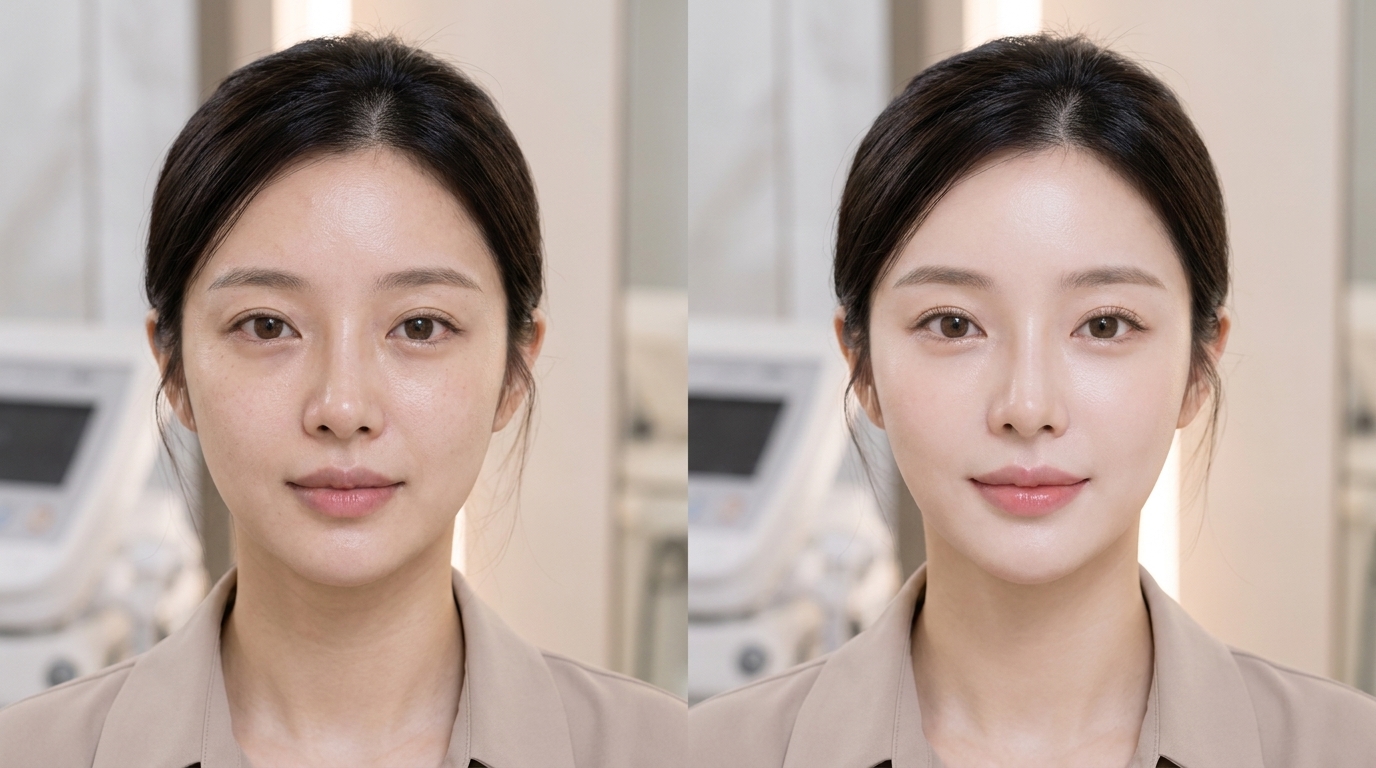
Clinical studies conducted about one month after a combined Re2O+HA treatment have shown promising results, indicating a wide range of improvements in skin quality from just a single session. This suggests a comprehensive approach to skin rejuvenation, addressing multiple aspects of skin health.
Improved Pore Appearance: Pores look noticeably tighter and refined.
Enhanced Skin Brightness: A more radiant and luminous complexion.
Deep Hydration: Increased moisture levels from within the skin.
Elasticity and Restoration: Improved skin firmness and ability to bounce back.
Smoother Skin Texture: A silkier and more even skin surface.
Reduced Dark Spots and Dullness: A clearer and more uniform skin tone.
Diminished Fine Lines: Noticeable reduction in the appearance of fine wrinkles.
Reduced Redness: A calmer, less inflamed complexion.
Strengthened Skin Barrier: Improved skin protection against external aggressors.
Decreased Roughness: Softer, less coarse skin.
Re2O Lineup: One Material, Two Finesses
Re2O offers a tailored approach with two formulations, each designed for specific treatment areas and goals:
Re2O Original Formula
Particle Size: Standard particles.
Highlight: Intensive ECM replenishment, focusing on overall dermal structural regeneration.
Suitable Areas: Broader areas like the forehead, cheeks, and jawline.
Recommended For: General elasticity, overall rejuvenation, and achieving denser-looking skin.
Re2O Fine Formula
Particle Size: Fine particles (approximately 50μm).
Highlight: Precise care for delicate and sensitive areas due to finer particles.
Suitable Areas: Delicate areas such as around the eyes, neck, and lips.
Recommended For: Refining skin texture and tone in sensitive spots, and targeted replenishment in delicate regions.
Choosing between the Original and Fine formulas allows for a customized treatment plan that best suits your individual skin concerns and desired outcomes.
Filling Your Skin with What It Truly Needs
The innovative concept behind Re2O is truly compelling. It's about moving beyond indirect stimulation and directly restoring the dermal layer by replenishing the ECM components that naturally diminish with age. This approach is not just a trend; it's a fundamental shift in how we think about skin rejuvenation. By addressing the root cause of aging skin, Re2O aims to provide a more comprehensive and enduring solution. It’s about giving your skin the complete structural support it needs to truly thrive and regain its youthful vitality.

❓ Frequently Asked Questions (FAQ) About Re2O
Q1: How does Re2O differ from Rejuran and Juvelook?
A: Re2O is distinct because it directly replenishes human-derived Extracellular Matrix (ECM) into the skin. In contrast, Rejuran (a 2nd-generation booster) uses polynucleotides (PN) to stimulate fibroblasts for collagen production, and Juvelook (a 3rd-generation booster) uses PDLLA microparticles to indirectly induce collagen synthesis. Re2O's approach is unique in that it directly provides the lost structural components of the dermis, rather than just stimulating the skin to produce them indirectly.
Q2: How many Re2O treatments are recommended, and how often?
A: The optimal number and frequency of Re2O treatments can vary depending on individual skin concerns, desired results, and the specific formula used (Original or Fine). Generally, a series of treatments might be recommended for initial results, followed by maintenance sessions. It's crucial to consult with a skincare professional who can assess your skin condition and create a personalized treatment plan for you.
Q3: Is there any downtime after Re2O treatment?
A: While Re2O is generally considered a minimally invasive procedure, some temporary side effects like mild swelling, redness, or bruising at the injection sites can occur. These usually subside within a few days. The exact downtime can depend on the individual's skin sensitivity and the specific treatment area. Your practitioner will provide detailed post-treatment care instructions to ensure a smooth recovery.
Q4: Is Re2O a safe procedure?
A: Re2O utilizes hADM (human Acellular Dermal Matrix) which is rigorously processed and regulated under standards like AATB, FDA, and MFDS to ensure safety and quality. As with any aesthetic procedure involving injections, there are potential risks, but these are generally low when performed by a qualified and experienced professional. Always discuss your medical history and any concerns with your doctor before proceeding with the treatment.
Individual results may vary.
Back to Blog →