Melasma and Sunscreen Labels: Why a High SPF Is Only Part of the Answer
SPF, broad spectrum and an iron-oxide tint describe different parts of protection. Here is how to read them together when choosing sun protection for melasma.
Published by Beauty Blossom
A high SPF number alone does not tell you whether a sunscreen addresses all the light-related concerns relevant to melasma. SPF mainly describes protection against sunburn associated with UVB. Broad spectrum adds information about UVA and UVB protection, while a tint containing iron oxides can help with visible light. These are complementary features, not interchangeable claims.
Start with the question each label answers
For someone managing melasma, comparing two bottles only by their SPF can miss an important distinction. A larger number is not a separate rating for visible-light protection. Read the protection wording and ingredients as well as the number on the front.
| Label feature | What it tells you | What not to assume |
|---|---|---|
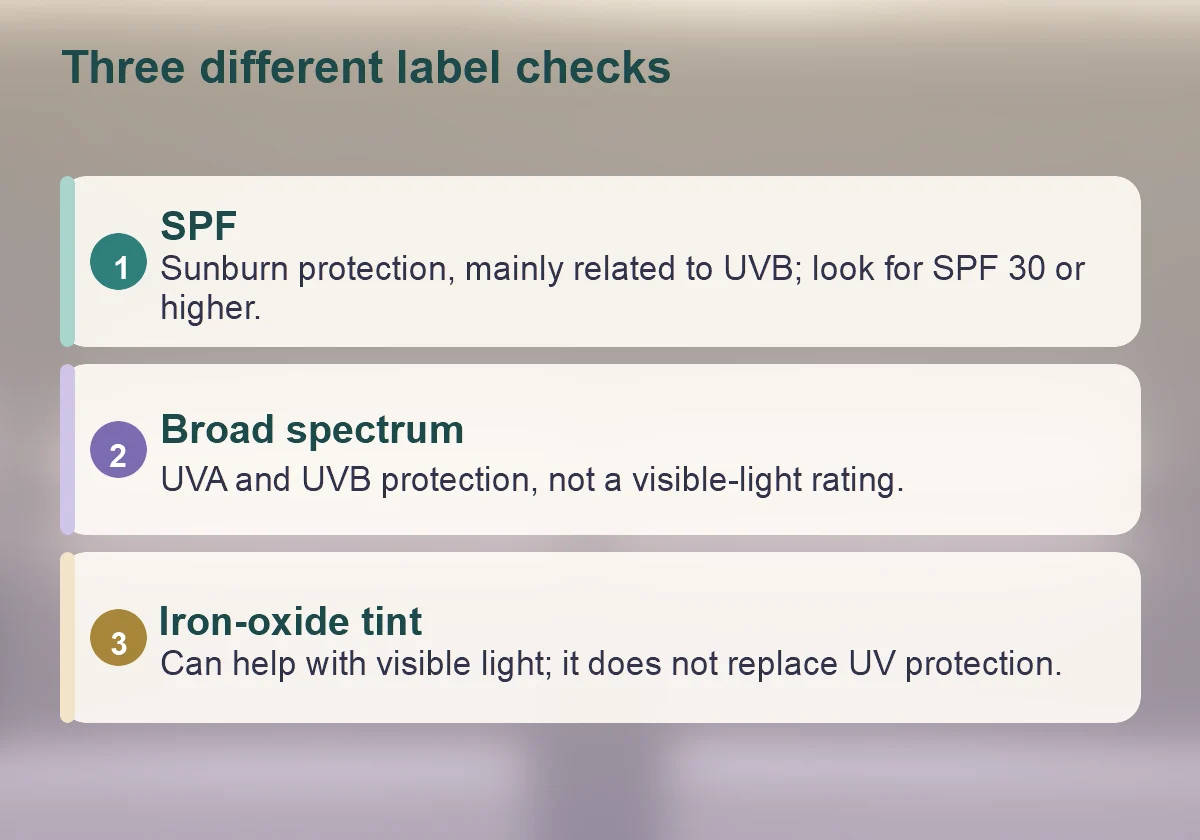
| SPF | Sunburn protection, mainly related to UVB | A complete UVA or visible-light assessment |
| Broad spectrum | Protection against UVA and UVB | The same meaning as visible-light protection |
| Tint with iron oxides | Can help protect against visible light | That it replaces SPF or makes every tinted product equivalent |
For melasma, look for broad-spectrum protection with SPF 30 or higher. Then consider an iron-oxide-containing tinted sunscreen for the visible-light component. Checking all three features is more informative than asking which bottle has the biggest SPF.
Why visible light changes the shopping question
Sunlight's ultraviolet radiation can trigger melasma or make existing patches darker. Visible light can also worsen melasma, especially in people with darker skin tones. That is why a product's colour and ingredients deserve a separate check instead of being inferred from its UV claims.
Look for iron oxides in a tinted sunscreen's ingredient information. A tint by itself does not establish identical visible-light protection across products. Nor does the presence of iron oxides turn a product into a complete light barrier. Keep the SPF and broad-spectrum checks even when the product has a tint you like.
Translate the label into outdoor habits
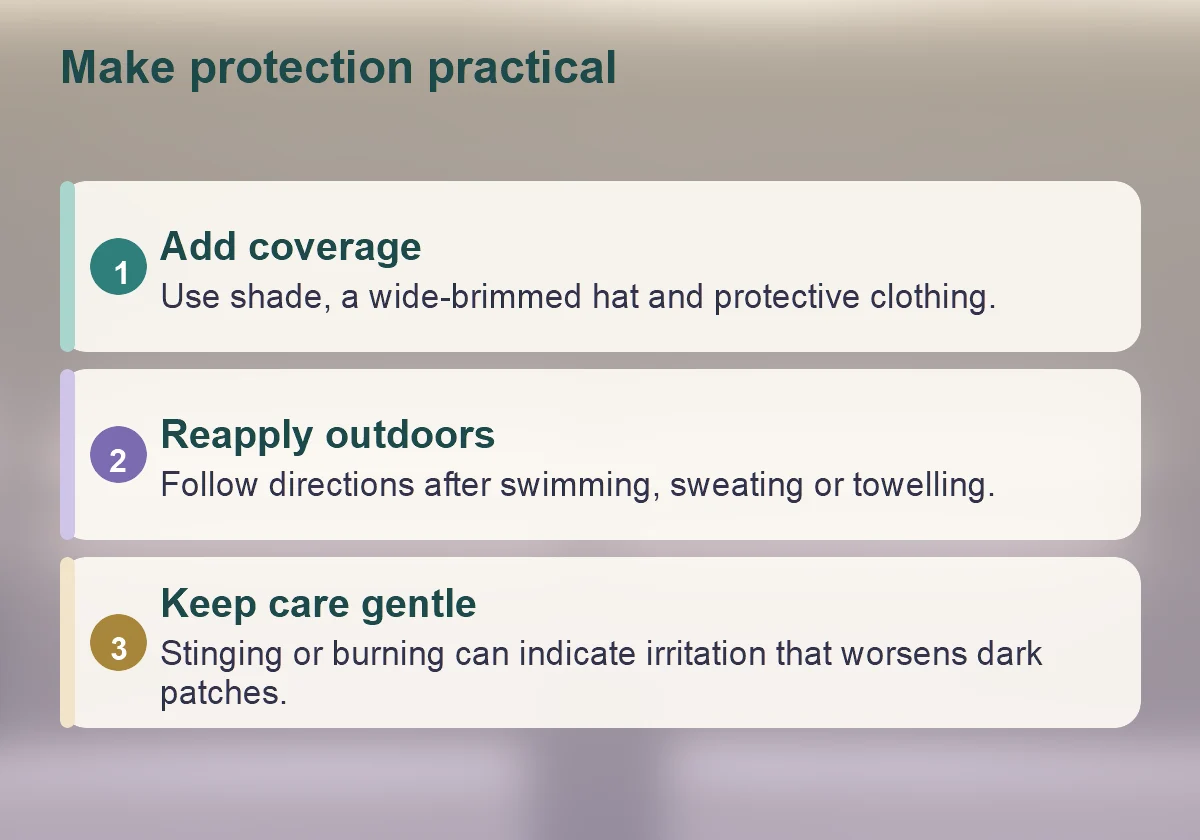
A useful product still needs a practical routine. When outdoors, reapply sunscreen and follow its directions after swimming, sweating or towelling. Shade, a wide-brimmed hat and protective clothing add useful layers rather than competing with the sunscreen.
- Before choosing: check SPF, broad-spectrum wording and iron oxides separately.
- Before going outdoors: plan shade, clothing and a hat as well as sunscreen.
- During outdoor activities: keep reapplication directions in mind, especially after water, sweat or a towel.
No sunscreen guarantees complete protection. The goal is not to find a single label that permits unlimited sun exposure, but to combine protection measures that you can actually keep using.
Comfort and diagnosis still matter
Stinging or burning is not a useful sign that pigment care is working. Irritating skincare can make dark patches more noticeable. Choose gentle, fragrance-free products, and discuss persistent irritation rather than repeatedly pushing through it.
Melasma can appear as patches darker than the surrounding skin, but uneven facial colour is not always melasma. A medical assessment helps establish the diagnosis before a treatment is selected. Light protection supports melasma care; it is not a substitute for identifying the condition or an assurance that medication or a procedure will never be needed. Equally, a procedure is not required for every person.
Common label questions
Does a higher SPF automatically protect against visible light?
No. SPF mainly describes UVB-related sunburn protection. Check broad-spectrum protection and the iron-oxide tint separately.
Can any tinted makeup replace sunscreen?
Do not assume that colour alone supplies the needed protection. Check whether the actual product offers SPF 30 or higher, broad-spectrum protection and iron oxides; tint does not replace UV protection.
Does sunscreen remove the need for individual melasma care?
No. Protection is part of a plan based on the diagnosis and skin response. There is no single best treatment for everyone, and recurrence remains a consideration.
Further reading: AAD: sunscreen labels; AAD: making melasma less noticeable; AAD: melasma diagnosis and treatment.
Questions before your visit?
For treatment enquiries and appointment requests, message us on WhatsApp with the treatment you are considering and your preferred visit date.
Individual results may vary.
Back to Blog →