Why Can Two Tattoo Colours Respond Differently to Laser Removal?
Ink composition, wavelength and pulse duration explain why a colourful tattoo cannot be judged by its appearance alone. Pico describes pulse time, not one universal wavelength.
Published by Beauty Blossom

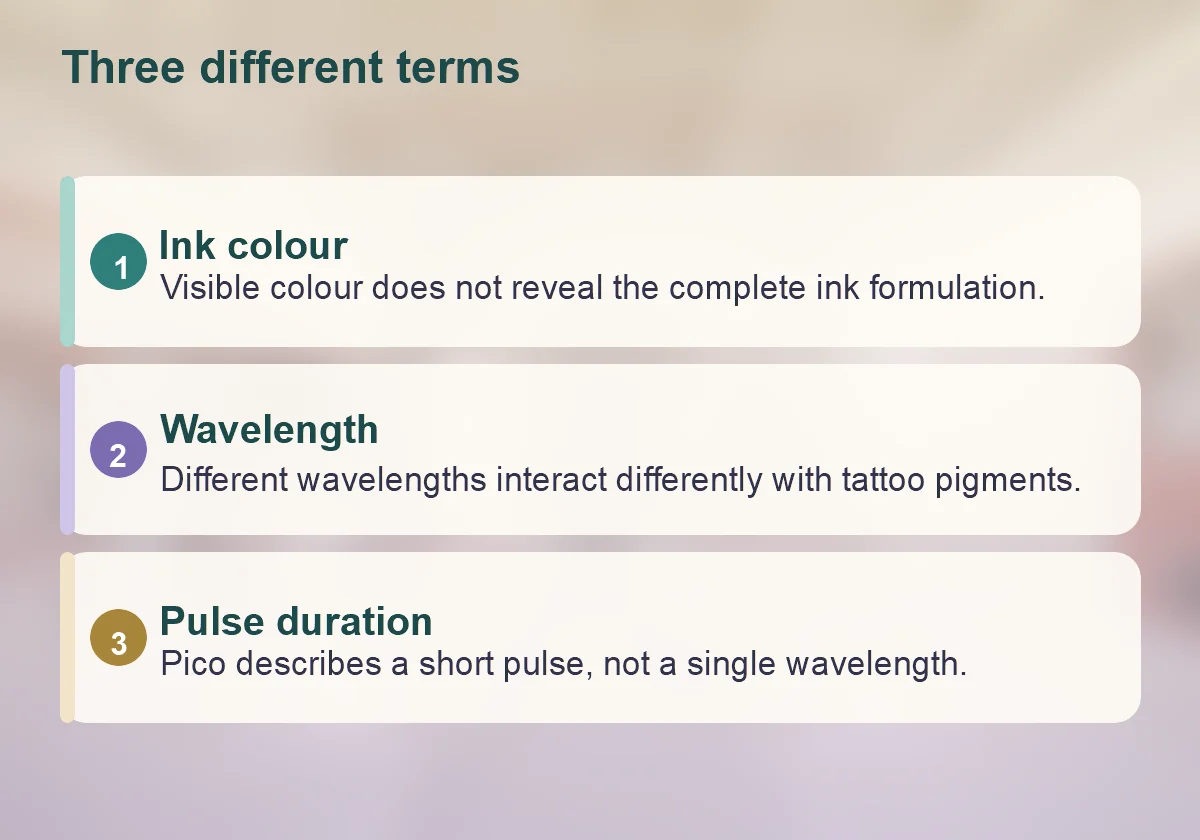
Two tattoo colours can respond differently because their pigments do not absorb every wavelength of light in the same way. Even two inks that look the same may have different formulations. A laser needs to interact with the pigment, but the colour you see is only part of the assessment: ink depth, the size of the tattoo and the skin’s response also matter. The word pico does not remove those differences. It describes a very short pulse duration, not a wavelength that works identically on every ink.
Why ink remains in the skin
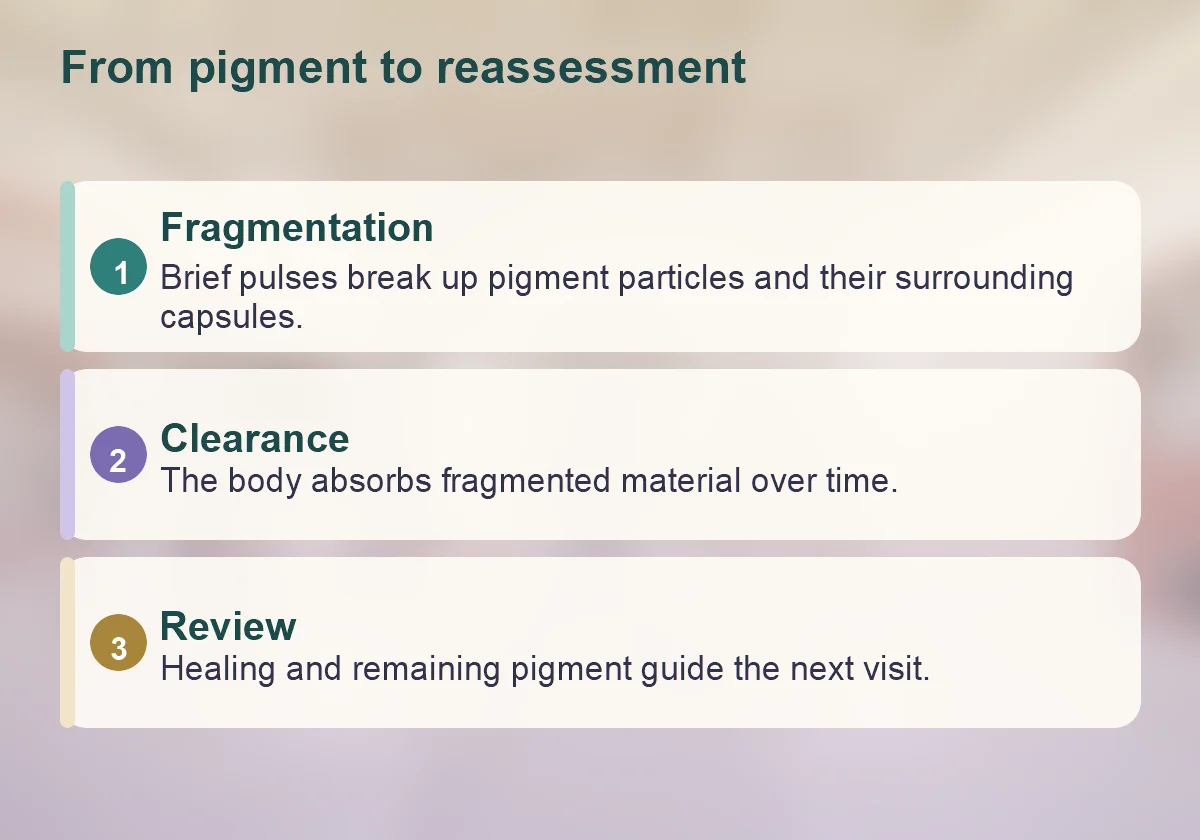
A tattoo consists of pigment particles embedded in the skin. Fibrous material can form around those particles, helping explain why the ink persists rather than simply washing away. During laser removal, brief pulses of energy are absorbed by pigment and break up particles and their surrounding capsules. The body then absorbs the fragmented material over time. Breaking pigment apart and clearing it are related steps, not one instantaneous event.
This is why a single glance at a tattoo cannot establish a treatment count. A small visible area can still contain ink at different depths, and different colours may leave different amounts of pigment behind.
Wavelength and colour: examples, not a ranking
Wavelength describes the light, whereas ink colour describes what we see. Their interaction matters. DermNet describes Q-switched 1064 nm Nd:YAG use for blue, grey and black tattoos, and Q-switched 532 nm KTP use for red tattoo pigment. These are examples of pigment targeting, not instructions to select a clinic setting.
| Example in clinical information | What it helps explain |
|---|---|
| Q-switched Nd:YAG, 1064 nm | Use for blue, grey and black tattoo pigments |
| Q-switched KTP, 532 nm | Use for red tattoo pigment |
| Different ink formulations | Similar-looking colours may not behave identically |
The examples do not create a universal easiest-to-hardest colour list. A colour name cannot tell you the precise composition of the ink or guarantee how much will fade.
What “picosecond” actually tells you
A picosecond laser delivers very short pulses. Pulse duration answers “how briefly is energy delivered”; wavelength answers a different question about the light itself. Picosecond systems include different wavelengths, with 532 and 1064 nm Nd:YAG and 755 nm alexandrite described in clinical information. Calling a treatment pico therefore does not identify one colour target.
Blue and green pigment responses also depend on wavelength. It is too simple to say either that these colours can never be treated or that every pico device treats them equally. Picosecond pulses use mainly photoacoustic pressure effects to fragment pigment, aiming to limit surrounding heat injury. That mechanism is not a promise of undamaged skin or scar-free removal.
What belongs in the assessment
- Discuss all visible colours, known ink details and any previous removal attempts.
- Consider the tattoo’s size and ink depth, alongside skin colour and recent tanning.
- Review healing and remaining pigment before deciding on the next visit.
Possible effects include pain, blisters, lighter or darker skin and scarring. Some pale inks can darken after laser exposure. Protect the treated area from ultraviolet light and follow the care plan for your skin. Complete removal cannot be guaranteed; the useful goal is an informed plan that responds to both the remaining ink and recovery.
Frequently asked questions
Does black ink always disappear completely?
No. A wavelength may target dark pigment, but ink composition, depth, tattoo size and individual response still affect what remains.
Is pico another name for 755 nm?
No. Pico describes pulse duration. Picosecond systems can use different wavelengths, so the two terms are not interchangeable.
If red ink is targeted by 532 nm, should every red tattoo use it?
No. The example explains pigment targeting, not a personal prescription. Ink composition and the skin assessment still determine an individual plan.
Sources: North Bristol NHS: Tattoos; DermNet: Nd:YAG laser; DermNet: KTP laser; DermNet: Picosecond laser.
Questions before your visit?
For treatment enquiries and appointment requests, message us on WhatsApp with the treatment you are considering and your preferred visit date.
Individual results may vary.
Back to Blog →