Why Can Oily Skin Feel Tight After Washing?
Oiliness and tightness can coexist. Learn how sebum differs from water, why harsh washing can leave skin uncomfortable, and what moisturizers actually do.
Published by Beauty Blossom

Yes, oily skin can feel tight after washing. Sebum is oil, while hydration concerns water in the skin: a shiny surface does not mean that moisturizing is unnecessary. Cleansing can remove some natural oils and moisturizing substances, and harsh washing can add irritation. The useful response is not to chase an even more stripped feeling, but to review how you wash and moisturize. Tightness alone does not identify a disease, prove barrier damage or measure how much water your skin contains.
Oil and water do different jobs
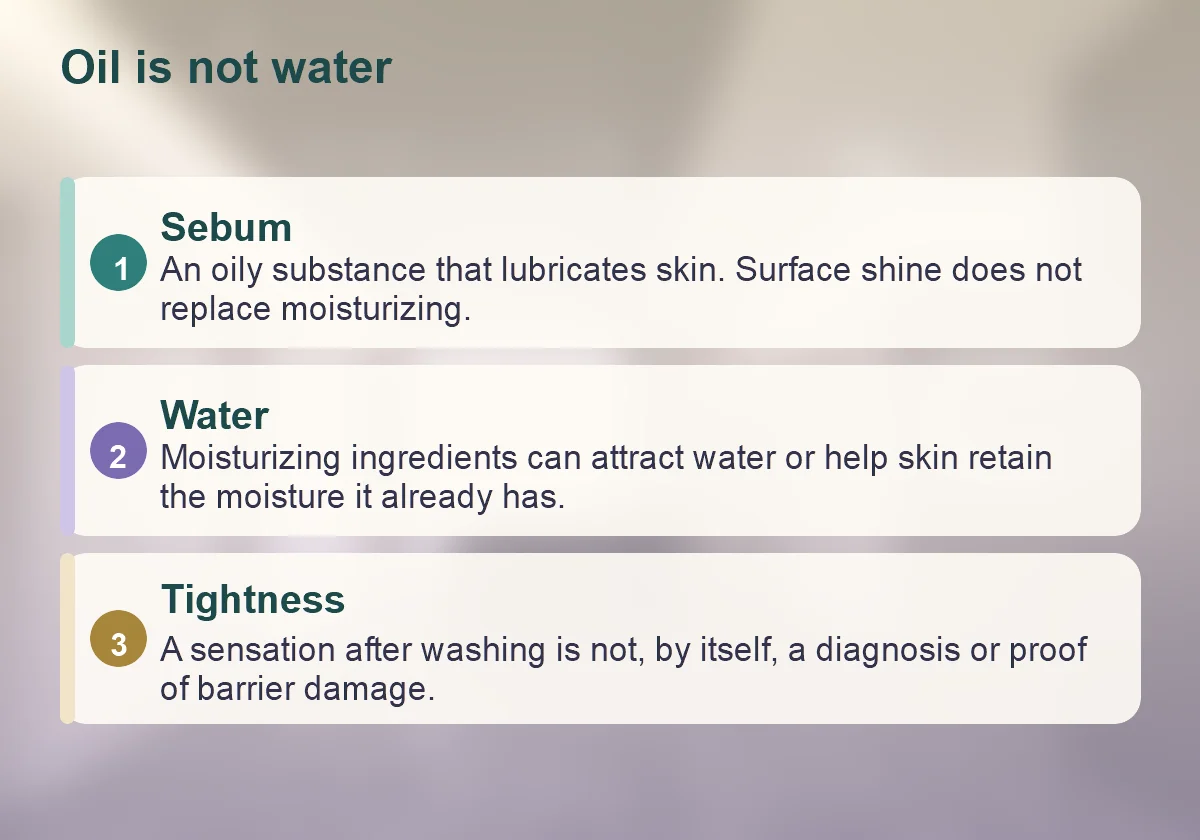
Sebum is an oily substance made by the sebaceous glands. It lubricates the skin, but it is not the same thing as the water that moisturizing products help attract or retain. That distinction explains why the American Academy of Dermatology recommends moisturizer even for oily skin.
Think of shine and comfort as different observations. You can notice oil on your forehead while also noticing tightness after cleansing. Neither observation, on its own, measures your skin’s water content or identifies the cause of discomfort. You can review an irritating routine without first assigning your skin a diagnostic label.
Why washing can leave skin feeling tight
A cleanser removes more than visible dirt. Cleveland Clinic explains that it also removes some natural oils and moisturizers, and that tightness can be noticeable with medicated cleansers. This does not mean every cleanser damages the skin or that every tight feeling has the same cause.
Harsh face washes can irritate oily skin. Hot water can contribute to dryness by stripping the skin barrier, while vigorous towel rubbing adds friction. A clean face does not have to feel aggressively scrubbed. Choose a gentle cleanser, use lukewarm rather than hot water, and pat dry instead of rubbing. If a product irritates your skin, stop using it or use it less often, as AAD advises.
What the ingredients in a moisturizer do
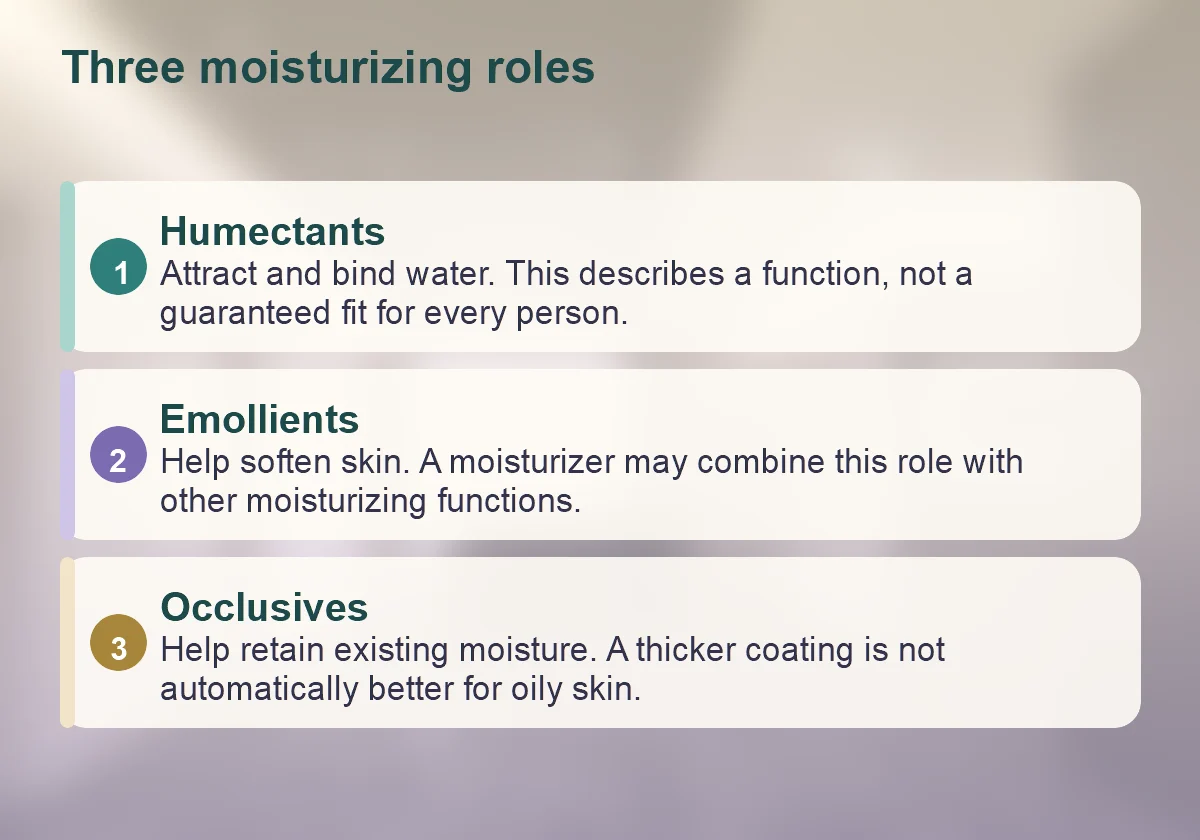
Moisturizer is a product category, not a synonym for adding more oil. Its ingredients may have several overlapping jobs. These terms describe functions rather than three mandatory products you must layer.
| Term | Main role | What it does not tell you |
|---|---|---|
| Humectant | Attracts and binds water. | Whether the whole formula suits you. |
| Emollient | Helps soften the skin. | That it treats the cause of tightness. |
| Occlusive | Helps retain existing moisture. | That a heavier coating is always better. |
One formula can combine these functions. Understanding the words is more useful than assuming that every oily face needs the thickest product, or that a light-feeling product cannot moisturize. Skin products can still irritate or cause allergic reactions; no ingredient category guarantees comfort.
A practical way to review your routine
- Review cleansing first: consider whether your wash, hot water or rubbing seems to make the tight feeling worse. Avoid scrubbing to remove every trace of oil.
- Keep the moisturizing step: AAD recommends applying moisturizer after cleansing even when skin is oily.
- Use labels as a starting point: oil-free and noncomedogenic products are options highlighted by AAD, not a guarantee that any particular formula will suit you.
- Describe ongoing symptoms: persistent irritation, redness, itching or a rash deserves clinical advice rather than a stronger cleansing routine.
The aim is a routine your skin tolerates, not a completely oil-free surface. You can describe when tightness happens and which products are involved without deciding that you have a specific condition.
Frequently asked questions
Does tightness prove my skin barrier is damaged?
No. Washing can contribute to dryness or irritation, but the sensation alone does not establish barrier damage or a diagnosis.
Should oily skin skip moisturizer?
No. AAD recommends moisturizer after cleansing for oily skin. The choice of formula still depends on individual tolerance.
Do I need separate humectant, emollient and occlusive products?
Not necessarily. A moisturizer can combine these roles. The terms explain how ingredients work, not a required shopping list.
Sources: AAD: oily skin care; Cleveland Clinic: washing your face; Cleveland Clinic: emollients; Cleveland Clinic: skin types and sebum.
Questions before your visit?
For treatment enquiries and appointment requests, message us on WhatsApp with the treatment you are considering and your preferred visit date.
Individual results may vary.
Back to Blog →