Sofwave for Neck Creases: What Should Be Assessed First?
Before Sofwave for neck creases, assess the line at rest, skin laxity and under-chin contour, then discuss realistic treatment boundaries.
Published by Beauty Blossom
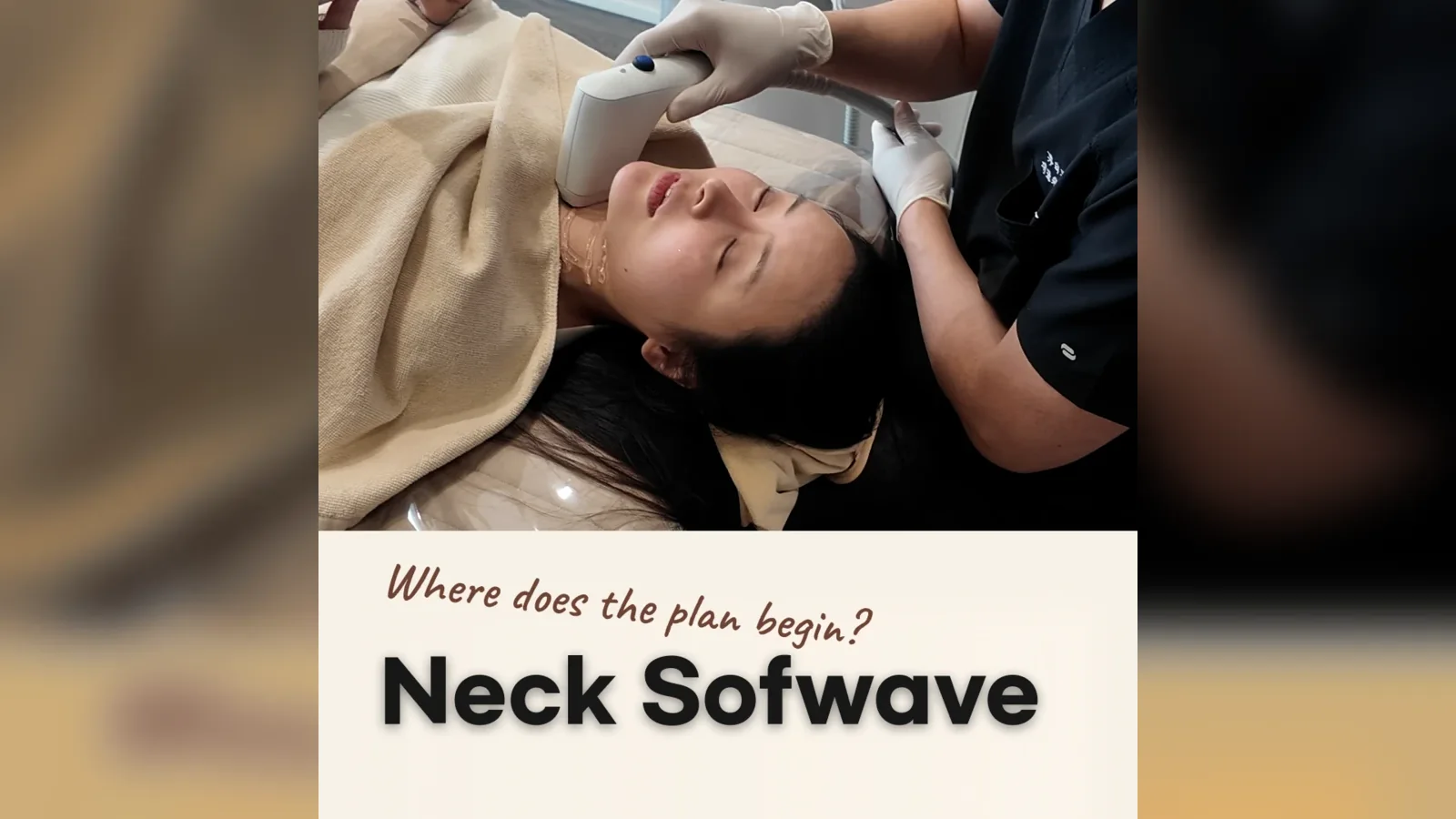
Short answer: Before considering Sofwave for a neck crease, describe where the line appears, whether it is visible at rest or mainly with movement, and whether your primary concern is neck skin or fullness under the chin. Sofwave is described as targeting the dermis with ultrasound, not as removing fat or erasing a deep, fixed fold. An in-person assessment determines suitability.
A horizontal line can look more pronounced when you lower your head. At the same time, the border beneath the chin may appear softer, but those are not necessarily the same issue. A useful consultation begins with the feature you see rather than a presumed cause or a request to treat the whole neck indiscriminately.
Is it a crease, skin laxity or a contour concern?
Look straight ahead and then gently lower your chin. Is the line present in a neutral position, or does it emerge mainly when the skin folds? Is the concern on the front of the neck, along the sides, or under the chin? These observations organize your questions; they are not a self-diagnosis.
Neck appearance can reflect texture, laxity, tissue volume, movement and posture together. Skin quality is not identical to fat volume. Ask the clinician to explain which component appears most relevant and what a dermal treatment could reasonably address. If the issue is chiefly under-chin fullness, discussing the mismatch is more useful than assuming every contour concern needs the same device.

What does Sofwave target?
Beauty Blossom Clinic describes Sofwave as ultrasound energy directed at the dermis at approximately 1.5 mm, with surface cooling, and lists the neck and jawline among possible areas. This describes the device’s intended tissue target; it does not quantify how much a particular crease will change. It should not be presented as a fat-removal treatment.
A crease that remains at rest, a fold that changes with posture and a soft under-chin contour may require different expectations. Ask where a proposed treatment boundary would begin and end. The front and sides of the neck, under-chin region and cheek-jaw transition are neighboring but distinct areas.
Neck assessment checklist
- Describe whether the line is visible at rest or mainly when you look down, and identify the precise location.
- Mention prior treatments, relevant medical conditions, medications and unusual skin sensitivity.
- Ask whether the concern seems related to skin texture, laxity or another feature, and what treatment cannot address.
- Confirm the proposed front, side, under-chin and jawline boundaries rather than assuming one continuous zone.
- Discuss comfort measures, aftercare, expected limitations and how to contact the clinic with a concern.
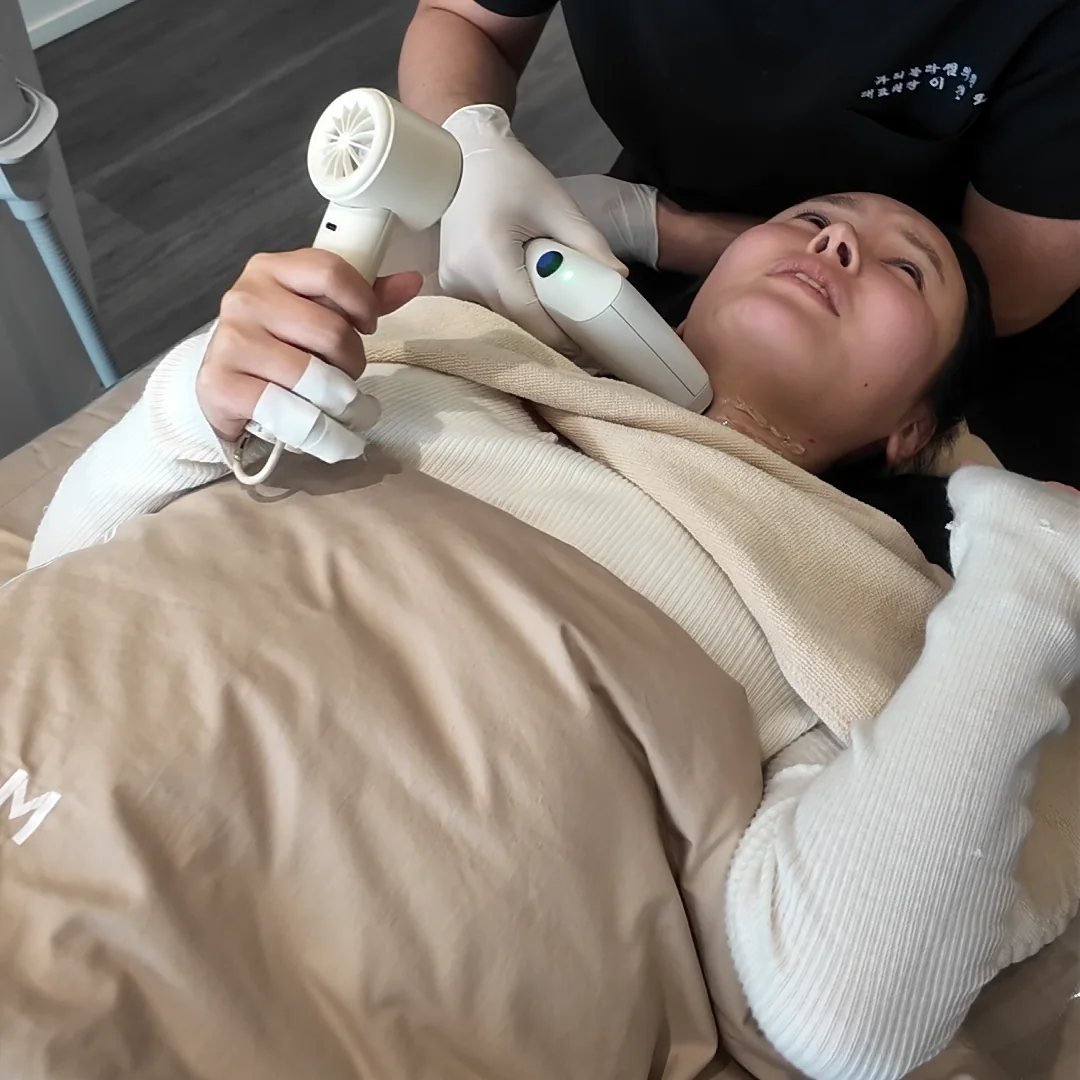
The photographed session in the source material includes work near the front and side of the neck, under the chin and at the cheek-jaw border. Those observed locations are not instructions for your visit. The clinic’s published information differs on routine numbing-cream use, so ask what preparation is planned for you instead of assuming a standard.
Comfort, limits and caution
Surface cooling does not make sensation identical for everyone. Tell the clinician if warmth or discomfort feels unexpectedly intense. The clinic describes gradual changes and individual variation, but there is no basis to promise that a specific horizontal line will disappear, or that every person will have the same recovery or duration.
Caution: A new or changing neck lump, one-sided swelling, pain, difficulty swallowing or another unexplained symptom needs medical assessment rather than cosmetic treatment planning. Share relevant health history and prior procedures. Marked excess skin or volume can also limit what a dermal ultrasound approach can address. The clinician should explain why the proposed plan fits, or does not fit, the findings.
Frequently asked questions
Will Sofwave remove a horizontal neck line?
No individual result can be promised. A clinician needs to see whether the line persists at rest, whether laxity contributes, and what degree of change may be reasonable for the specific area.
Can Sofwave reduce a double chin?
The described target is the dermis, not fat removal. A fuller-looking contour can have several contributors; ask for an assessment instead of assuming it has one cause or one solution.
Will I need numbing cream?
The clinic’s published information is not consistent on routine use. Confirm preparation and comfort options for your own visit, and tell the clinician about any prior sensitivity.
Visit Beauty Blossom Clinic
Beauty Blossom Clinic is at Mediwon Medical Center, 66 Yanghwa-ro, Mapo-gu, Seoul, South Korea. Reception is on the 6th floor. The clinic is near Hapjeong Station Exit 3. For an individual assessment, contact the clinic or request a consultation. View the location map.
Individual-results disclaimer: This article is general information, not a diagnosis or a promise of treatment suitability or results. Response, recovery and risks differ by person; a clinician must assess your circumstances before recommending a plan.
Location
Beauty Blossom Clinic
Mediwon Medical Center, 66 Yanghwa-ro, Mapo-gu, Seoul, South Korea (reception: 6F)
Individual results may vary.
Back to Blog →